Zantac Lawsuit


Researching drug company and regulatory malfeasance for over 16 years
Humanist, humorist

Thursday, July 06, 2023

PSSD: A GUEST POST


After researching SSRI risks for the past 17 years, I took a hiatus from regularly covering the subject to spend time pursuing another project. Now that this project, a fictional novel unrelated to pharmaceutical and drug regulator malfeasances, was recently published, I'm back to covering a drug-related topic today. I first heard the new acronym, PSSD, which stands for Post-SSRI Sexual Dysfunction (PSSD), a few years ago. 

Any reader with a Twitter account likely knows PSSD has been gaining considerable coverage in the past six months or so. This is likely because the pharmaceutically-induced harm negatively impacts more people than drug companies and doctors will acknowledge. 

Until receiving the guest post below, I didn't fully realize that PSSD can cause many symptoms and is not limited to sexual dysfunction. My comments follow Sean's post below.

--

Sean has chosen to keep his surname hidden.


My name is Sean; I am a 23-year-old male from the USA. During the COVID pandemic in 2020, I was experiencing more anxiety than usual. I had always been an anxious person, so getting help for that was on my to-do list. The therapists were fully booked then, and I could not get an appointment. My doctor was down the street, so I made an appointment to discuss my concerns. After a 15-minute consultation, my doctor diagnosed me with Generalized Anxiety Disorder (GAD) and prescribed fluoxetine, more commonly known by its brand name, Prozac. At no point did my doctor inform me of the possible side effects associated with Prozac.

Within 3 months of the 20mg Prozac tablet, it appeared it wasn't doing much, if anything at all, to lift my anxiety. It was pretty much ineffective. After speaking with a nurse via telephone, I decided to taper off by following her guidance. She told me to split the pill in half and take it every other day for the next couple of weeks, then stop once it ran out. I suffered no withdrawal symptoms or other side effects during my tapering regime.

After hearing from multiple people that it takes a couple of tries to find the right medication, I gave in again and went back over a year later to try another SSRI. This time it was Citalopram at 10mg per day. This new doctor diagnosed me with obsessive-compulsive disorder (OCD). Once again, I was not informed about any possible side effects Citalopram could pose.

Within an hour of taking the first pill, my genitals were completely numb. In the hours following, I experienced intense brain fog, and I was losing my range of emotions and sexual function. At this point, I was panicking and had a mental breakdown.

When I woke up the next day, I felt like I was dead, as if my soul had been removed from my body. Music became nothing but a sound. The best way to describe it would be like making an animal listen to music; they don't understand it. I felt nothing from seeing my family, no more love or empathy, no more happiness--just nothing. My entire life has just been shot down from one pill of an SSRI. I thought to myself, how is this even possible?

After becoming suicidal from this horrifying experience, I tried turning to alcohol. I didn't think it could get any worse, but it did. I couldn't feel the effects of the alcohol I was drinking; I literally had no escape.

I went to see my doctor and explained how unlucky I felt for experiencing this after my first day. I was told that what I'm experiencing is depression. I knew for a fact that this was incorrect. Genital numbness is not a symptom of any mental illness. I experienced depression as a teenager and told the doctor that it felt nothing like this. After I was given another antidepressant, I threw it away and researched what I was experiencing.

After a few hours of searching, I came across the PSSD subreddit. That was the day I learned I may be experiencing Post-SSRI sexual dysfunction (PSSD)

I prayed for my body to return to normal as I distracted myself from suicide daily. I felt as if I became asexual overnight. I had no libido and no attraction to anyone. There was suddenly no bond that could be formed. I tried talking to my friends at school and felt like I was talking to a wall. There was no connection to anything.

After seeing multiple doctors and informing them about this, they all became defensive and tried to put me on more antidepressants. I felt so violated. I was shocked that PSSD is not even listed as a side effect in the USA.

Fast forward to 2023, as I now write about my experience. I have seen no improvements in my PSSD symptoms. The fear of this lasting forever has become a reality, and the only way that the thousands of us suffering can escape from this is through research. Having to fund all of this on our own is disgusting, but we don't have a choice as we are still being ignored by the FDA and many doctors and psychiatrists.

Recently, a documentary about antidepressant withdrawal was released by BBC Panorama. The documentary mentions PSSD and those of us who have been left to suffer are also left with no answers. In the UK, the MHRA and Royal College of Psychiatrists have received reports of PSSD since 1991, and yet neither of these organizations has addressed it. In 2018, a petition was made to the FDA asking to include PSSD somewhere on the labels, yet we are still being ignored. Technically, the only action so far has been from the European Medical Agency, whose 2019 updated SSRI label now states that 'enduring sexual dysfunction may persist'; however, there is no mention of permanent genital numbness and debilitating emotional blunting.

There has been some recent literature, https://www.pssdnetwork.org/literature  containing one study that estimated the prevalence of PSSD to be 1 in 216. Nowadays, this should be alarming as millions of people are taking antidepressants, and the majority of them are not being informed of this serious risk. No matter how small the chance of PSSD might be, tens of thousands of sufferers, including myself, can promise whoever is reading this that it is not worth it. No innocent soul should have to go through a life of endless torture and emotional and physical feelings of "nothingness."


Sean

--

SSRI withdrawal is a harrowing experience, but eventually, most sufferers see an end to their symptoms after withdrawal is complete. PSSD, however, appears to be permanent. Robbing people of physical and emotional intimacy and leaving them numb, with little to no support and acknowledgment of this iatrogenic harm, is best described as a rape of the mind, body, and soul.

Like SSRI withdrawal, PSSD is downplayed by many prescribers. Their years of medical training did not provide any information about PSSD, and they're unlikely to look for symptoms of this disorder in their medical practice. Blaming PSSD symptoms on some DSM-created labels is easier and more convenient. 

Medical professionals no longer listen to patients but instead stick to their manuals and outdated training. SSRIs are prescribed as plasters to heal normal, albeit troubling, situations and related emotions. When people are uninformed of risks and accept the dressing only to later suffer iatrogenic harms, the same prescribers refuse to acknowledge the damage their actions caused--and they give out more plasters, or "Band-Aids" with specific brand names. 

One 10mg pill robbed Sean--and thousands of others. 

I hope Sean's guest post is shared widely. A handsome young man who should be enjoying life but instead is suffering and has nobody to turn to except support group members and old bloggers like me.

For more information and support on PSSD, follow PSSD Network on Twitter and on their website.

https://twitter.com/PSSDNetwork

https://www.pssdnetwork.org

Bob Fiddaman

Thursday, June 22, 2023

My Take on Panorama's 'The Antidepressant Story'


On Monday, June 19, the BBC's flagship current affairs programme, Panorama, broadcast the long-awaited, and much anticipated 'The Antidepressant Story'.

Living, as I do, in Central America, it's difficult to watch British TV, especially live broadcasts. With the help of a useful app, however, I didn't fret too much.

While most of Britain settled down at 8pm on Juneteenth, the time difference here meant a 2pm viewing here for me.

I watched with my partner, who also has an interest, given her daughter died at the hands of antidepressants.

Many, reading this, will know I've been banging the drum for over 16 years regarding the safety and efficacy of SSRIs so watching this hour-long special saw me (internally) go through a range of emotions. It's only now, some three days after it aired, that I'm able to write about it.

My main focus has always been about the withdrawal effects of SSRIs and also their propensity to induce suicidality. Although 'The Antidepressant Story' covered the withdrawal issue they never delved into the suicide link. I totally understand why as this has been covered four times (brilliantly) by the Panorama team during the first ten or so years of the 2000's (Links at the foot of this post)

I watched with interest as they covered PSSD. For me PSSD is a confusing acronym, at first glance it looks like PTSD, an invented disorder that promotes the use of psychiatric drugs. If an experienced old fella like me, who's researched these SSRIs for many years, finds this confusing, I have to wonder if the same can be said about the general public?

The two acronyms are very different though.

PSSD is Post-SSRI sexual dysfunction, a condition caused by the use of one or more serotonergic antidepressants that persists despite the cessation of antidepressant treatment. PTSD is Post-traumatic stress disorder, an apparent "mental health" condition that's triggered by a terrifying event.

Although I agree many suffer when recalling terrifying events, I refuse to give it a mental health label. PTSD first appeared in 1980 in the third edition of the Diagnostic and Statistical Manual of Mental Disorders (DSM-lll) published by the American Psychiatric Association, a manual used by psychiatrists, such as the ones who appeared (for balance) in 'The Antidepressant Story', namely Wendy Burn and Prof David Nutt. More about them later. 

The Antidepressant Story kicks off with Audrey Bahrick, a patient who tells her story about reading about Prozac and its beneficial properties. She was going through a sticky patch at the time and thought Prozac would give her the lift that she needed. After taking it, Bahrick felt "confident and energized", adding, "I loved being on Prozac."

Another patient, Trish Matthews, also tells her story. Trish was training as a nurse in the 1990's and found the pressure of training whilst trying to manage her homelife, she became stressed and struggled to manage her daily life. She went to her doctor and was prescribed an antidepressant. She believed, after reading various articles, that her stress was brought on by a chemical imbalance. 

Drug company adverts, such as the one below, were flooding TV stations across the US and New Zealand (The only two countries that allow Pharma Drug To Consumer advertising)


It wasn't long before those adverts turned to print so other nations, such as the UK, could read about an apparent serotonin deficiency and how to treat it.

It was genius marketing by the drug industry but it was pure fiction, a fiction that was lapped up by the likes of the Royal College of Psychiatrists and its members. They never once questioned it. They could now prescribe en masse and give a reason, albeit fictional, why they were prescribing.

The chemical imbalance myth has been debunked so many times over the years. That I'm still writing about it baffles me. It's ingrained in society, moreover in rooms with pens and prescription pads. It's cult-like and many who are hanging on to this claim are part of that cult.

Back to Bahrick and Matthews

As the show progresses we learn that Audrey Bahrick and Trish Matthews both started to experience the dark side of the SSRIs they were prescribed.

"I was immediately sexually numb, within a day (of taking Prozac) my genitals were numb", Bahrick said.

Trish Matthews had been taking her prescribed SSRIs for 18 months and felt she was now better so decided to cease taking them. This is when her problems began. "Within 24 hours I felt absolutely dreadful", she thought her 'depression' was coming back. She rang her doctor who told her, "you have to go back on them."

Withdrawing from SSRIs can mimic the symptoms of why you were put on them in the first place. Prescribers are, largely, unaware of this as are those who take them.

Dr Mark Horowitz, a trainee psychiatrist, who also features in the show, was diagnosed with depression at the age of 21. 15 years later he tried to come off and experienced insomnia, panic attacks, dizziness, anxiety and low mood. He has not been taught about these effects of SSRIs at medical school or in psychiatry training. Horowitz, when reading the academic literature available to him, found that psychiatrists and academics at the institution he had studied at and others like them around the world had little helpful to say about withdrawal effects from antidepressants, they recommended stopping the drugs over 2 to 4 weeks, and reported that the symptoms were mild and brief. To date, Horowitz is still taking his medication.

Joanna Moncrieff, a practising professor of psychiatry and a part-time academic and author, says she was skeptical about these new antidepressants from the start. "My interest has always been in the role of drug treatment and whether they're as beneficial as we are, usually, led to believe that they are."

Pfizer, who are never out of the news these days, are briefly featured in the show. The Panorama team obtained a 'secret document' that showed how Pfizer execs wanted to play down the withdrawal issue. They also wanted to include claims about the chemical imbalance being a fact, they were declined by drug regulators but the chemical imbalance somehow made its way into the patient information leaflets that accompany SSRIs. With trickery, using wordplay, companies like Pfizer could set the 'chemical imbalance' promotion rolling by putting its main message amongst words like 'it is thought' or 'it may be'. Moncrieff was shown the document by the Panorama team, her reaction said it all, "Oh, my gosh".


Moncrieff has been instrumental in trying to debunk the chemical imbalance theory and in 2022, along with Benjamin Ang and Mark Horowitz, published a paper in the Science Direct Journal that found the field of psychiatry bears some responsibility for dissemination of the theory of the chemical imbalance  and associated antidepressant use.

This paper caused outrage amongst many leading psychiatrists and they took to Twitter not only to refute the findings but to target Moncrieff personally. I've watched it all unfold via my own Twitter account - it still continues today.

The Balance

As I mentioned previously, for balance Panorama asked two psychiatrists onto the show. The pharma conflicted Prof David Nutt and the former President of the Royal College of Psychiatrists, Wendy Burn.

As was expected both made claims that could not be backed up with evidence. Nutt opted to go down the emotive route with, "antidepressants have saved the lives of many hundreds of thousands of people”.

I find this claim astonishing and am bamboozled that it's rarely challenged by mainstream media or, indeed, programme makers such as Panorama.

As I wrote on Twitter, "If I believed listening to the Dixie Chicks whilst going through severe Paxil withdrawal saved my life, would this actually prove that the Dixie Chicks saved my life?"

Of course it wouldn't.

There is no scientific evidence that antidepressants save lives. Too many people are scared to challenge the narrative because many patients who believe this to be true will get emotional and throw hissy fits on social media platforms. Trust me, I have friends who think they or their kids' lives were saved by SSRIs. I cannot debate with them as it causes them obvious distress. 

Nutt knows this. He seems to be playing the system here, it's clever deception. Appear to have concern and show support whilst dismissing the likes of the patients that appeared in the show and millions of others who have suffered the darker side of SSRIs.

Burn didn't fare much better. Fidgeting throughout her (edited) interview, Burn said she personally regrets that severe and long-lasting withdrawal wasn't recognised sooner. "I can't really explain why it took so long, perhaps partly because of the overlap between relapse and withdrawal...I don't know, I can't really explain it."

What Panorama didn't show the public, because they probably didn't know, is an interview Burn did with Equally Well back in 2020. She told them that "when she was first trained she was told not to tell patients about side effects as it might dissuade them from taking medication."


The BBC didn't push Burn on why she has blocked or muted so many patients on Twitter who have reached out for help regarding withdrawal and PSSD issues.

Burn offered a personal apology on the show but it reminded me of Alan Partridge publicly apologising to Norfolk farmers. "If there's anybody watching who has gone through withdrawal and it wasn't recognized then I'm very sorry."

You'll notice she was making a personal apology here and not one on behalf of The Royal College of Psychiatrists, whose members with Twitter accounts are some of the most vile human beings I've come across regarding those injured by SSRIs. That's another blog though.

All in all, I thought the one-hour special did the job, it got the message across and, as predicted, infuriated many Royal College members on Twitter. Their anger was aimed at the apparent bias of the show. At no point did they show any empathy whatsoever to those harmed by the very same drugs they write prescriptions for. Targeting their cultish beliefs was deemed, it seems, unacceptable.

Psychiatry is in a mess but I can't let General Practitioners (GPs) off the hook here either. For too long now, GPs have ignored the SSRI withdrawal and PSSD issues as have the British Drug Regulator the MHRA. This needs to change, and it needs to change right now!

I sat down with the MHRA 15 years ago to discuss the SSRI withdrawal issue, back then I had no Facebook or Twitter support groups to help me, nor did I have any interest from the BBC or any other network channel. I made the visit alone and sat with the, then, chief executive of the MHRA, Kent Woods, their Head of Pharmacovigilance Risk Management, Sarah Morgan, and their Communication Manager, John Watkins.

I thought I'd struck gold, sadly that wasn't the case. The problem still exists today and many patients who are prescribed these drugs will, no doubt, go through what I did, what the patients in the show did, and what many millions of people worldwide are having to endure.

With that said, if you want to become an advocate for SSRI safety, it comes at a price. Members of the Royal College of Psychiatry have labelled me 'a conspiracy theorist', a 'far-right sympathizer', a 'misogynist', amongst many other labels designed to keep me quiet. It's straight from the pharma playbook, folks!

I'm not alone, many other SSRI safety advocates have had their fair share of crap thrown at them as they strive for answers, many of whom who have lost loved ones due to SSRI induced suicides.

The Royal College of Psychiatrists were 'royally' kicked in the nuts with this Panorama offering. It's going to get a lot worse with the insults, the accusations, the muting and the blocking. Cults don't like their belief system tarnished.

Bob Fiddaman

Watch the 'The Antidepressant Story' on BBC IPlayer here.

Outside the UK, watch here

Previous Panorama SSRI coverage

The Secrets of Seroxat

Emails From The Edge

Taken On Trust

The Secrets Of The Drug Trials


Tuesday, June 20, 2023

GUEST POST BY BEVERLEY THOMSON PART 2


This is Part II of a guest post by Beverley Thomson. 

Part I, which has gained a lot of interest, can be read here.

--

The Psychiatry Redefined website offers a functional medicine paradigm for the treatment of one of psychiatry’s most challenging presentations including the course ‘Functional & Integrative Medicine for Managing Medication Side-Effects’. For $170, ‘This course provides methods for managing medication withdrawal and side-effects (sexual dysfunction, weight gain, suicidality) through a lens of functional and integrative medicine. In particular, we examine nutritional interventions to ameliorate the withdrawal symptoms associated with SSRI antidepressants. We conclude with a general discussion regarding the role of medication in psychiatry.’

The claim is this “serious void” in the psychiatric model and this void created by psychiatry and psychiatric medication can now be filled by an evidence-based practice prioritising nutritional deficiencies. ‘Mental illness should be seen as a reflection of multiple internal imbalances. If we understand the causes of these imbalances, we will understand the cures.’ it would seem the chemical imbalance theory has been revised, updated and in this world of functional medicine it is no longer about serotonin deficiency rather a “reflection of multiple internal imbalances”. It is not the antidepressant which has caused the imbalances but our nutritional deficiencies!

The Alternative to Meds Center 7 in Arizona is just one of many luxurious clinics claiming to be a world authority on the subject of psychiatric medication withdrawal. With 15 years of experience, their program helps individuals with medication withdrawal using alternative mental health, holistic psychiatry, and holistic addiction treatment at a cost of up to $85,000.

According to their website these experts declare, ‘People coming off of psychiatric medication need special considerations not found in a “drug rehab.” You are likely well aware that getting yanked off of medications would be a disaster.

Surprisingly, most health professionals seem to be largely unaware of this. After almost 20 years of focusing on the worst of the worst cases, we have become world experts in safe, comfortable medication withdrawal.’ They use a host of holistic therapies including Intravenous Therapy described as ‘a great way to get a concentrated effect on the physiology, which is highly effective applied to medication withdrawal’. They have crafted their IV’s to be specific for each type of medication withdrawal.

Claiming to have an 87% long-term success rate, they say success is about more than just getting off of medications. ‘The symptoms that got a person on medications generally come back if the underlying causes are not attended to. In MANY cases, the neurotoxic accumulation of poisons based on individual genetics gets overlooked in medication withdrawal. Our program draws on the fundamentals of Environmental Medicine by pulling out heavy metals, hormone-mimicking toxins, and other physiological and neurological stressors. Simultaneously, highly specific neurochemical and hormone precursors and natural forms of top-shelf science support are administered so that getting off of the medications is even possible.’

Jamie, 43, had taken venlafaxine for over 14 years and during that time had suffered serious adverse effects. He was rapidly withdrawn from the drug by his psychiatrist. He was left with severe withdrawal adverse effects including depression, bouts of anxiety and Post SSRI Sexual Dysfunction, (PSSD). He consulted two psychiatrists who offered no option other than to reinstate the original drug. After a desperate search online for help with his Protracted Acute Withdrawal Syndrome (PAWS), he found a ‘Recovery Coach’ offering ‘a ‘Unique-to-You’ Blueprint Summary from a 130+ Check-Up Process, which would highlight all the ‘Dis-Ease’-Sustaining Factors which were contributory factors in his living in his current state-of-being’. He assured Jamie that by using a wide range of indicator and assessment tools, drawn from disciplines such as, Functional Medicine, Nutritional Health, Birth-to-Addiction Spectrum disciplines; Emotional, Mental, Psychological, Behavioural and Physical Health, he would be able to get back to living a healthy life. Jamie was told, ‘we humans are creatures of habit and much of how you are living today, whatever the cause, has become HABIT to your emotions, brain and body’.

Putting his trust in this professional, Jamie invested over £6,000 for the services, there was also an ongoing £250 monthly payment for supplements and nutritional advice. Some of the tests Jamie was subjected to; histamine, thyroid, pyroluria, blood lactate, chemical sensitivities, food sensitivities, food and chemical sensitivities, candida related complex, genetic, ADHD, vitamin and mineral deficiencies, OAT test, Dutch test, zinc / copper balance, heavy metal toxicity, methylation profile, celiac, GARS test and testosterone levels. It was suggested in a subsequent report Jamie was ‘Thinking in the ‘loop’ of being bio-chemically addicted to his emotions resulting in ‘emotional addiction’’, that he was ‘living every day through the Chemistry of Survival', and his body was doing his thinking rather than his mind. He was advised his ‘Post-Abstinence Withdrawal Symptoms’ were high priority for immediate action, and this required the ’Use of Live Life Beyond…. Daily Brain-Re-training and Life-Change Implementation Checklist, due to his general thought processes being negative in nature, more than positive’.

Jamie connected with me online, and I agreed (free of charge) to meet with him and the Recovery Coach. Following specific questions regarding Jamie’s Protracted Acute Withdrawal Syndrome, (PAWS), we realized the Recovery Coach and his organization had absolutely no understanding of antidepressant withdrawal and the effects venlafaxine and subsequent withdrawal had on Jamie’s biological state. The language used in Jamie’s test reports were indeed testimony to this. This is just one example of making a patient count for considerable profit. Thankfully the fees Jamie paid out have now been reimbursed.

We then secured a meeting with the Integrated Care Director of Jamie’s local NELFT NHS Foundation Trust. The trust provides an extensive range of integrated community and Mental Health services. Unfortunately, it does not provide the much- needed service for psychiatric drug withdrawal, however the Director was willing to listen, and he managed to find a psychiatrist to support Jamie in his attempt to find a solution to his post withdrawal symptoms. We had numerous meetings with the Psychiatrist to discuss the limited options and Jamie decided to reinstate a different SSRI at a very low dose. He is receiving weekly clinical monitoring from the psychiatrist, and I am providing ongoing psychological support (without payment). Jamie is an informed patient and decisions were made collaboratively on the understanding there are no guarantees of success. He is acutely aware this is trial and error, experimental and there are no guarantees. The case highlights some key issues; prescribers’ lack of safe tapering / withdrawal knowledge and the need for training, an example of the type of opportunistic services ready to exploit those looking for help and the vulnerable position patients needing help with withdrawal or iatrogenic harm find themselves in due to the lack of specialist services available.

If we are to better understand how to treat withdrawal and post withdrawal symptoms It is imperative, we put patients before profit and establish trusted authoritative services as a priority. There are millions dependent on antidepressants representing an emerging and growing potential future market available to this new wave of functional / integrative psychiatry. Perhaps this warrants the warning; if we choose to take antidepressants whenever possible we should do so at the lowest dose and for the shortest time. Never before has there been a need to become truly informed patients and choose wisely by putting our trust in those who are experts and honest about this complex issue. We have a right to pay for healthcare services if we so choose to and are able, but caution is required.

This current situation also reminds us of the need for responsible prescribing. Less prescribing of these drugs means less harm and dependence and ultimately less demand for the withdrawal and support services. However, while governments, medicine and psychiatry continue to deny patients best possible care and the answers they deserve, are we often sending those dependent on and harmed by psychiatric medication down expensive, experimental rabbit holes full of empty, lack of evidence-based promises? Are we sometimes trying to solve the unsolvable?

Beverley Thomson

7 https://www.alternativetomeds.com/


Beverley Thomson is a writer, researcher and speaker with a focus on psychiatric medication including antidepressants, benzodiazepines and ADHD drugs; their history, how the drugs work, adverse effects, dependence, withdrawal and development of patient support services. Her aim is to help inform and empower the patient to make informed choices about medication. She has a particular interest in withdrawal management and prescription drug-induced suicide. In the past 10 years, she has worked with organizations such as the British Medical Association, the Scottish Government (as part of a working group addressing the issue of prescribed drug harm and dependence in Scotland), the UK Council for Evidence-Based Psychiatry (writing evidence-based summaries to be used by professionals and the general public), and the UK All Party Parliamentary Group for Prescribed Drug Dependence. She has contributed to articles in the British Medical Journal (BMJ) and mainstream media including TV and radio.

Tuesday, June 13, 2023

GUEST POST BY BEVERLEY THOMSON PART 1


This is Part 1 of 2

Beverley Thomson is a writer, researcher and speaker with a focus on psychiatric medication including antidepressants, benzodiazepines and ADHD drugs; their history, how the drugs work, adverse effects, dependence, withdrawal and development of patient support services. Her aim is to help inform and empower the patient to make informed choices about medication. She has a particular interest in withdrawal management and prescription drug-induced suicide. In the past 10 years, she has worked with organizations such as the British Medical Association, the Scottish Government (as part of a working group addressing the issue of prescribed drug harm and dependence in Scotland), the UK Council for Evidence-Based Psychiatry (writing evidence-based summaries to be used by professionals and the general public), and the UK All Party Parliamentary Group for Prescribed Drug Dependence. She has contributed to articles in the British Medical Journal (BMJ) and mainstream media including TV and radio.

--

As humans we instinctively act to our advantage. In some cases, this is often done to the detriment of others, known as opportunistic behaviour. Whilst opportunistic behaviour is deemed acceptable or at least inevitable in the commercial world, is opportunistic behaviour ever acceptable when it comes to patients seeking help with or harmed by antidepressants or other drugs used in mental health? When it comes to deprescribing and treating iatrogenic harm caused by conventional medicine, is ‘making every contact count for profit’ something we should question?

With the ongoing call for a shift in how we view and treat our mental health, much progress has been made in the last few years to raise awareness of the potential harm caused by antidepressants and other drugs used to treat our depression and anxiety. Unfortunately, for many, this has all come too late and at a disastrous cost to their health. The paradoxical effects of these drugs have left millions suffering dependence, irrevocable harm and desperately in search of help to restore equilibrium of both mind and body. As the search for freedom from psychiatric drugs has increased, we have seen the appearance of many commercial organisations and professionals offering their services to help people to withdraw from the drugs and post withdrawal.

Notwithstanding the progress being made to establish some well-intentioned, reliable, and affordable services, have patients suffering iatrogenic harm become vulnerable to the exploitation of those marketing themselves as ‘restorers of health’? Often making what seem exploitative, spurious, and unprincipled claims that they have the powers to successfully withdraw people from psychiatric medication, is this emerging, fast growing industry of professionals and services profiting financially from a mass market of desperate patients harmed by prescribed medication?

We are once again being seduced by a new language. There is talk of services for withdrawal being functional, Integrative, alternative, and using holistic assessments including lab testing and diagnostic tools. It is about the natural balancing of neurochemistry. There are claims that by addressing biophysical and psychological factors the balance of the brain can be naturally restored. It can take combinations of supplements, organic diets, dedicated and personalised care management, investigative research into medical contributors, Chinese medicine, licensed counselling, and use of a never-ending list of holistic modalities.  We are now being told our brain and body can heal themselves following exposure to psychiatric drugs, but we are rarely shown the evidence. Taking antidepressants causes the brain and central nervous system to change their structure and functioning, but where is the proof after long-term exposure they can learn to live without the drugs and function normally once the drugs are withdrawn? Just as in the early 1990s when carefully scripted pharmaceutical marketing campaigns such as ‘Defeat Depression’ created the belief it was our chemical imbalances and brain biochemistry at fault, are we once again being duped by marketing which in time will be proved questionable science?

I agree we need a different perspective when it comes to treating our mental health and consideration of our lifestyle choices are important, but it is perhaps in our healthy, homeostatic state, prior to any iatrogenic harm, that functional medicine really has its place. Surely it is a speciality which should be focusing on maintaining health rather than repairing the damage done by iatrogenic harm.  Claims natural methods can be used to restore balance when the imbalance has been caused by taking or withdrawing from powerful psychoactive, psychotropic medication might seem questionable.

The first systemic review on antidepressant withdrawal was not published until 2015.1 In 2019, ‘Withdrawal - the tide is finally turning’2   made the case that withdrawal from antidepressants is often long lasting and severe. The experts in the field have produced much needed guidelines on withdrawal and patients have produced invaluable anecdotal evidence, but reality is theory and practice seem worlds apart when it comes to the practicalities of such a complex individual issue. A recent UK study, ‘‘Stabilise-reduce, stabilise-reduce’ A survey of the common practices of deprescribing services and recommendations for future services’,3   highlights the need for the establishment of services to help people to safely stop prescribed drugs associated with dependence and withdrawal. The global survey identified only thirteen existing deprescribing services, (8 in the UK, 5 from other countries).“The common practices in the services were: gradual tapering of medications often over more than a year, and reductions made in a broadly hyperbolic manner (smaller reductions as total dose became lower). Reductions were individualised so that withdrawal symptoms remained tolerable, with the patient leading this decision-making in most services. Support and reassurance were provided throughout the process, sometimes by means of telephone support lines. Psychosocial support for the management of underlying conditions (e.g., CBT, counselling) were provided by the service or through referral. Lived experience was often embedded in services through founders, hiring criteria, peer support and sources of information to guide tapering.”

The study concludes there is a need for further research to clarify best practice and recognises effective deprescribing is an international issue as more individuals around the world become exposed long-term to drugs associated with dependence. Antidepressant withdrawal is thought to affect 56% of people who attempt to stop these drugs, with up to 25% reporting withdrawal symptoms as severe. 4 It is clear there is a lack of official guidance on withdrawal, tapering and symptoms. There is a need for the involvement of people with lived experience of withdrawal. These services should be separate to addiction clinics. This report details future directions and research recommendations.

The current dilemma is that doctors are being advised to address overprescribing, patients are becoming more aware of the harmful effects of prescription drug dependence, but this lack of free or affordable withdrawal and support services is opening the doors to unregulated commercial opportunities. The marketing and prescribing of psychiatric medication have long been opportunistic ventures and ironically the deprescribing of these drugs now presents another opportunity to put profits before patients. Those prescribing the drugs are the ones who know least about deprescribing and withdrawal. The lack of professional medical support often leaves patients with two options; either they become one of thousands joining internet peer support groups which are providing guidance, or they pay a private clinic thousands of dollars, putting their faith in claims such as “we can do investigative work that can isolate the factors that need to be brought into balance”.

“If I thought that it was possible, I would have opened a string of clinics all over the country to help people off of antidepressants. Unfortunately, the problems that often occur when people try to stop an SSRI antidepressant are much more severe and long-lasting than the medical profession acknowledges, and there is no antidote to these problems” says psychiatrist Dr Stuart Shipko. 5  If there really is no antidote to these problems, are some commercial services exploiting both those wishing to withdraw from antidepressants and those suffering negative effects of withdrawal? 

In his book ‘Functional Medicine for antidepressant withdrawal’, James Greenblatt, MD, tells us ‘There is currently zero field-wide consensus regarding antidepressant discontinuation best practices. In addition to a stunning ethical failure, this represents a serious void in the psychiatric model… a riddle that too many patients and clinicians are being forced to solve alone.’ His book is ‘a comprehensive, evidence-based paradigm for antidepressant discontinuation that prioritizes the repletion of underlying nutritional deficiencies. Bridging concept and application, it provides health professionals with clinically proven tools for mitigating antidepressant withdrawal and guiding patients successfully through taper. It also reveals a path to the standard of care that we all deserve, one illuminated by science and upheld by the mandates of ethical, conscientious, personalized medicine.” 6

1 Fava GA, Gatti A, Belaise C, Guidi J, Offidani E. Withdrawal Symptoms after Selective Serotonin Reuptake Inhibitor Discontinuation: A Systematic Review. Psychother Psychosom. 2015;84(2):72-81. doi: 10.1159/000370338. Epub 2015 Feb 21. PMID: 25721705.

2 Hengartner MP, Davies J, Read J. Antidepressant withdrawal - the tide is finally turning. Epidemiol Psychiatr Sci. 2019 Aug 22;29:e52. doi: 10.1017/S2045796019000465. PMID: 31434594; PMCID: PMC8061160.

3 https://doi.org/10.1371/journal.pone.0282988

4 Davies J, Read J. A systematic review into the incidence, severity, and duration of antidepressant withdrawal effects: Are guidelines evidence-based? Addict Behav. 2019;97: 111–121. pmid:30292574

5 https://www.madinamerica.com/2013/08/ssri-discontinuation-is-even-more-problematic-than-acknowledged

6 https://www.psychiatryredefined.org


PART 2 COMING SOON

Monday, June 05, 2023

MHRA HAVE SOMETHING TO HIDE


Back in March, the Telegraph, a popular UK tabloid, revealed the UK's former health secretary, Matt Hancock's WhatsApp messages. Hancock, it was revealed, was part of 100,000 messages concerning covid-19 policy. The "Lockdown Files", as they were dubbed by the Telegraph, in essence, showed a window into how the UK government were liaising with one another during the covid outbreak. It was all rather churlish and smacked of incompetence. The revelations, however, soon died a death, despite the general public waiting to see if there was anything vaccine related amongst the 100,000 messages.

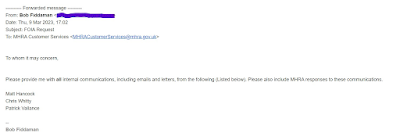
With this in mind, I took it upon myself to send the following to the British drug regulator, the MHRA. I deemed it as a Freedom of Information request (FOIA)

It was sent on March 9 and a receipt of acknowledgement was Sent back to me by the MHRA.

Click to enlarge

The MHRA claim that a Freedom of Information request can take up to 20 business days for a reply.

By late April, I had not received the information I requested so I sent them a reminder email to which they responded on April 28 with:

Click to enlarge


INQUIRY

It's now June 5 and despite a further 5 emails to the MHRA, I have still not received the information I requested back in March 9. Moreover, the MHRA have failed to reply to any of the 5 follow-up emails.

It was announced in 2021 that a covid inquiry would be taking place amid pressure from bereaved loved ones who were questioning the UK government response to the outbreak, Public hearings are scheduled to begin June 13 and last until 2026 and will be chaired by retired judge Heather Hallett.

WHATSAPP

Hallett has asked to see messages exchanged between former Prime Minister, Boris Johnson and more than three dozen scientists and officials over two years from early 2020. She also wants to see Johnson’s notebooks and diaries from the same period.

She is, in essence, requesting exactly what I have.

Last week, the government’s Cabinet Office filed court papers seeking to challenge Hallett’s order for the documents. Johnson, however, has somewhat distanced himself from the government’s stance by saying he is happy to hand over his messages. On Friday, he said he has sent the WhatsApp messages directly to Hallett’s inquiry.

I have to ask if my FOIA to the MHRA is connected to recent events. Did they know electronic messages would be requested by a future inquiry and have they been holding off sending me those electronic records so they can deny me access, citing a investigation and/or other legal matters as an excuse for denial?

One thing is certain, I've been sending FOIA's to the MHRA for nigh on 16 years, in the main these have been antidepressant related. I've seen MHRA CEO's come and go over the 16 years. My first contact with the MHRA was back in 2006. Back then, the then CEO, Kent Woods, personally emailed me. I even had a meeting with him to discuss my concerns regarding people struggling with SSRI withdrawal. Since his departure, around 2013, the MHRA, who were awful then, have spiralled into a state of decline.

Woods left the incestuous agency's revolving door and was followed by Ian Hudson. His appointment was a kick in the teeth for me. Hudson, for those who don't know, was the former Head of Safety at GlaxoSmithKline, the very same drug company who had threatened to sue me as they wasn't happy with my research on this blog. Hudson's tenure at the MHRA was uneventful and in 2019 the reigns were handed over to June Raine who is, today, the current Chief Executive of the MHRA.

Raine's 'leadership' has, at least, shown some clarity, she has highlighted the position of the MHRA but it's not a position that helps the public. Last year, Raine was part of a lecture given at Oxford University. She told the audience,  of ‘how the Covid pandemic has catalysed the transformation of a regulator, from a watchdog to enabler’.   

No mention in her lecture of the MHRA protecting the public from risk of unsafe medicines or vaccines.

To think (during Woods tenure) the MHRA and I were working together to better the Yellow Card Reporting System (I later declined to work with them after Woods wouldn't acknowledge the teratogenic side effects of paroxetine)

The MHRA are going about their duties and admitting, publicly, that they are a lapdog to the pharmaceutical industry (something I've known all along). They have now got to the point where they are refusing the public access to information that they have no right to refuse. (I see their refusal to answer my FOIA as a refusal to release.)

So, what now? Well, I could always seek an ombudsman to unravel the mystery of why my FOIA request is being ignored by the MHRA. It's a first for me as previous FOIA requests have always been answered.

Maybe I've hit on something they can't wriggle out of so they use the 'ignore him' tactic in the hope that I'll go away.

They, of all people, should know by now that isn't going to happen!

Bob Fiddaman


Thursday, May 25, 2023

TRIAL SET TO START ALLEGING BRAIN DAMAGE CAUSED BY ECT


Opening statements begin on Wednesday, May 31 in the trial of Jeffrey Thelen v. Somatics, LLC and Elektrika, Inc.

Jeffrey Thelen, a resident of Nebraska, underwent 95 ECT “treatments”, received between May 16, 2014, and July 25, 2016, which he alleges caused brain injuries and other harms. Thelen claims he sustained injuries, including brain injury, caused by Somatics’ ECT machine. The causes of action that will be tried are: (1) Strict Liability (Failure to Warn); and (2) Negligence. Somatics denies it was negligent and further denies that the ECT machine was defective as labeled.

The complaint, which can be read in full here, shows the injuries and on-going problems Thelen has endured. 

"The injuries Mr. Thelen sustained as a result of defendants’ shock treatment device, include but are not limited to, brain damage, neurocognitive injuries, severe permanent memory loss, significant decline in his ability to learn and recall information, a disruption and decline in his ability to encode new information, diminished quality of life, additional physical, physiological, psychological and emotional injuries and harms, and lost wages and earning capacity."


Thelen alleges that defendants negligently and intentionally concealed and failed to adequately disclose and warn about risks, including but not limited to, brain damage and permanent neurocognitive injuries associated with their shock treatment device. In addition to concealing risks, SOMATICS intentionally, recklessly and overtly misrepresented the safety and efficacy of the shock therapy device. 

ELEKTRIKA is a manufacturer and exclusive supplier of “Thymatron” ECT devices for SOMATICS. The lawsuit alleges ELEKTRIKA has failed to register with the FDA. 

SOMATICS stated on its website, “ECT remains the safest and most effective treatment for severe depression”. This is misleading and runs against what the FDA say about ECT. In fact, the FDA say the complete opposite, "...the long-term safety and effectiveness of ECT treatment has not been demonstrated.”

After settling an ECT brain injury litigation in 2018, SOMATICS revised its website to issue new warnings about adverse events associated with ECT and its Thymatron device – SOMATICS now for the first time warns on its website that, “in rare cases” ECT “patients may experience permanent memory loss or permanent brain damage.”

Prior to the settlement, SOMATICS, in a Patient Information Pamphlet, falsely stated that ECT does not cause brain injury, falsely stated that any memory loss issues are temporary and not permanent, falsely claimed that ECT actually improved memory and to further downplay the risks of ECT. The pamphlet, using spin, blamed the above adverse events as an 'underlying condition, other medications, and aging.'

According to Dr. Kenneth Castleman, biomedical electrical engineer and former Senior Scientist at NASA’s Jet Propulsion Laboratory, "...the amount of electric current that an ECT machine puts through a patient’s head is about 200 times what is considered dangerous for accidental electric shock, approximately 100 times what Tasers, cattle prods, and electric fences use, about the same as what is used for stunning pigs before slaughter, and roughly one-fifth as much as the electric chair. In addition, the amount of voltage applied to the head (460 volts) is about 400 times what is required to damage a single brain cell. Clearly this amount of electricity has the potential to cause injury to the brain.”.

This is definitely a trial to keep an eye on. Many people, including friends and followers of mine on Twitter, have been severely injured by ECT "treatment" and calls for those injuries to be acknowledged have been ignored, many safety advocates have often been ridiculed and called names for trying to raise ECT injury awareness.

I can't think of a better law firm than Wisner Baum to take on a case like this. I've been a fan of theirs since the early 2000s and have even attended one of their previous trials in Chicago (Dolin v GSK)

They get things done.

Period!

Attorneys for Mr. Thelen are Bijan Esfandiari and Monique Alarcon.

Bob Fiddaman


Wednesday, April 26, 2023

Woman Develops Cervical Cancer After Gardasil Shots


Caroline Cantera was 19 years old when she received her first of three Gardasil shots. She agreed to receive Gardasil after being convinced by Merck’s prolific marketing that the vaccine is very safe and prevents cervical cancer.

After receiving the shots, her life suddenly took a drastic turn as she was diagnosed with stage four cervical cancer.

Multiple biopsies, CT scans, MRIs, six rounds of chemotherapy, 30 radiation treatments, three brachytherapy treatments, and countless doctor visits, now she will never be able to have children of her own because her eggs are no longer viable due to the treatment.

A lawsuit has now been filed by Wisner Baum (formerly Baum Hedlund Aristei & Goldman) alleging Merck’s Gardasil HPV vaccine caused her to develop cervical cancer and other injuries. This is the first lawsuit to allege Gardasil can cause cervical cancer, the very cancer Merck asserts Gardasil prevents.

This from the Wisner Baum press release:

According to the complaint, Merck has never studied whether Gardasil prevents cervical cancer. Instead, Gardasil was tested to determine if it could prevent development of certain lesions, some of which are considered related to cancer, however, a majority of such lesions, even the most serious, regress on their own.  Not every HPV infection places one at risk for cervical cancer.  Only persistent HPV infections (not short-term or transient infections) in a limited number of cases may cause the development of precancerous lesions.

Public health officials have long recommended the Pap test as the most effective frontline public health response to preventing cervical cancer. Long before Gardasil was introduced to the market in 2006, cervical cancer rates had been plummeting by up to 80% with implementation of routine Pap testing. For those who are diagnosed with precancerous lesions or worse, cervical cancer is largely treatable if caught early.

Nonetheless, Merck sought fast-tracked FDA approval of Gardasil to fill a purported unmet need in preventing cervical cancer, with its expensive HPV vaccine.  Once approved, Merck engaged in a relentless marketing campaign falsely proclaiming that Gardasil was a “cervical cancer vaccine” and that any young girl vaccinated with Gardasil would become “one less” woman with cervical cancer, the lawsuit claims.

Merck's underhand and unscrupulous marketing was definitely a factor in Caroline's decision-making here and it highlights how vaccine manufacturers play down risks to maximise profits.

With vaccine manufacturers under public scrutiny, especially in the times we find ourselves in, it's imperative that justice be served here.

Cantera’s attorneys, Bijan Esfandiari, Michael L. Baum, and Monique Alarcon filed the complaint (Case No. 3:23-cv-00161) in U.S. District Court for the Western District of North Carolina as part of the Gardasil multidistrict litigation (MDL No. 3036).

Bob Fiddaman

Previously on this blog

"I don’t want this pain for other kids." ~ Victoria Trevisan, Gardasil Victim

Merck & Co Face Uphill Battle as Gardasil Lawsuits Consolidated

Parents of 13-year-old Boy File Wrongful Death Lawsuit against Vaccine Manufacturers, Merck


Wednesday, April 05, 2023

Merck's Gardasil Adverse Events Databases To Be Released


Merck forced to turn over all of its Gardasil adverse event databases.

U.S. District Judge Robert J. Conrad, Jr, recently ordered Merck to turn over all of its Gardasil adverse events databases to plaintiffs suing the pharmaceutical company for injuries allegedly caused by the human papillomavirus (HPV) vaccine.

Regular readers of my blog will know I've been covering the Gardasil litigation for quite a while now (Links at the foot of this post)

The Gardasil adverse events databases have been held under lock and key by Merck and up until Conrad Jr's order they had refused to make the entire Merck Adverse Event Reporting and Review System (MARRS) databases available to the plaintiffs’ attorneys.

In passing down his order, U.S. District Judge Robert J. Conrad, Jr, said, “Plaintiffs’ and their experts should have the same opportunity as Merck to review and analyze the entirety of the data.”

Common sense, plus a strong legal argument from plaintiffs' attorneys Wisner Baum seems to have seen the light of day.

Wisner Baum have have filed dozens lawsuits on behalf of young people injured by Gardasil, alleging Merck knowingly and fraudulently concealed the vaccine’s risks. There are also 80 pending in the federal court system and that number is expected to increase. Senior Partner, Michael Baum said, “Access to this full database of adverse event reports should allow experts to better analyze the full extent of post-Gardasil autoimmune symptom clusters, and demonstrate there is a “statistically significant causal connection between Gardasil and autoimmune conditions.”

Source: Brenda Baletti Ph.D

U.S. District Judges often come under heavy criticism for, seemingly, siding with large corporate companies such as Merck. Robert J. Conrad, Jr's order and subsequent reasoning for placing such an order has to be applauded here.

Not only should Plaintiffs’ and their experts have access to adverse reactions, the general public should too. Hopefully this data will be made public. It's important in light of recent news that a bill has been introduced in Sacramento to require students entering the 8th grade to have the HPV vaccine. Such a bill, if granted without first seeing MARRS databases, can potentially put patients at risk, patients such as those listed in the links below.

Bob Fiddaman

"I don’t want this pain for other kids." ~ Victoria Trevisan, Gardasil Victim

Merck & Co Face Uphill Battle as Gardasil Lawsuits Consolidated

Parents of 13-year-old Boy File Wrongful Death Lawsuit against Vaccine Manufacturers, Merck


Monday, February 27, 2023

Cancer Prevention Act Wants To Mandate HPV Vaccines for Children


ABC are reporting that a bill has been introduced in Sacramento to require students entering the 8th grade to have the HPV vaccine. This would apply to students attending public and private schools in California. The bill, known as the “Cancer Prevention Act,” introduced on February 9, 2023, by Assembly members Cecilia Aguiar-Curry (D), Blanca Rubio (D), Laura Friedman (D), Ash Kalra (D), Liz Ortega (D), Diane Papan (D), Wendy Carillo (D), and Senator Scott Wiener (D).

Dr. Jacob Lalezari, lead investigator of the 2005 clinical trials, said, "With this HPV vaccine, there is no legitimate debate, there are no side effects, there is no toxicity and it is now shown unequivocally to prevent infection and cancer, so there is no reason why young people shouldn't get this vaccine."

Lalezari also claimed, back in 2020, that leronlimab, a monoclonal antibody investigational drug under development by CytoDyn, Inc. (CytoDyn) would have saved the lives of most of the people who died of COVID-19, and reduce the need for ventilators.

Approx one year later, the FDA released a statement regarding the use of leronlimab for the treatment of COVID-19.

"With the conclusion of both the CD10 and CD12 clinical trials, it has become clear that the data currently available do not support the clinical benefit of leronlimab for the treatment of COVID-19."

In fact, said the FDA, "Taken together, the CD10 results indicate that most study participants experienced resolution in COVID-19 symptoms regardless of whether they received leronlimab or placebo."

So why did Lalezari claim, back in 2020, that leronlimab could save lives and reduce the need for ventilators?

Leronlimab is produced by the small Vancouver-based pharmaceutical company CytoDyn. Leronlimab was used by 800 patients as an experimental HIV drug. 

Jacob P. Lalezari, M.D., is the Medical Director of Quest Clinical Research in San Francisco, California, and interim Chief Medical Officer of CytoDyn.

Lalezari's claims that "there are no side effects, there is no toxicity" with HPV vaccines, therefore fall short given his previous claims about the use of leronlimab for the treatment of COVID-19.

More importantly, his 'no side effects' claim regarding HPV vaccines is dismissing injuries caused by Gardasil, a HPV vaccine produced by Merck. (Numerous links to these injuries at the foot of this post)

The bill, if passed, would require that the Gardasil vaccine be administered to all school-aged children attending grades 8 through 12 in California.

Meanwhile, hundreds of young women and men are suing Merck in numerous California state courts and in federal courts across the country, claiming Gardasil caused them to suffer serious and often debilitating side effects, including death.   

Californian attorneys, Wisner Baum, recently released a statement which included the following:

“Parents of teens who have been injured by Gardasil are up in arms about the bill.” Said Kathy Robi, a California parent of a daughter now consigned to a wheelchair: “This is not a vaccine that should be mandated.  There is no evidence Gardasil will prevent cervical cancer in the long term; it is entirely theoretical, based on studies testing only surrogate endpoints (lesions), not cancer itself, and like any medical intervention, Gardasil has risks, and those risks can be devastating.  Are the risks, which can include death, worth it?  I don’t think so.” 

Wisner Baum senior partner, Bijan Esfandiari, who represents hundreds of young women and men allegedly injured by Gardasil, said, “There is something wrong here and our children should not be subjected to a state mandate that turns them into guinea pigs and places them at a heightened risk for the very disease they are being told this vaccine prevents.” 

There is something seriously afoot here and those Assembly members who introduced the bill are either too lazy to read the facts or may have been hoodwinked by Merck's past statements that Gardasil is safe and effective. 

The links below highlight the complete opposite.

Bob Fiddaman

"I don’t want this pain for other kids." ~ Victoria Trevisan, Gardasil Victim

Merck & Co Face Uphill Battle as Gardasil Lawsuits Consolidated

Parents of 13-year-old Boy File Wrongful Death Lawsuit against Vaccine Manufacturers, Merck


Thursday, January 12, 2023

Name Change for Game Changers


Highly respected law firm, Baum Hedlund Aristei & Goldman, entering its 50th year representing clients, has a new managing partner and has now changed its name to Wisner Baum, LLP.

The move comes as the firm announced the retirement of long-time vice president, secretary, and senior shareholder, Ronald L. M. Goldman. The other named partners—Paul J. Hedlund and J. Clark Aristei—retired from the firm in 2018. Aristei sadly passed away in 2021.

Vice president R. Brent Wisner, Baum Hedlund’s lead trial attorney, will serve as Wisner Baum’s new managing partner. It's no surprise given Wisner's incredible track record of success in major cases after only 11 years of lawyering.

Wisner became the youngest lawyer in U.S. history to win a multi-billion-dollar verdict, which he achieved with a massive $2 billion jury verdict against Monsanto (Bayer) in 2019, less than a year after obtaining the first Roundup cancer verdict of $289 million against Monsanto in 2018. So far, he has negotiated mass tort settlements in excess of $1 billion.

With a plethora of awards and recognition behind him, Wisner said, “I am honored to have the opportunity to lead this firm into its next chapter and eager to continue the legacy that Michael Baum, Paul Hedlund, Clark Aristei, and Ron Goldman built,” adding, “Standing on the shoulders of giants, and I am very optimistic that the firm’s best days are ahead of us.”

Michael Baum, who served as the firm’s managing partner from 1993 to 2022, will continue his work at Wisner Baum as one of the firm’s three senior partners.

Back in 2011, I visited the old offices of Baum Hedlund Aristei & Goldman. I was in town to pick up an award and the BH office was a must see for me. I'd, up to that point, admired them from afar as I saw how they were successful in nailing Paxil manufacturers, GSK, to the mast, not only with settlements for plaintiffs but also in releasing previously unseen documents into the public domain.

I, quickly, became friends with Michael and his staff and was surprised that they knew of my work as a blogger and patient safety advocate.

In 2017, I travelled to Chicago to see Brent Wisner in action. Wisner was representing Wendy Dolin whose husband, Stewart, had tragically taken his own life due to the suicidal adverse effect of Paxil. Although the jury found for Dolin, this was later overturned by the Supreme Court. Nonetheless, Wisner was able to produce previously unseen documents and video deposition into the public domain. It was all very damning for GSK and, indeed, Paxil.

“Our ethos from the beginning was pure and simple: we wanted to use the law to help people who had been wronged and make the world a better place, ” adding, “As much as we have grown over the years, that philosophy has remained, and out of it grew a culture that has attracted talented lawyers like Brent who share the same mission. He is exactly the kind of lawyer and leader that will take this firm to new heights. Wisner Baum is in good hands.”

It's safe to say that this law firm are game changers when it comes to seeking justice against the huge corporate companies that have left thousands, if not millions, devastated by their illegal actions over the years. For that, we owe them a huge debt of gratitude.

Wisner Baum LLP can be followed on Twitter here, their website can be found here.


Bob Fiddaman


Please contact me if you would like a guest post considered for publication on my blog.