Zantac Lawsuit


Researching drug company and regulatory malfeasance for over 16 years
Humanist, humorist
Showing posts with label Dolin. Show all posts

Tuesday, January 08, 2019

Supreme Court Analyzes Merck's Ambiguous Wording


I'll admit it: I'm a legalese geek. But unlike certain companies peddling certain products, if I was too self-conscious to admit such, my failure to do so wouldn't hurt anyone.

Lately, I've been keeping a close eye on the court proceedings regarding Merck's Fosamax. Fosamax is a drug used in the treatment and prevention of postmenopausal osteoporosis. Ironically, Fosamax has been causing bone fractures in some consumers just as SSRIs can and do cause "depression," anxiety and akathisia in some consumers. But many Fosamax lawsuits haven't been heard by juries because Merck claims the company informed the FDA regarding bone fractures and the FDA failed to act by changing, or agreeing to change, the labeling.

The Merck case which was heard yesterday by the Supreme Court bears striking similarities to the GSK vs Dolin case. GSK also argued that it informed the FDA about the suicide links related to its Paxil product. (Paxil is an SSRI "brain pellet" that wreaks havoc among users while reaping billions in GSK profits. GSK claims it did everything to warn the public and doctors about Paxil-induced suicide risks. However, just as in the Fosamax case, GSK claims the FDA failed to agree to update the label.

Reading yesterday's Supreme Court transcript is fascinating and I highly recommend you download the 50-page transcript which is linked at the foot of this post. It provides an up-close look at how drug companies use the FDA's impotence to their advantage. Not only does the FDA fail to protect consumers, it proactively protects drug makers by serving as a revolving-door employment agency between pharma, the FDA and back again. Drug companies and the FDA create ambiguity and seem to enjoy a mutual understanding that this ambiguity will later be used to avoid lawsuits, protect shareholders and keep consumers in the dark regarding adverse drug effects.

Déjà vu: Dolin vs GSK

Wendy Dolin filed suit after her husband, Stewart, died when he jumped in front of a Chicago train. Stewart was taking a generic version of Paxil made by Mylan Pharmaceuticals, but GSK, the original manufacturers of Paxil, was responsible for the labeling and any subsequent label updates.

GSK tried to weasel its way out of a trial by citing the circumstances that Merck is now using as a defense in the Fosamax trials. GSK failed and the Dolin trial was heard by a jury who found for Dolin. Not only did the jury find that GSK was responsible for failing to warn consumers of the increased suicide risks created by Paxil, the jury also recognized that Paxil caused Stewart to suffer from akathisia, an adverse drug effect, prior to his death. Dolin was awarded compensation for both Stewart's Paxil-induced death and for Stewart's Paxil-induced suffering prior to his prescribed demise.

The Dolin trial, which lasted six weeks, ended with the jury awarding Wendy Dolin $3 million. But GSK appealed and the jury's decision was later overturned by the Seventh Circuit Court of Appeals. The overturned ruling didn't relate to the jury's finding that Paxil caused Stewart's death. Rather, it related to whether the label and failure to update the label, was the responsibility of GSK or the FDA. Dolin appealed but the Seventh Circuit refused to reconsider its decision to overturn the verdict. Dolin has taken her case to the Supreme Court where attorneys representing victims of Fosamax were yesterday.

A bit confusing, perhaps, but in short: Dolin won and GSK appealed. GSK won and the Dolin case is now in the hands of the Supreme Court.

Dolin's attorneys, Baum Hedlund, likely kept tabs on yesterday's proceedings given Merck's defense is similar to GSK's. The pharmafia conveniently blames its buddies at the FDA because partners in crime don't squeal on each other. Their silent pact sometimes helps both legally avoid responsibility for harming and killing unsuspecting consumers.

Like GSK, Merck is attempting to blame the FDA. Both companies try to adeptly muddy the legal waters so much so that jurors-even those who find the product causes adverse effects-become confused about who, exactly, should be accountable for faulty labeling and related tragic outcomes.

In cases such as Dolin vs GSK, it seems the amount awarded to plaintiffs is sometimes reduced not because the jury doesn't believe the product causes harms, but because the jury is effectively confused by pharma's legal strategy to "blame" its FDA pals. At the end of the day, pharma execs and FDA regulators likely slap each other on the back over dinner and drinks and cryptic "atta boy" correspondence. The end result is that consumers harmed by pharmaceutical products are further harmed by these cozy corporate/FDA ties.

Stress Fractures vs Emotional Lability

Merck is claiming that the FDA denied Fosamax label updates after it was learned a large number of atypical femoral fractures occurred among Fosamax users. Merck claims it proposed a change to the label but the FDA told them the wording in Merck's new proposal was inadequate. The FDA's complete response letter, in essence, said it didn't believe Merck had done a decent job with their proposal to change the label. Therefore, the FDA covers itself by responding to pharmaceutical companies and pharmaceutical companies understand they are essentially off the hook given the FDA won't follow up regarding proposed label updates and pharma won't either.

Merck did indeed inform the FDA about Fosamax related fractures but Merck labeled them stress fractures and not atypical femoral fractures. Thus, when the FDA read Merck's proposal for a label change they may have assumed these stress fractures were a relatively minor adverse drug effect. The FDA tends not to include extensive risk info in patient information leaflets because doing so might prevent consumers from seeking drugs as "treatment."

GSK used the same Merck tactic with its Paxil product after it was forced to acknowledge the number of suicides related to Paxil that occurred during Paxil clinical trials. GSK didn't tell the FDA that Paxil can cause adults to end their lives when suffering from a terrifying Paxil-induced condition called akathisia. Instead, GSK labeled suicidality as "emotional lability" just as Merck labeled atypical femoral fractures as simply "stress fractures."

Tossing the Egg

Imagine the CEO of an egg factory learns that many eggs contain bacteria that can cause serious harm and/or death to consumers. The CEO contacts a government regulator and says they have a problem. The government regulator doesn't think it's a severe problem and simply tells the egg factory to monitor the situation. But the egg CEO only told the regulator part of the story, stating that many eggs were cracked. The CEO didn't mention the bacteria inside the eggs that had grown as a result of said cracks.

It's a win-win for the egg factory. They can continue to sell eggs that are cracked, further, if a wrongful death lawsuit is brought against them, they can deny liability by stating, "We warned the government regulator but they decided not to do anything about the problem."

Both GSK and Merck had secrets hidden in their cracked eggs. The eggs were never fully opened by either company and the FDA only took a sneak peek through the cracks. GSK and Merck don't believe a jury should decide whether the FDA would have approved a label update had either company submitted an updated label change after receiving a first response from the FDA. Both companies claim the FDA wouldn't have sanctioned a second proposed label change. These companies are making assumptions, assumptions they aren't entitled to make despite that the CEO's likely have learned what to expect from their FDA friends.

Why nobody has thought to subpoena the current FDA Commissioner, Dr. Scott Gottlieb, is beyond me. Put Gottlieb on the stand, make him take an oath and ask him the very same questions the judges and legal teams are fighting over. Then again, Gottlieb would probably side with the drug companies given the FDA's incestuous relationship with pharma.

GSK, Merck and the FDA enjoy having their cake and eating it, too. But I doubt they use cracked eggs when together they cook up their half-baked legal excuses.

Bob Fiddaman


Merck Supreme Court Transcript

Wendy Dolin Petition to Supreme Court


Saturday, April 08, 2017

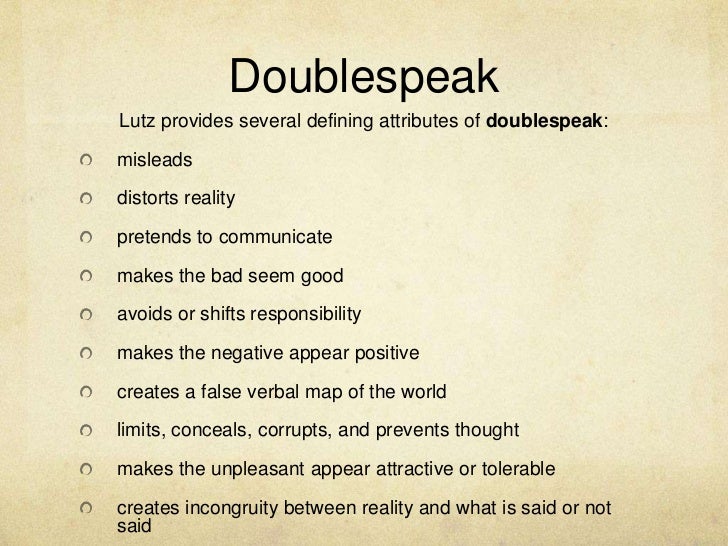
Paxil Label: Doublespeak


In textbooks, manuals, and some types of web writing, boldface is often used to highlight the first instance of an important keyword that is central to the subject of a chapter or article. (1)

I guess we can now say, with confidence, that this also applies to warning labels for SSRIs.

Let's just take a look at the current Patient Information Leaflet (PIL) for Seroxat, which was last revised on  11 January 2017.

**Seroxat is the European brand name for paroxetine. In the US and Canada the brand name used is Paxil.

Click to enlarge

Why use a boldface font across the words "young adult"?

Well, according to the description quoted at the head of this blog post, "boldface is often used to highlight the first instance of an important keyword that is central to the subject of a chapter or article."

So, the 2017 warning label clearly shows that it's important for patients and healthcare professionals to know that the current paroxetine label emphasizes that being a young adult puts you at an increased risk of suicidal behaviour whilst taking antidepressants. Remember, this is taken from the current Seroxat (Paxil) PIL.

Why do we not see the same for all adults?

Also, whose idea was it to use boldface on the words "young adult"?

This is something I put to the MHRA Pharmacovigilance team:

Could you please explain why "young adult" is in boldface type font and who made the decision to include "young adult" in a boldface type font?

It's important to note, before I publish their response, that MAH stands for Market Authorisation Holder which, in essence, means the manufacturer of the product.

Below is the answer MHRA sent.  Please note: MHRA's punctuation and spelling errors are as received. Ironically, my post today is about the importance of words used in drug labeling--words the MHRA accepted. Given that the MHRA doesn't take the time to check its own correspondence, they likely apply the same carelessness when approving drug company's labels.

MHRA's haphazardness is unprofessional; But the former (MHRA's letters) simply make their communications department look bad, while the latter (MHRA's labeling) is extremely hazardous to consumers...

Wednesday, April 5, 2017

Dear Mr Fiddaman

The SPC for Seroxat includes the following:

A meta‑analysis of placebo‑controlled clinical trials of antidepressant drugs in adult patients with psychiatric disorders showed an increased risk of suicidal behaviour with antidepressants compared to placebo in patients less than 25 years old (see also section 5.1).

As the above suggests that this particular age group are most at risk, the MAH will have suggested the emboldening of the text within the PIL. There are fors and againsts the use of emboldening, but in this particular case it has been considered appropriate.

--

I asked for further confirmation of this and was told...

Thursday, April 6, 2017

Dear Mr Fiddaman,

The emboldening would have been proposed by the MAH, who is this case are Smithkleine Beecham limited (part of the GSK group).


Kind regards,
--

So, there you have it folks. GlaxoSmithKline suggested that words "young adults" be highlighted in boldface font. As you will see from the current Seroxat Patient Information Leaflet there is no such boldface font for adults over the age of 24.

Surely, the FDA (the American drug regulator) would have also been in the same position as the MHRA, right? Did GlaxoSmithKline also suggest to the FDA that they should boldface the words "young adults"? If so, why didn't GlaxoSmithKline suggest the same for adults over the age of 24 given that the rate of suicidal behavior for adults over 24 taking Paxil showed a nearly 9-fold increase?

Don't GlaxoSmithKline have a responsibility to protect this patient population from potentially fatal or disabling risks like this?

I'm at a loss here. Who is actually protecting the adult consumers with regard to potential suicide risks with GSK's Paxil?

It appears through all the bickering between GSK and the regulators about which entity is responsible, they've both forgotten that, in the meantime, consumers are still taking a drug that is potentially life-threatening. You cannot stress a warning in boldface to one individual age group and, seemingly, ignore another age group. This is inadequate and misleading to both prescriber and patient, regardless of how GlaxoSmithKline wish to paint it.

The current Paxil warning label shows a distraction from the whole truth, it's procrastination, it's misdirection and it's doublespeak, with the sole aim of hiding the whole truth whilst offering a morsel of truth. It's lying by omission. Magicians and illusionists do the same thing because they don't want to show you how they are conning you, they will draw your attention to one thing whilst hiding another thing (the secret) - This is exactly what GlaxoSmithKline are doing, although they have been clever, they are showing a glimpse of the truth but carefully distracting you away from it by using boldface font.

Now, where have I seen American lawyers representing GSK arguing that warnings for suicide, over the age of 24, have been placed on their labeling, and that those warnings are adequate and not vague? Not vague? I'd suggest this was a boldface lie, or, at the very least, lying by omission.

Bob Fiddaman


(1) Boldface text - grammarist.com

Court transcripts from the Dolin Paxil trial

Wednesday, August 03, 2016

Glaxo's Beef With David Healy Part II


Following on from Glaxo's Beef With David Healy, which I wrote about back in October 2015.

Back story.

In summary, Wendy Dolin has filed a suit against Paxil (Seroxat) manufacturers, GSK, alleging that Paxil caused the suicide of her husband, Stewart. Since filing Wendy has been subject to GSK's defence lawyers subpoenaing her cellphone and text message records, her home phone and her late husband's company phone. King & Spalding, GSK's defence team, have also asked Wendy about her love life and shown the private medical notes of her later husband to her children.

Not content with targeting a grieving wife, GSK have also singled out David Healy, an expert called by Dolin in the case against GSK.

In short, they have claimed that Healy should not be allowed to give evidence in the trial, he's not credible, he has a bias, he's telling people to go out and kill.

It's all hot air, much of which has been cherry-picked from Healy's blog and, in some instances misquoted and misguided - for example GSK's highly paid law team, who must have combed through Healy's blog by borrowing their client's rat-infested flea comb have claimed Healy has said things when in actual fact he hasn't, it's been comments left by others on Healy's blog - so much for crossing the T's and dotting the i's, huh?

Anyway, you get the gist, right?

GSK target the person filing the suit against them then, after failing, they then target that person's expert witness. You just have to love how King & Spalding operate at times.

Well, they failed in getting Healy's testimony thrown out. In fact, they wanted all four of Dolin's witnesses to not have their testimony's aired.

 They were denied these motions by Judge James B. Zagel who, in summary, said...

“I am denying all four of GSK’s motions to exclude. The Daubert criteria are satisfied when a well-credentialed expert provides well-supported opinions that are relevant and reliable.”

One would have thought that was that - but remember, we are dealing here with a pharmaceutical company (and their attorneys) who will try everything in the book when the defence of Paxil becomes so weak.


GMC BACKGROUND

In 2013 Healy found himself under the spotlight after a patient in his care suicided. This event spurned a review by Betsi Cadwaladr University Health Board (BCUHB) who, for reasons not known, hired an external consulting Psychiatrist, Dr. Robert Higgo to take a role in the review process.

The review, according to Healy, was meant to examine the circumstances surrounding the incident. Higgo, in his review, accused Healy of misconduct.and submitted his findings to the BCUHB.

In response to Higgo's allegations the BCUHB...

(1) initiated an internal investigation to examine the allegations

and

(2) sent a referral to the GMC to explore whether there was any misconduct that would raise concern about Dr. Healy’s fitness to practice medicine.

To cut a long story short, Healy was exonerated by the GMC. They concluded...

"As Dr. Healy had stated from the very beginning, that Dr. Higgo’s report was unfounded and that Dr. Healy did not engage in any conduct putting his fitness to practice medicine into question."

So, Healy was cleared. Here's where it gets interesting.

While in America, Healy was tracked down by attorneys who served him with a subpoena, the gist of which was that he should produce all documents concerning the BCUHB and GMC investigations.

No guessing who those attorneys were.

Healy refused, citing that it would jeopardise his employment as a physician and documents that were deemed privileged and confidential by BCUHB.

GSK then filed a motion to the court, basically demanding that Healy produce the documents.

The court asked to see the document in chambers (ie; just them and not GSK) so they could make a decision as to whether these documents were relevant to the Dolin case, moreover, relevant to GSK's argument that Healy's testimony in the Dolin case should be heard.

Healy handed over the documents to the court in July last year.

It was during the courts review of these documents that GSK filed motions for Healy to be dismissed as an expert witness - as previously mentioned, the court denied them this.

But, on and on they go. GSK now wish to conduct a hearing with Healy before the Dolin trial date of January 2017. Dolin, via her attorney, Brent Wisner of Baum, Hedlund, Aristei & Goldman, sent another letter to GSK indicating that...

“...in light of the recent ruling by the General Medical Council (“GMC”) clearing Dr. Healy of wrongdoing, this proceeding is no longer necessary or relevant.” 

Furthermore, plaintiff added that if GSK wish to pursue this matter then  she (Dolin) would like to conduct targeted discovery related to GSK’s interactions, if any, with GMC and Betsi Cadwaladr University Health Board (“BCUHB”)

Has the penny dropped yet?

The GMC exonerated Healy but now, it seems, GSK want their own kangaroo court to attack him even further.

In a quite genius twist Dolin's legal team have now asked the court that if GSK are granted a special hearing with Healy before trial then they request that plaintiff should be permitted to conduct targeted discovery relating to any influence GSK may have had in BCUHB’s or the GMC’s investigation of Dr. Healy.

In short, Dolin is asking for...

All documents reflecting communications between GSK or its agents, including counsel representing GSK, and Robert Poole, Robert Higgo, Giles Harborne, Matt Makin, Alberto Salmoiraghi, Peter Higson, or anyone at Betsi Cadwaladr University Health Board that mention or discuss Dr. David Healy.

All documents reflecting any payments or monies by GSK or its agents, including counsel representing GSK, to the aforementioned.

They've requested the same documents between GSK and the GMC too.

I wouldn't put it past anyone connected with GSK to find ways to sling mud at one of their biggest critics - I've heard the 'bullet left on a car story' but thought it was just folklore - I'm seriously beginning to think there was merit in that claim from a plaintiff who went up against GSK many years ago... apparently they wouldn't accept GSK's offer, next thing they know, there's an empty bullet casing left on their car...but that's another story.

Who needs John Grisham, huh?

The whole sordid affair, or rather matter of affairs, has me wondering if GSK's UK legal team will go down the same road when defending Paxil in a UK lawsuit next year. Just over a hundred people have filed a group action claiming they suffered as a consequence of withdrawing from Paxil. In 2002 GSK settled over 3,000 similar cases in the United States but, for one reason or another, GSK won't settle with those who make the same claims against them in the UK.

Will they be mud slinging Healy et al again, or bloggers for that matter?

The motion to vacate the 'special hearing' was filed by R. Brent Wisner on August 1.


Author's note.

Researching pharmaceutical companies, in particular GlaxoSmithKline, over the past ten years or so has taught me a few things when it comes to litigation.

1. The pharmaceutical company will defend cases in antidepressant related suicide, homicide, birth defects and withdrawal - even though the drug in question has been proven to cause such adverse reactions - they will, under oath, admit their drug can cause all of the above but will refute that (in the case they are defending) it did not cause x,y, or z to kill themselves or cause induced homicide, birth defects or horrific withdrawal problems.

2. They will drag litigation out for as long as they can, throwing subpoenas left, right and centre - they will object to this and that and will file motions in the hope that plaintiffs attorney's will spend more - thus settle at a later date for a meagre offer - See the Paxil birth defect case - Joanne Thomas v GlaxoSmithKline here and here.

3. They like to show their teeth. It's a way to stop further litigation against them. The actions in the case of Dolin v GlaxoSmithKline is basically a stark warning being sent out to anyone who may have ideas of going up against GSK in the future. It doesn't matter if you lost your child to suicide or had to abort your child due to birth defects caused by Paxil - or if you lost your job and marriage due to horrific Paxil withdrawal - you are dealing with a company that shows no empathy - it's an entity that is psychopathic - it cares not a jot about personal feelings - Grinding its teeth and digging its heels in is just an advertisement by proxy. The message being, Oppose us and we will make your life a complete misery. They not only do this with people who bring claims against them, they do it with expert witnesses who go up against them. One only has to look at the way they have targeted David Healy - it's not just about targeting Healy, it's about sending a message out to other future expert witnesses.

That's my take on things anyway.

Anyone know how the ruckus between David and Goliath finally ended up?

Answers on a postcard to King & Spalding.


Bob Fiddaman


Related

Court document shows how a jury, in 2001, found GSK's Paxil responsible for inducing suicide and/or homicide.


Saturday, November 21, 2015

GSK: Motions Denied in Paxil Suicide Case


Earlier this year I reported on how GSK, via their team of highly-paid lawyers, had targeted four expert witnesses that were due to give evidence in (Dolin v. SmithKline Beecham Corp. et al., case number 1:12-cv-06403)

For those that don't know, Wendy Dolin had filed suit against GSK claiming that their antidepressant, Paxil, had induced the suicide of her husband, Stewart. Since filing, Wendy has, just like the four expert witnesses due to give expert opinion supporting her claim, has come under fire from GSK. In fact, Wendy Dolin has been sent more than 30 subpoenas from GSK, they have also made over 70 record requests and have shown the Dolin children their father's private medical notes. To top it all, GSK's lawyers have been asking (goading) Wendy about her love life since her husband killed himself.

Not satisfied with targeting a bereaved wife, GSK then turned their attention to four expert witnesses. One of those witnesses, Dr. David Healy, came under heavy fire from Glaxo's gunslingers, King & Spalding. They had accused Healy of being a radical activist who held an extreme bias against GSK (insert tears here). Furthermore, GSK had probed into Healy's private life and had, during a 10 hour deposition, talked more about his finances than the actual science behind Paxil and induced suicide.

The decision is in folks and.... (drum roll)..

GSK have been roundly trounced.

Judge James B. Zagel, in summary, said...

"I am denying all four of GSK’s motions to exclude. The Daubert criteria are satisfied when a well-credentialed expert provides well-supported opinions that are relevant and reliable. My decision does not, however, mean that the reliable opinions of all four of these expert witnesses are correct—reliability is a measure of consistency of opinions, not necessarily a measure of correctness. Such a determination will be the job of a fact-finder at trial."

Healy, along with three other experts, namely; Dr. David Ross, Dr. Joseph Glenmullen, and Dr. Roger Grimson, will now be allowed to offer their expert opinions in the Dolin case, something that GSK have fought desperately hard to suppress and, as I suspect, may now be the factor in some sort of settlement being agreed upon.

This isn't the first time GSK have faced claims that Paxil induces suicides in adults. In 2001 a jury returned a verdict that Paxil was responsible for inducing homicide and suicide in Don Schell, who had, some years previous, shot to death his wife, daughter and granddaughter before turning the gun on himself.

Glaxo were ordered to pay $6.4 million to the remaining family members.To the layman, it beggars belief why Glaxo would oppose the claims of Wendy Dolin given that they have already lost one Paxil induced suicide case. The mud-slinging and goading of plaintiff and expert witnesses doesn't surprise me in the least, it's what I have come to expect of Glaxo and their defence lawyers. Wendy Dolin isn't the first plaintiff to have pressure put on her by Glaxo, she won't be the last. Healy et al aren't the first expert witnesses to have mud thrown at them, again, they won't be the last.

If anything, this ruling has shown Glaxo that no matter how hard they try to suppress those who wish to seek the truth, they will always fail.

I hope the Dolin case goes the whole hog and isn't settled. To put Paxil in the public eye (yet again) is something that needs to be done. The message that this antidepressant can cause homicidal and suicidal acts needs to be repeated. It is, in my opinion, a menace to society just as, I believe, GlaxoSmithKline are. Yeh, okay, we will have those that say Glaxo have saved millions of lives with vaccines and have helped millions of people with various respiratory diseases, fair enough, I guess, but that does not give them the right to market and manufacture drugs that can induce homicide and suicide - it's akin to the defence of a serial killer, 'He donated to charities every week your honour, so what if he killed a dozen or so adults, he's a decent man, at heart."

Glaxo need to step up to the plate. They need to compensate Wendy Dolin for her loss, they need to stop pussy-footing around and acknowledge that defending Paxil in suicide cases is a fruitless exercise, they know it, their shareholders know it and the general public know it. Paxil is a nasty drug that causes more harm than good. Glaxo claim Paxil has helped millions of people worldwide but just like the fictitious serial killer above, they throw a blanket over the darker side of Paxil, the induced homicide and suicide, the birth defects, the horrific withdrawal suffered by those trying to stop Paxil.

It will be interesting to see what Glaxo's next step is regarding the Dolin case. They've thrown pretty much everything at the grieving widow but she has stood firm and remained strong because she knows that the truth will, eventually, out.


Bob Fiddaman


Tuesday, October 13, 2015

Glaxo's Beef With David Healy


I've been watching the proceedings of a current trial in the US. It involves the wife of a man who killed himself shortly after being prescribed Paxil.

If you are like me, a bit of a geek when it comes to reading court documents, then you will just love this.

It plays out like a John Grisham novel. Here we get to see the mechanics of defence lawyers, particularly when it comes to allowing expert witnesses to offer evidence against the company they are representing, in this instance, GlaxoSmithKline.

Background:

In June 2010 Stewart Dolin visited his family doctor who wrote him a prescription for Paxil for "work-related anxiety and depression".

Dolin's prescription was dispensed but he received the generic form, manufactured by Mylan.

Six days after beginning his course of the generic Paxil, Dolin left his office shortly after having returned from lunch with a business associate. He walked to a nearby Chicago Transit Authority Blue Line station at Washington and Dearborn in downtown Chicago. As a northbound train approached the station, Mr. Dolin leaped in front of it to his death. Blood tests taken with Mr. Dolin’s autopsy were positive for paroxetine.

Stewart's wife, Wendy, filed suit against GSK. (Dolin v. SmithKline Beecham Corp. et al., case number 1:12-cv-06403)

Motions:

GSK have filed so many motions in this case. Basically, they write to a judge asking him to make a decision on claims they make. In the case of Dolin they first claimed that, although Stewart Dolin had taken paroxetine, it wasn't their brand. In fact, the brand that Dolin had taken was a generic form, manufactured by Mylan and not GlaxoSmithKline.

On March 4, 2014, an Illinois federal judge determined that GlaxoSmithKline PLC can be held liable for a suicide even though the consumer took a generic version of the antidepressant Paxil, (Source)

Next form of defence for Glaxo's highly paid law team, King & Spalding, was to target the person bringing the claim against them. In this instance, the wife of the deceased, Wendy Dolin.

GSK's defence lawyers subpoenaed Wendy Dolin's cellphone and text message records, her home phone and her late husband's company phone.

Wendy then filed her own motion stating that she had already complied with what she characterized as GSK's intrusive discovery requests, and accused GSK of excessive prying that would not end without the court's intervention.

Furthermore, Wendy claimed in her motion that GSK had sent more than 30 subpoenas and over 70 records requests, and shown the Dolin children Stewart Dolin's confidential therapy notes despite Wendy Dolin's objections.

GSK has also taken hours of deposition testimony from her and grilled her about her personal medical information and her romantic life since her husband's death, according to her motion.

On September 12, 2014, Dolin and GSK came to a "resolution" regarding Glaxo's contentious subpoena. The resolution has, to date, remained confidential.

So, in attempts to, what can be seen as dragging the case out, King & Spalding have now turned their attentions on experts called by Dolin. One such expert witness is Dr. David Healy.

Healy and colleagues, earlier this month, published a damning report on Glaxo's handling of Study 329, a clinical trial involving adolescents and the use of Paxil. Glaxo had, back in 2001, claimed Paxil was safe and efficacious in this patient population. Turns out, they were lying and just spun the results, putting thousands of teens at risk - See (Restoring Study 329)

Fair to say then that Healy is not on Glaxo's Christmas card list.

Muddy the waters:

So, what does one do with criticism, what does one do to suppress the truth?

We've seen the above tactics of GSK's highly paid law team.

1. Claim it's not our drug, ergo not our responsibility

2. Throw endless subpoenas at the person bringing the claim, including delving into her late husband's phone records in the small hope they can find a crumb of evidence that will help them suppress the truth about the Paxil suicide link in adults.

3. Show the children of the deceased personal confidential therapy notes from their father.

4. Grill the widow about her medical background and romantic interests since the death of her husband.

Way to go King & Spalding, you're basically a mirror image of the clients you represent (my opinion "Todd" - see disclaimer at foot of blog - it's been there for years)

Not satisfied with raping the memory of Stewart Dolin, King & Spalding have now turned their attention to David Healy.

Now, I'm not going to blow smoke up Healy's ass, he's one of the good guys, that's all you need to know. He raises awareness because he cannot just stand by and watch bad drugs do harm. That alone should be applauded. Healy has a lot more to lose than your average blogger (myself included). He puts his career on the line by speaking out, it's one hell of a sacrifice. He could have quite easily closed his eyes but he has something that we all have, something that only those with blackened hearts suppress.

Conscience.

King & Spalding nefarious, nae rabid, attack on Healy is not too dissimilar to the raping of Stewart Dolin's memory.

So, what's this motion about?

Well, according to King & Spalding, Healy should not be allowed to give evidence in the trial, he's not credible, he has a bias, he's telling people to go out and kill.

Yup, you read that last bit correctly.

GSK's motion to exclude Healy is a work of art, the kind of art many of us don't understand. It's a huge pile of excrement carefully sculptured by the expert hands of King & Spalding's finest. Ironic that this huge pile of steaming cak is called a motion!

Here's some of the reasons why they don't want Healy to give evidence.

1. Dr Healy is not qualified to testify because of his radical advocacy and extreme bias against GSK.

Oh, boo hoo. Naughty Dr. Healy having an opinion on GSK. Since when did someone with an opinion become a radical activist?

Would this actually have something to do with the fact that Healy has, in the past, given his expert opinion in the cases of Kilker vs GSK and Tobin v GSK. In both cases jury's found GSK guilty. The Kilker case saw GSK's Paxil ruled as the cause of Lyam Kilker being born with birth defects. In the Tobin case a jury found that Paxil was the proximate cause of Donald Schell taking a gun to family members, killing them, then killing himself.

GSK, don't, it appears, think so. They claim Healy, via the medium of his blog, has, in the past, claimed that “the pharmaceutical industry ‘rapes’ patients,” that he “compares GSK’s insistence on  statistically-significant findings to sexual abuse by Catholic priests,” and that GSK’s “widespread cover-up of adverse events dwarfs the Nazis’ cover-up of the Holocaust.” 

Here's the rebuttal of Dolin's attorneys.

Dr. Healy never stated that pharmaceutical companies “rape” patients, but specifically defined a concept that he calls “pharmaceutical rape culture” which he defines as a “concept that examines a culture in which harm from pharmaceutical products is pervasive and normalized due to societal attitudes about  medicine and health care.” Dr. Healy specifically distinguishes pharmaceutical rape culture from actual rape, but draws cultural parallels to the way society reacts to the problem, i.e., blaming the victim. 

Similarly, Dr. Healy never compared GSK’s insistence on statistical significance to “sexual child abuse.”  Dr. Healy’s blog entry simply discusses how the Church’s use of Canon Law to disregard state and federal law parallels how pharmaceutical companies “actively attempt to over-ride the legal systems of the United States and other countries with claims that unless findings are demonstrated in controlled trials to a statistically significant extent that they simply aren’t happening.” 

Finally, GSK’s reference to the Holocaust is not only inaccurate, it is offensive.  Dr. Healy made a passing reference to the Nazis in his blog entry to illustrate the fact that pharmaceutical companies have actively sought to hide risks from patients and authorities using a myriad of methods.  The specific quote is: 


[Pharmaceutical companies] have taken astonishing steps to prevent decent reporting, or to denigrate reporting when it happens, and to manage the perception of risk rather than risks themselves.  If the Nazis had access to [their] bag of tricks, there would be real and widespread doubt that the Holocaust ever happened.  

At no time did Dr. Healy suggest or even insinuate pharmaceutical cover-up of adverse events “dwarfs the Nazi’s cover-up of the Holocaust.”  This sort of inflammatory and misleading...

--

Personally, and this is just my opinion, I think that King & Spalding paralegals and other staff have, seemingly, trawled through Healy's blog as a reporter for the National Enquirer would. The sole purpose is to dismiss his beliefs whilst trying to find cherry-picked sentences that they feel may incriminate him, and, furthermore, persuade a judge that Healy is some sort of crank.

For the record, the "pharmaceutical rape culture" reference was actually a blog post by another blogger.

Is it me, or does anyone else think these highly paid attorneys can't do their job properly?

Dolin's attorneys added that Healy "...discusses topical and controversial issues and he does so with poetic license."

GSK then, quite remarkably, decided to look into the phrase, "poetic license."

Weeks after the rebuttal of Dolin's legal team GSK then attached as an exhibit  a "true and correct copy of the online Oxford Dictionary definition of poetic-license."

Since when did GSK start using the Oxford Dictionary?

Here's part of a transcript from BBC Panorama. Journalist, Shelley Jofre was interviewing Glaxo spokesperson, Alistair Benbow. Ironically, the subject of definition came up.

BENBOW: Addiction is characterized by a number of different criteria which includes craving, which includes increasing the dose of drugs to get the same effect, and a number of other features and these are not exhibited by Seroxat.

JOFRE: That's not, with respect, what the Oxford English Dictionary says. It says addiction is having a compulsion to take a drug, the stopping of which produces withdrawal symptoms.

BENBOW: If you use that limited description of addictive then most prescription medicines could be defined as addictive.


So, on one hand the Oxford English Dictionary gives a true and correct definition, yet on the other hand the Oxford English Dictionary only gives a limited description!

Come on Glaxo, you can't have it both ways. If, as they claim, the dictionary (provided as an exhibit) gives a true and correct definition then Benbow telling Jofre that the same dictionary only gives limited descriptions was an actual lie... or was it just an opinion of Benbow, one that was radical and, dare I say it, biased.

GUN-TOTTING HEALY

One of the most ludicrous claims of GSK was that Healy, once again through the medium of his blog, suggested that "it would be reasonable for people who have lost loved ones due to alleged drug side effects to take violent revenge against pharmaceutical executives or editors of the New England Journal of Medicine."

Based on this one paragraph GSK accused Healy of inciting violence against GSK’s executives and medical journal editors.

(Insert laughter here)

(Change your underwear here)

As Dolin's attorneys put it, "Healy is expressing concern that discord is “brewing” and that absent action, there could be violence.  Dr. Healy expressly condemns such violence. "

As I said a the top of this post, I'm a bit of a geek when it comes to reading court documents. Whilst reading through GSK's motions I've had Nescafe shoot down my nostrils, reached the point of apoplexy, so much so that I had to bite the arm of my chair, and, been to the bathroom to avoid any embarrassment of urinating myself.

Healy's deposition was supposed to be about science, in actual fact GSK's attorneys chose, for at least 90% of the 10 hours, to talk about Healy's blog, his financial accounts, and every other avenue that they could think of - rather than deal with the science.

If anything, these motions merely highlight the lengths GSK and their legal representation, King & Spalding, will go to as to avoid the Paxil/suicide link being, once again, publicly aired.

Other experts for Dolin have also come under fire from GSK. More mud-slinging, more cleverly crafted piles of poo.

Those King & Spalding offices, I believe, need fumigating.


Bob Fiddaman. (Using Benbow's poetic licence)


Source: Public Access to Court Documents (Pacer) 

Wendy Dolin is represented by Bijan Esfandiari, Michael Baum, Frances Phares and R. Brent Wisner of Baum Hedlund Aristei & Goldman PC


Please contact me if you would like a guest post considered for publication on my blog.