Zantac Lawsuit


Researching drug company and regulatory malfeasance for over 16 years
Humanist, humorist
Showing posts with label GLAXOSMITHKLINE. Show all posts

Saturday, September 17, 2022

Zantac - The Heartburn Medication on Trial


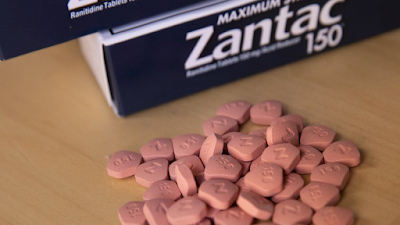
There's been much talk about the popular heartburn medication, Zantac (ranitidine) causing cancer after independent laboratory testing found that one ranitidine 150 mg tablet produced 304,500 nanograms (ng) of a cancer-causing substance called N-Nitrosodimethylamine (NDMA), an amount that greatly exceeds the U.S. Food and Drug Administration’s (FDA) daily acceptable intake limit of 96 ng.

After learning this, the FDA, in April 2020, requested Zantac be removed from the market.

Zantac is manufactured by many pharmaceutical companies, several of whom have recalled it, citing "safety concerns."

The following types of cancers have developed in some people who took the Zantac:

Bladder cancer

Esophageal cancer

Gastric cancer / stomach cancer

Liver cancer

Pancreatic cancer

Prostate cancer

Breast cancer

Lung cancer

Colon cancer

On September 15, 2022 , Baum Hedlund Aristei & Goldman, attorneys headquartered in Los Angeles, California, filed Zantac lawsuits on behalf of thousands of people throughout the country who allege exposure to ranitidine causes cancer. The filing of 88 complaints on behalf of 7,291 claimants is one of the largest on behalf of Zantac cancer victims in 2022.

Allegations against the defendants, namely, GlaxoSmithKline (GSK), Pfizer Inc, Patheon Manufacturing Services LLC, Boehringer Ingelheim, and Sanofi, include:

Failure to Warn 

Manufacturing Defect 

Negligent Product Design

Negligent Manufacturing

Negligent Misrepresentation

Baum Hedlund's press release states, "...the defendants knew that Zantac (ranitidine) could degrade into a potent human carcinogen, NDMA, in the regular course of transport and storage, and within the human body, but failed to take any action to prevent consumers from being exposed." Furthermore, they add, "...lawsuits maintain that Zantac’s manufacturers made billions selling a product they knew posed an unreasonable risk to consumers. If the drug manufacturers had disclosed and disseminated the cancer risks associated with Zantac and OTC ranitidine products, the plaintiffs say they could have avoided the risk of developing cancer by instead using alternative medications that do not pose the same risk."

Baum Hedlund's Brent Wisner also said, he believes the defendants in the Zantac litigation “deliberately misled consumers because they knew that full disclosure of Zantac’s risks would limit the amount of money they could make selling the drugs.” Adding, "They
 knew that concealing the truth would protect profits. Their deception led to an epidemic of cancer in this country, and we intend to hold them accountable.”

History shows that, between them, the defendants, above, have made settlements for various violations over the years of more than 20 billion dollars. Pfizer top that list with fines/settlements of over 10 billion dollars whilst GSK run a close second with fines/settlements of over 8 billion dollars.

It remains to be seen if those figures will be increased during or after these Zantac lawsuits.


Bob Fiddaman


Monday, March 07, 2022

GUEST POST: P-450 Test and Multiple Chemical Sensitivity


I've heard many stories over the years regarding the troubles people have experienced whilst taking brain pellets marketed as 'antidepressants.' Kerri's guest post (below) is yet another example of how patients are pushed from pillar to post, often having to find their own way to resolve matters relating to brain pellet adverse events because of a severe lack of knowledge from prescribing physicians.

The three pellets featured in Kerri's story were, at a point in time, blockbuster products raking in billions of dollars for the drug companies who marketed and manufactured them, namely Lilly (Prozac) and GlaxoSmithKline (Paxil) and Pfizer (Zoloft). Three apparent drugs that are supposed to help but, as is my experience, cause more problems than the original 'illness' they are prescribed for. They all, allegedly, work in pretty much the same way. Drug company reps will tell you that A is better than B and C because, well, because that's what they are paid to do. They have no scientific evidence that one is more tolerable and causes less side-effects than the other.

I find it difficult to believe that neither Lilly, GlaxoSmithKline or Pfizer  knew nothing about the problems caused by the three products mentioned below, moreover, the journeys many millions face when taking them.

This is just a small part of Kerri's journey. She writes to warn others and to create an awareness that all is not lost if you, or someone you know, suffers the same fate as she.

Bob Fiddaman

--

I was taught to trust the doctors. I was taught to trust the prescriptions.  I was taught to trust the assessments I received from hospitals. And I did…but, this trust of these medical recommendations nearly killed me.

My name is Kerri Lynn and I was born in Long Beach CA, but was raised in the upper Midwest. I grew up in a dysfunctional home and early on, I gravitated towards addictive tendencies.  I strived to make good choices at this time, however, my best efforts to live life on life’s terms were mostly self-destructive.

"I was restless, irritable and discounted all the time being newly sober and I needed help facing life, or so I thought." 

At 13, I discovered drinking.  I partied all the time until my addiction stopped working for me.  I chased other self-destructive behaviors and relationships.  My out-of-control nature led to an ultimatum from loved ones: I had to find a solution how not to be self-destructive.

Pain and circumstances drove me to seek help from 12-Step Recovery.  This was really a challenge and about 60 days into this sober journey, I sought help from my family doctor.  I was restless, irritable and discounted all the time being newly sober and I needed help facing life, or so I thought.  My first prescription was for 20 mg of Prozac. 3 Days into this first prescription, I was unable to walk or talk.  I was severely anxious and my brain was racing and telling me to do delusional things like run outside naked.  I experienced Homicidal and Suicidal Ideation (I have come to understand that these are the symptoms of Serotonin Syndrome/Akathisia). I was panicking due to my reaction to this prescription, though I had no awareness that it was the prescription that was causing these symptoms.  I had to reach out to a former counselor to sorts things out.

I met with my former counselor the following Monday. I finally revealed I was taking Prozac, and he immediately called my prescribing physician to get me off this prescription.  This was the beginning of a 13-year nightmare with prescribed medications.

40mg of Paxil was my next prescription.  A year into taking this antidepressant, I woke up one morning and could not emotionally feel anything. I was terrified.  I called my doctor again and he tried yet another substitute of Zoloft.  At that point, all hell broke loose.  My doctor tried Paxil one more time and this sent me to the hospital.  Between 2000 and 2006, I was Hospitalized on 3 separate occasions due to drug toxicity or cold turkey drug withdrawal. 

"I exhausted every potential care and specialty option locally."

During these nightmare days, I was entertained with my expanded medical vocabulary.  I learned words like suicidal ideation, disassociation, delusion, hallucination, profuse night-sweats, rapid irregular heartbeats and agoraphobia.  We must not forget the bladder loss or rectal haemorrhaging, nor the black outs that would last more than 24 hours, when they would randomly introduce new medications.  And my favorite suffering were the overwhelming panic attacks.

Sadly, my entire investment in the “healing process” to this point only led to my condition becoming more and more dire.  The medical assessments only were dealing with a random set of symptoms that were mostly caused by the prescription and I could not break the cycle, no matter what I did or took.  Almost every diagnosis made things worse and added to my growing list of “untreatable symptoms.”  I exhausted every potential care and specialty option locally.  I even spent 2 weeks at the world renown Mayo Clinic only to achieve an inaccurate diagnosis once again of Visceral Extreme Hypersensitivity.  When I return to my home, I felt defeated and my local hospital would no longer allow me to make appointments, unless first reviewed by management over the phone.  These doctors thought I was crazy.

It is always darkest before the dawn.  I was under the care of many physicians.  Many were a significant part of the problem and few were graciously a part of what would be my life-changing solution.   I was blessed to be introduced to the Cytochrome P-450 test which analyses DNA and genetic strengths and deficiencies.  From this accurate genetic assessment, it was discovered that I have both fast and slow processes in my liver and kidneys.  This finally expressed a causality between reception and rejection of various medications.  It was also determined accurately that I am missing the GSTM-1/ Glutathione Gene.   It was finally determined that my true ailment was Multiple Chemical Sensitivity and all previous diagnoses actually placed me in grave risk by triggering my symptoms. The synthetic nature of the drugs being prescribed to me were actually poisoning me and triggered my multiple chemical sensitivity.  During the course of 13 years of prescriptions, my body has been damaged so that I will most likely be significantly chemically sensitive for the remainder of my days. 

"It is my hope that my story can guide people to new strategies so that nobody ever has to suffer like I did."

My hope is that by sharing my story that we can come to a new responsibility about how we seek and receive diagnoses.  The medical profession has a mission statement of seeking to do no harm.  This is not always the case.  From my experience, a measured suspicion is the best approach.  I now take the responsibility of doing my own medical research.  I trust my instincts and I am my own advocate.  Through my difficult journey my local provider actually became the first hospital in the country to study the P-450 genetic test.  I strongly recommend this assessment be the starting point.  Don’t utilize the P-450 as a last resort.

I am now 11-years medication free and stable.  I have to live the rest of my life being critically aware of my environment and surroundings due to my chemical sensitivity. However, today I have a strategy for living that works. It is my hope that my story can guide people to new strategies so that nobody ever has to suffer like I did.

~ Kerri Lynn

---

You can listen to Kerri's story in her own words here via the brilliant Akathisia Stories, a co-production of MISSD and Studio C.

You can read more about Cytochrome P450 (CYP450) tests here

Footnote:

Test limitations

Although they have potential, CYP450 tests have limitations:

Tests are available for only certain medications. Also, each test is specific to only one medication, so a change in medication may require another test.

Testing can't predict which medication will work best for you — it can only provide clues.

Not all insurance companies cover the costs of these tests.


Wednesday, June 02, 2021

GSK Alleged of Ignoring Sexual Harassment Claim


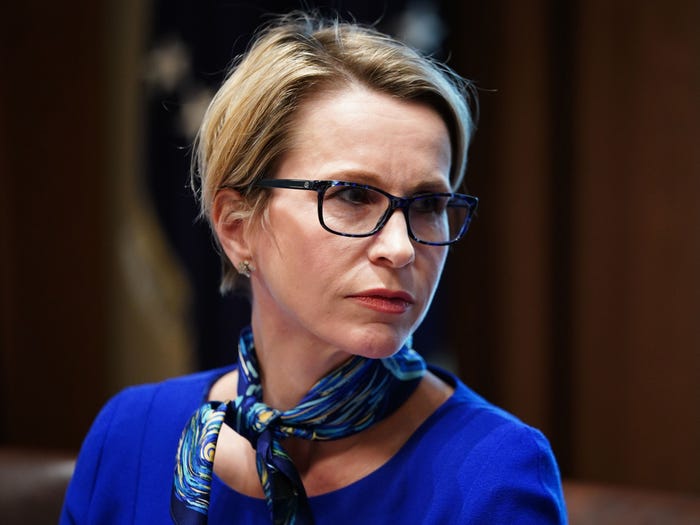
Dame Emma Walmsley, Chief Executive Officer GSK

Mark Best is 54

He lives in Puckeridge in Hertfordshire

He's pissed off with GSK (GlaxoSmithKline)

Why?

Well, he, and his fiancée have been passed around from pillar to post by the hierarchy at GSK.

His betrothed, Georgia Suckling, is also pissed off.

She assumed that any disorderly conduct by any other GSK employee toward her would have been nipped in the bud.

Sadly, this isn't the case as it's alleged that Georgia has been subjected to harassment from a colleague at GSK.

A male colleague.

For the past month or so, I've been copied in on a series of emails to GSK, which have included the GSK CEO, Emma Walmsley and one of the "Glaxo Three', Jason Lord.

In a nutshell, Mark Best is alleging that his fiancée , Georgia Suckling, has been harassed by a male colleague.

Once, both Georgia and Mark, brought this to the attention of senior staff, they were, basically, stonewalled and pressured into leaving their positions and told to travel 200 miles or so to their new place of employment.

The emails, of which there are many, throw the light on GSK's apparent misconduct procedure, moreover how it is claimed that such a procedure is nothing but words on a website that really mean nothing at all.

I asked Mark to write a guest post for this blog. I included all of those he copied in on emails, including Walmsley and Lord. I asked for comments.

In typical GSK fashion, they never responded

Mark Best has much to say.

This is part one...

--

Hi, my name is Mark Best, I am 54 years young and currently live in a village called Puckeridge in Hertfordshire.

I am a time served Engineer and hold a Higher National Certificate (HNC) in mechanical production engineering. 

My skills and qualifications have been accredited by the Institute of Mechanical Engineers and my title is Mark Best, ENGTECH, a globally recognised level of professional registration for Engineering Technicians. 

I served my apprenticeship with the Pharma company called Glaxo based in Ware, Hertfordshire, which has gone through several mergers including Glaxo Wellcome and currently GlaxoSmithKline or GSK. I have had one break in service with GSK when it’s Aerosol department was closed in 1995. I moved to a company called Napp /Bard pharmaceuticals in Cambridge on the Science park near Milton where I spent 2.5 years as a packaging engineer. I returned to the GSK Ware site in 1998 and worked in the Tablet Packing dept as an Engineering Tech until 2010 and then moved on to industrialisation of the new equipment to assemble and pack the then new Ellipta device. After this (Circa 2016) I moved into an Engineering Compliance and C.I. (Continuous Improvement) role as a Senior Engineering Technician up until being forcibly made redundant in Feb 2020, I say forcibly but I will explain this later.

My fiancée, Georgia Suckling, also worked on the Ware GSK site and that is where we first met. Georgia was employed by a 3rd party business partner of GSK who was contracted to run the GSK Ware engineering stores, the company is called ERIKS U.K.

Georgia had had several roles within Production environments at various companies. Prior to joining ERIKS U.K. she was a Production Manager at a specialist lighting company where she oversaw and planned the production schedule and ensured components and sundries were ordered into stock to meet production schedules for customer orders and ensure successful delivery of customer orders to agreed timescales.

Georgia is currently 30 years old and had worked for ERIKS U.K. from early 2017 where she joined them as Office Manager in the GSK Ware Engineering Stores. Georgia lived in Bishops Stortford in Hertfordshire with her Mum and two dogs, Fin and Izzy, a crazy pairing of a Samoyed and French Bulldog!

Georgia was in the Office Manager job for 8 months ( roughly) when ERIKS U.K. decided to remove the then Service Centre Manager (SCM) due to his lacking performance. Georgia was left in the deep end and held the stores together alone as the Office Manager until she was approached by ERIKS U.K. and her GSK manager (Graham Hale) in December 2017 to step up to the role of SCM owing to her outstanding performance. Finally Georgia agreed to take the role and was given a pay rise, a company car, private healthcare and a commitment of necessary training and support for the senior role from both GSK and ERIKS U.K. Georgia commenced the SCM role in Jan 2018.

In early Feb 2018 I was requested by my manager and my senior manager to review the spares holding and lead times for the Ellipta Packing department and liaise with the machinery suppliers to smooth this process and reduce lead times of critical parts. The two main suppliers to us were Marchesini, an Italian packing machinery manufacturer and ATS (Automated Tooling Systems) a Canadian machinery manufacturing specialist.

A meeting was held between my two managers and myself with Georgia, Graham Hale (GSK contracts manager) and Sue Gratwick, who also worked for ERIKS U.K. as a store's person.

It was agreed that Georgia and I would work together to highlight the issues that ERIKS faced in procuring the spares we required for Ellipta Packing and we would come up with solutions and improvements that were good for all parties concerned.

Both Georgia and I got on well from the start of the project and I addressed several issues that she was facing very quickly! 

Firstly, to get Georgia a GSK laptop to release orders on the GSK systems remotely, e.g. from home, Georgia had been asking for this for ages and rather than having to be stuck at her desk in the stores office she could release orders remotely as and when required  (GSK run a 24/7 operation whereas the stores only work on days Mon -Fri). Georgia was taking the GSK laptop home and could spend 2 hours per evening releasing orders for GSK which eased the pressure she was under in the office and to concentrate and improve the metrics set by GSK during the day.

As well as this quick win, she voiced issues regarding ATS (Automation spares deliveries). I had first hand experience of this from my Industrialisation role. When I visited ATS in Canada, the guys on the shop floor were disgruntled owing to the closure of their in-house machine shop. Many parts and spares were made in-house at ATS and problems/modifications could be addressed quickly and resolved almost immediately. Since the closure of the in-house machine shop, the parts drawings were sent to China to a 3rd party company to be made in a bid to save costs! The issue that the company now faced was that parts would take 8 weeks to be made from scratch and be shipped from China to Canada. Often the parts were not to the correct standards or there were other issues that caused setbacks, especially on new bespoke machine builds such as GSK machine builds. This obviously caused a delay of a further 8 weeks to remedy the problems but also set back other parts of the project that relied on these parts being delivered. This put ATS under pressure, GSK under pressure and ERIKS U.K. under pressure.

To relieve the problem during the industrialisation phase, I had approached a local Engineering Company that we/GSK Ware had used for many years called Pope and Meads. A deal was struck whereby Pope and Meads could manufacture parts/spares under licence for ATS meaning that we, GSK, could control quality and drastically reduce lead times for critical parts e.g. same day/next day etc. This agreement was never rolled out to ERIKS U.K. and hence ERIKS/Georgia and the stores were getting the bad press for lead time delivery for ATS parts that was clearly outside of both Georgia’s and ERIKS control!

On the back of this, I arranged for Georgia to have a planned visit of Pope and Meads, a tour of the manufacturing facility and an opportunity to meet the team who she would need to liaise with to procure urgent/critical ATS parts on behalf of ERIKS U.K. to keep GSK Engineering spares in stock or respond to urgent breakdowns quickly.

During the time spent in the engineering stores, and with Georgia working on this project, I became aware of a certain individual, a Sodexo worker (Sodexo were another GSK 3rd party business partner used on the Ware site for plant/facilities maintenance) who was coming to stores constantly throughout the day and for the same part, 

On one occasion, I noticed this person pointing to Georgia behind my back and she looked worried. She went to the main store area with the Sodexo worker for a few minutes and came back to the office visibly upset. I asked her if she was OK and she said "no". 

She shared with me that this guy was constantly asking for a relationship with her, she had declined politely stating she did not want a boyfriend but he was persistent and would not take no for an answer. Georgia opened up to me that several GSK employed engineers had made inappropriate propositions and comments to her and another Sodexo manager, [redacted], had acted inappropriately with suggestions and comments on SKYPE. This had been reported to Simon Russell, the now area manager for ERIKS who approached  [redacted] about his manner and it stopped immediately. She said she could shrug off most of this male attention but this individual would not take no for an answer and if he saw her talking to any other male on site he would be asking her if she was seeing this bloke or that bloke.

I explained to Georgia that she did not have to suffer this type of harassment and GSK had strict policies and reporting lines if this inappropriate and unwanted behaviour continued.

Georgia was due to go on a short city break with a friend and this was in late February. She relayed to her friend how this Sodexo individual was making her feel at work and her friend was threatening to come to the site to confront the individual directly and to tell her mother.

Following Georgia’s return from her break, I asked Georgia out on a date and we started a relationship in early March. We got on great and enjoyed each other’s company. The harasser had no idea that Georgia was seeing me but persisted to ask her if she was seeing this guy or that guy if he saw her talking to any other male employee. Georgia described him as a 'dripping tap' His attempts to approach Georgia around the site increased and if he passed her at one point on site he would run through buildings to ensure he was in her path, a few moments later on her return from a meeting to her desk for instance!

Towards the end of March 2018, I was at my desk in my office area with my colleagues on a Monday morning and my manager approached me and just said, "Mark, you have to come with me, you are not going to like this but you have to come with me now." My colleagues were clearly shocked and I did as I was instructed. I was taken across the lobby to the meeting room in the Directors suite where the head of security was waiting with two security guards. Neil Garrod, the GSK head of security said to me, “Mark, I’m so sorry to have to do this, in the last 20 odd years of knowing you on site I have never heard your name mentioned in vein”. Neil went on to state Colette Cochrane, my Engineering Director, "received a call from Security over the weekend where somebody has reported that you were seen drunk as a lord in a local bar and openly taking and handing out cocaine”. He added, "Colette has instructed us to conduct a drink and drugs test on you now and that is why you are here", Colette had sighted GSK Speak-up as the reporting system used to deal with this allegation.

I stated there and then that I had not been out at all over the weekend, I had not touched a drop of alcohol over the weekend and I do not do/take drugs so the allegation was completely false on ALL counts. I said I would pass the test and be clear on both drugs and alcohol! I had to take the test to clear my name and, as stated, was clear on both counts.

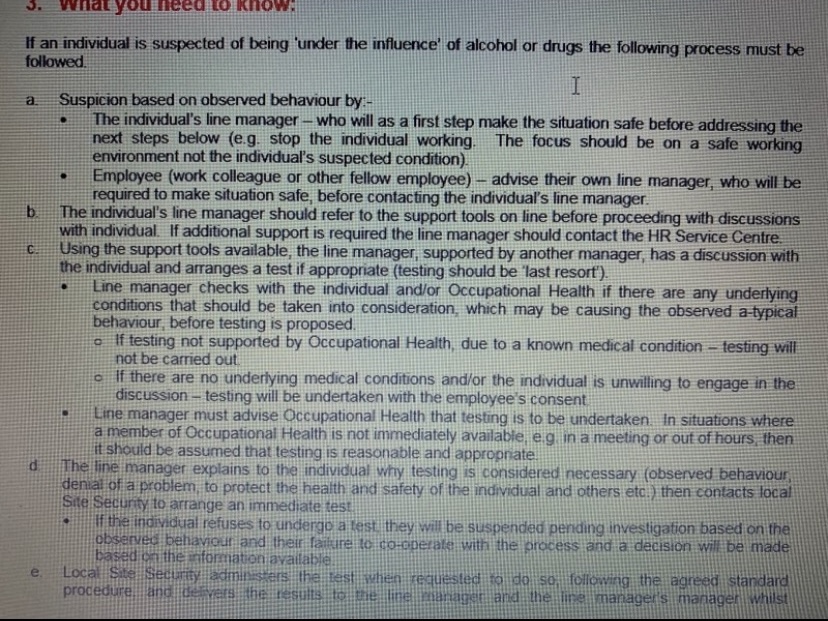
On return to my desk, my colleagues were concerned about what I had been subjected to and one went on to source the GSK policy for Drug and Alcohol testing. We realised then that the policy had been breached by Cochrane. The policy for GSK testing and speak-up is below

Speak-up
Drugs/Drink testing Policy
Click on image to enlarge

Following this test, I did speak with Cochrane and again she sighted 'speak-up' as the policy used to action the report. GSK had the number but would never release it to me, only the Police! This is important because I went to the Police and they basically laughed down the phone saying that your Engineering Director has been watching too many films and the Police would only get involved in tracing a call/phone if a serious crime was linked to it! This is a workplace matter. End of call!

I relayed this info to Cochrane who was reluctant to share the number. Luckily Georgia had mentioned this matter to Graham Hale who said that the call was made from a Sodexo work phone. As we suspected, Georgia’s harasser was probably behind this malicious call.

Hang on to these thoughts and read the policies as it is important to what happens next!

GSK Protocol


Mark has much more to say in Part Two.

Stay Tuned!

Bob Fiddaman


Monday, March 08, 2021

Seroxat and the Fallacy of Centrality


Shane Cooke

Last week, I learned a new term and planned to blog about it. Days later, I read "Gripped by and Discarded by GlaxoSmithKline," a guest post on Dr. David Healy's RxISK.org site. This blog explores how the two relate. 


Fallacy of Centrality

The term "fallacy of centrality" was coined by Ron Westrum, a researcher who observed pediatricians' diagnostic practices in the 1940s and 1950s. He found that many of these doctors assumed that they were in a central position, and they presumed if something serious was occurring, they would know about it. If something occurred that they didn't know about it, well, it just wasn't happening. This distorted thinking prevented many pediatricians from recognizing and reporting child abuse before the early 1960s. The pediatricians' applied the "logic" that if parents were abusing their children, they'd know about it. 


A present-day example of this type of magical thinking is below (Fig 1). The former head of the Royal College of Psychiatrists, Wendy Burn, uses her "clinical experience" to dismiss SSRI withdrawal. Burn hasn't seen SSRI withdrawal problems in her practice; therefore, it doesn't exist or rarely occurs. The fallacy of centrality is problematic among doctors, especially psychiatrists who expose their illogical thinking via social media accounts. It took Burn and many of her colleagues years to belatedly acknowledge the large SSRI withdrawal problem. Their admission came about after many members of the prescribed harm community and a handful of ethical researchers shared the real experiences and scientific facts.


Burn and Professor David Baldwin previously claimed in the national media that "...in the vast majority of patients, any unpleasant symptoms experienced on discontinuing antidepressants have resolved within two weeks of stopping treatment." (Fig 2) Once again, they embraced the fallacy of centrality.


Fig 1


Fig 2


The same arrogant, illogical thinking is illustrated in "Gripped by and Discarded by GlaxoSmithKline." It's the story of a young man, Shane Cooke, who suffered SSRI harms and was later repeatedly victimized by a chain of experts who employed the fallacy of centrality. Shane was just 21 when he decided to leave his foster parents, whom he had been with for nearly 20 years. He became engaged to a young woman, and they agreed to move in together. Both were in their final year at college, which caused understandable stress as they finished their degrees. 


Shane was having difficulty eating and sleeping and was anxious about his coursework deadlines. In 2002, he saw his GP, who prescribed two different SSRI brands that precipitated Shane's suicidality. His GP then switched him to Seroxat, an SSRI sold by GlaxoSmithKline (GSK). Prescribing Seroxat was the norm in the early 2000s given that doctors were not yet familiar with the serious risks the product presents. However, GSK and the British drug regulator, the MHRA, were aware of the problems with Seroxat.


In October of the same year, BBC's Panorama aired its first of four investigations into Seroxat. Scottish BBC journalist Shelley Jofre extensively reported the problems caused by the so-called 'wonder drug.' 


Prescribing physicians have no excuse for pushing this dangerous and risky drug after this date. Some doctors might argue they never watched the show, but this is a lame excuse. Once again, however, the fallacy of centrality comes into play here: What would an investigative journalist know about a drug that the medical profession doesn't know? 


After being prescribed Seroxat, Shane developed severe agitation, often asking his foster parents, "What's wrong with me?" 


I can relate. The adverse effects I experienced while taking Seroxat and withdrawing from it are documented in my book, this blog, and numerous podcasts. 


Shane's angry outbursts worsened, and he drove a car through a glass entrance of the Ablett Psychiatric Unit in Clwyd after he had been drinking alcohol. (SSRIs can increase cravings for alcohol and drive people to drink who have never previously consumed alcohol.) 


The Courts then ordered Shane to leave the home he shared with his wife-to-be and move back in with his foster parents. According to his foster parents, he complied with the order but would often go missing and later be found hiding in hedges or grass verges. His foster parents agreed that it was the medication causing Shane's bizarre behaviour, which now had spiralled to threats of suicide. Two doctors who then assessed Shane decided to decrease the Seroxat dose. Ten days later, Shane said he became "normal" again.


Unfortunately, Shane again became a victim of another professional's fallacy of centrality. A judge at Caernarfon Crown Court jailed Shane for two-and-a-half years for crashing his car through the doors into the foyer of the Ablett Unit Clwyd on June 2. While Shane had been drinking on the night of the crash, the judge failed to consider the role Seroxat had played. The judge wrongfully assumed that alcohol made "Shane do it." If a judge has never witnessed violence and alcohol cravings as adverse effects of prescription drugs, the judge decides this simply cannot and does not happen. (It is also true, however, that some judges do know but decide to blame alcohol; it is more convenient and less problematic than blaming a pharmaceutical company's drug.) 


Devastated by their son's incarceration, Shane's foster parents eventually heard about a psychiatrist from Bangor, Wales, who was researching the link between Seroxat and rage. That doctor is David Healy. They contacted Healy, who assessed Shane's medical records and determined Seroxat had induced Shane's fury on the evening of June 2.


The decision to jail Shane was going to be appealed, but the appeals process would have been lengthy. Shane was nearing his sentence's completion (shorter than the punishment he was initially given), and he decided not to continue an appeal. He served the prison sentence for his Seroxat-induced crime. GSK continues to deny Seroxat causes dependency and suicidal thoughts and actions. However, I do not believe GSK's false claims are products of the fallacy of centrality.


Upon Shane's release, he was electronically tagged and sent back to his foster parents. His engagement, independence, and career all destroyed by a risky drug and repeated fallacies of centrality. Despite these travesties of injustice, Shane went on to complete his coursework and passed his exams. Today, Shane is active on Twitter and hopes others won't suffer what he did. Shane and his foster mom, Mary, now run the Prescribed Medication Withdrawal group in Wales.


You can follow him here and read his full story here.


Mary, who is one of the unsung heroes in the advocacy world, can be followed on Twitter here.


The withdrawal group is now doing fortnightly zoom meetings. Anyone within travelling distance of Prestatyn, in particular, are welcome to join in. (this is in the hope of meeting face to face in the future) 


You can reach Mary via email at ellen.hennessey@btinternet.com


--

If you still need convincing that Seroxat isn't problematic, watch the four investigative reports here. Perhaps you can share them with healthcare professionals who, like so many prescribers out there, probably suffer from a fallacy of centrality.

THE SECRETS OF SEROXAT (2002)

EMAILS FROM THE EDGE (2002)

TAKEN ON TRUST (2004)

THE SECRETS OF THE DRUG TRIALS (2007)


Bob Fiddaman

Monday, June 01, 2020

Children of the Cure: Who Cares?


I've just finished reading 'Children of the Cure', a book by David Healy, Joanna Le Noury and Julie Wood. 

Although being familiar with much of the content (Paxil Study 329) I did learn quite a lot - the history of antidepressants for one - the jumping through hoops games the BMJ, seemingly, like to play was another.

Many researchers like to revisit clinical trials (studies) and play around with the published findings, these researchers often dispute the original claims. This is all well and good but after reading Children of the Cure I have to ask myself, why bother?

In a nutshell, any available published studies, be they online or in print, are just a snapshot of what really occurred during clinical trials, this snapshot is often spun in such a way that can leave the readers, be they healthcare professionals or members of the public, thinking that something is safe and effective when in actual fact it's the complete opposite. Articles published in prestigious academic journals almost always add weight to the apparent positive outcomes of such trials, these articles are, in turn, used to convince those who are unsure about the safety and efficacy of a drug, namely prescribing doctors and psychiatrists. Such articles boast names of leading figures in particular fields, again this adds weight and is designed to convince journal editors and panel members and also prescribers that everything is hunky dory. It's the first step in dogmatism. It's carefully crafted and intended to plant a seed so deep that when later queried those who have been convinced will either ignore fresh claims, shrug their shoulders or, as in the case of Study 329, forget it ever happened.

RIAT

In 2015, the BMJ published 'Restoring Study 329: efficacy and harms of paroxetine and imipramine in treatment of major depression in adolescence' which was pieced together after a bunch of researchers managed to get access to raw-data from a host of trial centres across North America. The raw-data had never been seen before, in fact the only time raw-data is seen is when trial lawyers request it in discovery - even then, most of the data is redacted (Blacked out)

The RIAT team, which is an acronym of 'restoring invisible and abandoned trials', painstakingly went through data after it was agreed by GSK to grant the team access via an online portal. All seemed fine until the team, consisting of Joanna Le Noury, research psychologist, John M Nardo, retired clinical assistant professor,  David Healy, professor, Jon Jureidini, clinical professor, Melissa Raven, postdoctoral fellow, Catalin Tufanaru, research associate, and  Elia Abi-Jaoude, staff psychiatrist, learned that it was a technological system that was designed to hinder their process, nae progress.

Nevertheless, the team persevered and found discrepancies that involved GSK downplaying suicide events that occurred in the Paxil arm of the clinical trials. One has to keep reminding oneself that these trials were carried out on adolescent children whom GSK were desperately trying to get a licence to 'treat' for their blockbuster antidepressant Paxil, also known by other brand names such as Seroxat, and Aropax to name but a few.

Believe it or not, this wasn't the hardest hurdle the researchers had to jump, that came much later when they submitted their findings to the BMJ. The hoop-jumping game BMJ set out would have left even the most flexible of people tied in knots.

The BMJ 'game' is new to me. I was of the opinion that the RIAT team presented their findings and it pretty much went to print. Reading Children of the Cure will leave you flabbergasted at the lengths the BMJ went to, it appears, to frustrate the team.

It's akin to when one makes an insurance claim. It's standard practice to refuse a claimant in the hope that they will go away, if they don't, well, just throw more paperwork at them and the majority will give up pursuing a claim. The BMJ are no different than these types of insurance companies. There is also the fear factor. One should be ready and willing to publish evidence that points to fraud, especially when that fraud puts adolescents at risk - my understanding, upon reading the book, is that the BMJ constantly bottled it, they thought more about repercussions to their name rather than protecting a vulnerable population.

IT DOESN'T MATTER ANYMORE - IT HAPPENED IN THE PAST

I've often heard this phrase used whenever 329 is mentioned. 'It came at a time when there were bad eggs operating GSK', another, 'it's all part of how a business is run', the most callous of all being, 'Ok, let's move forward now.' These well-worn phrases might all be well and good if, for example, SSRIs were completely banned for use in children and adolescents, I'm of the opinion that they should be.

But wait, aren't they banned, what about the recommendations? Well, recommending something is not set in stone, just as I recommend you buying this book doesn't mean that you are going to. Children and adolescents are still prescribed SSRIs, not so much Paxil these days because of the bad rap it's had over the years, a large chunk of credit for this must go to BBC journalist, Shelley Jofre who is mentioned throughout Children of the Cure. Shelley's four Panorama investigations basically opened a can of worms, all four shows highlighted how PR firms who specialise in ghostwriting (turning something so bad into something quite wonderful). The four Panorama specials also showed the complete mess that is the MHRA, a British drug regulator who, just like the BMJ are afraid to say boo to a goose for fear of reprisals.

Those that added their names to the now infamous 'Efficacy of Paroxetine in the Treatment of Adolescent Major Depression: A Randomized, Controlled Trial' should hang their heads in shame, as should the Journal of the American Academy of Child and Adolescent Psychiatry (JAACAP)

The FDA and MHRA should also hang their heads in shame, as should Sally K. Laden, the gifted miracle worker who turned shit into gold. ALLTRIALS for practically taking one up the back passage from GSK and allowing them to select what can and can't be seen by future researchers. Prescribers who haven't bothered to look into or request raw-data from drug companies should also take a long, hard look at themselves.

We, in general, should all take a look at ourselves and ask what are we doing about this notorious spin - is it just a piece of history that we all know about but tend to think, pah, it's old news?

History has habit of repeating itself, particularly when apathy is present. Remember, ketamine is the new miracle drug on the market and is receiving many accolades from high profile psychiatrists just as Paxil was by The Marty Keller clan. Keller is an insidious man - the lengths he went to to lose Healy his dream job at the University of Toronto shows how far he was willing to go to keep his sordid (well-paid) secret under wraps.

Children of the Cure by David Healy, Joanna Le Noury, and Julie Wood is published by Samizdat Health Writer's Co-operative Inc. and can be purchased on Amazon US here and Amazon UK here.


Bob Fiddaman


Monday, October 22, 2018

GSK Study 356 - The Truth is Out - 25 years Too Late!


Regular readers of the Fiddaman blog may have been keeping a close eye on an old study from the early 90's (08 Apr 1993 – 25 Oct 1994) that I've recently found via GSK's clinical trial registry website.

The study, known as GSK Study 356, reported 7 suicide attempts (2 of which were completed suicides). However, these attempts at suicide are not mentioned within the documents GSK has made public. Moreover, the actual number of suicide attempts in Study 356 was 9. (2 of which were completed suicides)

How do we know this?

Documents obtained from the Australian drug regulator, the TGA, show us this but strangely do not tell us in which group the attempts at suicide occurred...until now.

For those who are unfamiliar with the study, it was, to my knowledge, an attempt at finding which of the two antidepressants, namely Prozac and Paxil, were better at treating major depression. The study was sponsored by GSK.

After posting two blogs on the subject, GSK Study ID - 29060/356 - The Missing Suicide Attempts and No Action to be Taken Against GSK for Hiding Suicide Data, the TGA have written to me in efforts to clarify what was revealed by me last month.

However, rather than trying to add clarity to my previous two blogs, the TGA has opened a pretty big can of worms.

In asking them why GSK failed to report the missing suicide attempts they told me the following. It makes for very interesting reading.

Good Afternoon Mr Fiddaman

I have followed up your enquiry about the presentation of information about the Clinical Trial - GSK Study ID - 29060/356 on the GSK study website.

The nine events you have referred to were discussed with investigators at a meeting on November 26th 1993, whilst the study was still ongoing and blind.  Seven of those same events were also included in the Dear Investigator Letter which went out to investigators in August 1993. Of the nine events that were discussed with the investigators five events were subsequently coded to the WHO preferred term of drug abuse, through the methodology applied at that time. On the trial summary these are presented as cases of “Drug Abuse (Overdose)”. There were two of these recorded for paroxetine (patients 139 and 147) and three of them recorded for fluoxetine (patients 18, 76 and 144) 

The remaining four cases were coded to the WHO preferred term of “Suicide Attempt”. On the trial summary two of these events are listed as “Suicides” (in the fatal SAE section) with one for paroxetine (patient 92) and one for fluoxetine (patient 122). The two other cases are presented as “Suicide attempt”, both for fluoxetine (patients 87 and 142).

The information as presented in the clinical trial summary accords with the safety information as provided in the full study report.

I trust that the information provided is of assistance.

Regards

Bernadette Barton 
Assistant Director
Adverse Event and Medicine Defect
Pharmacovigilance and Special Access Branch

Therapeutic Goods Administration
Department of Health
PO Box 100
Woden ACT 2606 Australia

--

So, there you have it, folks. The missing suicide attempts were coded as "drug abuse." They did this, according to the TGA, because this was the preferred term, at the time, used by the World Health Organisation (WHO)

So, breaking down the 9 who attempted suicide we have 6 from the Prozac group and 3 from the Paxil group. (1 patient from each of the groups completed suicide)

It's a head-scratcher for me - why would WHO use such a system?

The medical definition of "suicide attempt" and "drug abuse" differ somewhat.

Suicide Attempt
A non-fatal, self-directed, potentially injurious behavior with an intent to die as a result of the behavior; might not result in injury

Prescription Drug Abuse
Taking medication in a manner or dose other than prescribed

This begs the question: How many other GSK sponsored studies buried suicide attempts in the drug abuse category?

Study 356 was carried out in the early 90's. By the late 90's there was growing concerns regarding Prozac, the concerns surrounding Paxil came later.

Here's a Guardian article from 1999. I'll just post the sub-heading and the link:

It was too good to be true. Prozac, the wonderdrug hailed as the answer to the war against depression and taken by some 37 million people worldwide, is not as harmless as we've been led to believe. Disturbing evidence has now emerged, showing that, after the initial relief and euphoria of the first dose, Prozac can push some patients into so agitated a state of mind that they are a danger not only to themselves, but to others, too. (Full Article)

One has to remember here that Study 356 was sponsored by GSK, the manufacturers of Paxil who, at the time, wanted Paxil to be the blockbuster drug that Prozac already was.

Would doctors have prescribed Prozac knowing that there was a high ratio of suicides in a clinical trial - personally, I think they would have. The marketing for these two drugs was heavy and included incentives for doctors to prescribe them. Eli Lilly reps dining and dashing', whilst GSK reps would persuade doctors at strip bars, amongst other places.

Now we know. It's taken the best part of 12 months to get to the bottom of this study, a study that is almost 25 years old!, and I couldn't have done it without the help of Kathy, who is the moderator of the Facebook page,  Australian Antidepressants Class Action & Awareness and an administrator for the Australians For Safe Medicines Facebook page.

Special thanks to the TGA too. They seem a little bit more transparent than their counterparts, the FDA and MHRA.

The British, American, and, indeed, Australian media are disinterested.

Bob Fiddaman


Tuesday, October 09, 2018

Is GSK's Horlicks a Medicine, Asks Judge


I'm strong to the finish, 'cause I eats me Spinach

Following on from an earlier post of mine that the British and American media don't seem to be interested in, sees GlaxoSmithKline (GSK) lawyers in Bangladesh argue that GSK do not need permission to sell Horlicks in Bangladesh. Further, it sees the judge ask GSK if Horlicks, a malt drink marketed and manufactured by GSK, is a medicine, given the claims on the product label.

New Age Bangladesh is reporting that, on hearing both arguments, the judge asked GSK's legal team, "Is it a drug? Do you have drug administration’s permission?"

Several claims have been made on GSK's Horlicks, including that the consumption of it can "make you grow three times faster."


Glaxo Chairman and General Manager Failed to Show for Court Hearing

This from the New Age...

Prosecutor Kamrul Hasan said that on its label Horlicks contains words like ‘taller’, ‘stronger’ and ‘sharper’ next to the brand name, which may give rise to the idea among consumers that they needed to rely on the product for gaining the qualities. 
Kamrul said that the label further confirmed that their claim was proven ‘clinically’.
‘I challenge defence lawyer to prove its claim before the court,’ said Kamrul.
The label of Horlicks Classic Malt, Kamrul said, discusses about Horlicks drinkers showing five signs of healthy growth— ‘bone circumference’, ‘strong muscle’, ‘heightened concentration’, ‘healthy blood’ and ‘gaining weight rightly’. 
The label also listed numerous health benefits of drinking Horlicks, including the strengthening of bones and muscle, development of the brain, improving metabolism and ‘blood health’ necessary for a strong immune system. 
Kamrul said that the label even claimed that children might not get the necessary nutrition from regular food and their nutrition demand could be met by drinking Horlicks daily. 
Arrest warrants have been issued for GSK's chairman, M Azizul Haque, its General Manager, Prashanta Pandey and Azim Uddin Ahmed, chairman of Mutual Food Products Limited, the company responsible for processing and packaging of Horlicks in Bangladesh.

Haque and Pandey failed to show for the court appearance whilst Ahmed was present during the hearing and later granted bail.

It seems as though the longer a product stays on the market, the more manufacturers can make outlandish claims, as long as they add the words "clinically proven" next to the claim. GSK also claims Horlick's is 'clinically proven' to improve attention and concentration. Begs the question why they don't market it as an ADHD drug!

How on earth did we get from this...


...to this...

('clinically proven' to improve attention and concentration')

Nothing to do with the Beecham Group (now GSK) acquiring Horlicks in 1969, huh?

If one thing, it shows us how the power of marketing has improved over the years, even though it's all based around exaggeration as depicted in the popular Popeye cartoons of yesteryear. Glaxo has taken the Popeye cartoon and basically added to it a whole bunch of claims that they maintain are 'clinically proven.' I'm with the prosecutor on this one, "I challenge defence lawyer to prove its claim before the court."

Next thing we know, GSK will be claiming that their Lucozade sports drinks are better than water...Oh, hang on a minute, they already made that false claim (Source)

Or maybe that Ribena really is full of vitamin C, yup, they got busted for that too, by two pesky schoolgirls! (Source)

They may even claim that their popular antidepressant, Seroxat, also known as Paxil, is non-habit-forming - Oops (Source)


Bob Fiddaman

Back Story

Bangladesh: GSK Chairman & General Manager Could Face 7 Years in Prison


Monday, October 01, 2018

Bangladesh: GSK Chairman & General Manager Could Face 7 Years in Prison


(Left) M Azizul Haque GlaxoSmithKline Chairman. (Right) Prakash (Prashant) Pandey GlaxoSmithKline General Manager

"For increasing sales, the accused adopted a host of heinous tactics."


It never rains but it pours.

Incidentally, I love rain.

None of the British media has picked up on this, or indeed any other country apart from Bangladesh.

The New Age of Bangladesh, a leading English language daily newspaper, is reporting that an arrest warrant against, M Azizul Haque, who is the chairman, and Prakash (Prashant) Pandey, who is the general manager of GlaxoSmithKline Bangladesh, has been issued for cheating consumers through deceptive advertisements of Horlicks.

Kamrul Hasan, who heads the Department of Inspection for Factories and Establishments in Bangladesh said, "For increasing sales, the accused adopted a host of heinous tactics."

GSK and heinous tactics, surely not?

This from the New Age:


Horlicks Classic Malt
On the label of Horlicks Classic Malt, Kamrul said, five signs of healthy growth are talked about — ‘bone circumference’, ‘strong muscle’, ‘heightened concentration’, ‘healthy blood’ and ‘gaining weight rightly’ — which are confusing and misleading.
The label also listed numerous health benefits of drinking Horlicks, including the strengthening of bones and muscle, development of the brain, improving metabolism and ‘blood health’ necessary for a strong immune system.
Kamrul said that the label even claimed that children might not get the necessary nutrition from regular food and their nutrition demand could be met by drinking Horlicks daily.
‘This is not medicine and a food item cannot ensure so many health benefits alone,’ observed Kamrul.


 Mother’s Horlicks

Staggeringly, on the label of Mother's Horlicks GlaxoSmithKline claimed, "it helps the baby grow in the mother’s womb."

GSK didn't just add these outlandish claims to the labels, Kamrul said, "GSK was seen making similar claims in adverts meant for television consumers and Facebook users."

This from the New Age:
GSK was cheating people by bringing to market a variety of Horlicks products, targeting different groups of consumers like women, children and mothers.
The verified Facebook page of Horlicks Bangladesh show mothers continuously interacting with its updates, mostly being similar advertisements, sharing their desire to feed Horlicks to their kids, often aged about three.
A warrant for the arrest of Azim Uddin Ahmed, chairman of Mutual Food Products Limited, the company responsible for processing and packaging of Horlicks in Bangladesh, was also issued.

If the allegations are proved, the accused will face seven years’ imprisonment or heavy fines, or both.

Here's an example of the misleading ad Glaxo have broadcast across Bangladesh.


A spokesperson for GSK said, "We have not received any notice on the mentioned issue from Bangladesh Food Safety Authority; hence are unable to comment on it now."

Bob Fiddaman


Sunday, September 16, 2018

No Action to be Taken Against GSK for Hiding Suicide Data


Earlier this month I posted previously unseen documents that clearly showed how GlaxoSmithKline (GSK) hid 9 suicide attempts from the results of a 1993 clinical trial posted on their website. See - GSK Study ID - 29060/356 - The Missing Suicide Attempts

The documents were sent to me by 'Kathy', who is the moderator of the Facebook page,  Australian Antidepressants Class Action & Awareness and an administrator for the Australians For Safe Medicines Facebook page.

After publishing my findings, Kathy wrote to the Therapeutic Goods Administration (TGA) and asked if they would be taking action against GSK for failing to report the 9 suicide attempts in the Aropax clinical trials, known as GSK Study #356.

The TGA's response is staggering, to say the least.

Dear Kathy

Thank you for emailing the Therapeutic Goods Administration (TGA). I acknowledge your concerns about the GSK clinical trial (A double-blind, multicentre study to compare paroxetine and fluoxetine in the treatment of patients with major depressive disorder with regard to antidepressant efficacy, effects on associated anxiety and tolerability) that was conducted in 1993-1994.  However, the TGA is unable to comment about the clinical trial as it was completed twenty four years ago.

As has been explained to you previously, the TGA’s safety monitoring is based on rigorous pre-market assessment and then the post-market signal investigation area of the TGA monitors the safety of medicines, to contribute to a better understanding of their possible adverse effects when they are used outside the controlled conditions of clinical trials.

Thank you for your interest in medicine safety.

Regards

Bernadette Barton
Assistant Director
Adverse Event and Medicine Defect
Pharmacovigilance and Special Access Branch

--

On the 'About TGA' section of their website, they state: "TGA's approach to therapeutic product vigilance is to continually monitor and evaluate the safety and efficacy (performance) profile of therapeutic products and to manage any risks associated with individual products.

Just to be clear, the results of GSK Study #356 failed to mention 9 suicide attempts, moreover, they failed to say which group these 9 suicide attempts pertained to. Study #356 had two active drugs, namely paroxetine and fluoxetine, both of which are selective serotonin reuptake inhibitors (SSRIs). There was no placebo group in the study.

As a regulator who claims to "manage any risks associated with individual products" I am utterly gobsmacked by their response above.

Surely a regulator should be asking GSK why they failed to include these 9 suicide attempts. Surely they should be telling GSK to publish the correct statistics and not a watered down version of what actually occurred during the study.

In essence, the TGA is saying, we don't care if the public doesn't know how many suicide attempts occurred in either the paroxetine or fluoxetine group. We don't care that GSK failed to report that the percentage of suicide attempts was a staggering 11.11%. We don't wish to manage these risks, even though we claim on our website that we do. We don't care the public isn't armed with this information when visiting their doctor or psychiatrist. We don't think 9 suicide attempts in a clinical trial is important.

I find the last line of the email kind of ironic: "Thank you for your interest in medicine safety."

Are they taking the piss?

Bob Fiddaman


Tuesday, September 04, 2018

GSK Study ID - 29060/356 - The Missing Suicide Attempts


Fluoxetine - AKA Prozac
Paroxetine - AKA Aropax, Seroxat, Paxil

Study ID - 29060/356
A double-blind, multicentre study to compare paroxetine and fluoxetine in the treatment of patients with major depressive disorder with regard to antidepressant efficacy, effects on associated anxiety and tolerability.


Snapshot was taken 3rd September 2018

Study ID - 29060/356/_1
Extension phase for a double-blind, multicentre study to compare paroxetine and fluoxetine in the treatment of patients with major depressive disorder with regard to antidepressant efficacy, effects on associated anxiety and tolerability.

Both studies appear on the GSK Study Register website, the second study is a continuation (extension) of the first.

As you can see, both studies were double-blind, which means neither the patient or investigator knew what drug they were taking/prescribing. After the trials have been completed, GSK can break the code and find out on which drug the adverse events occurred. In this case, one suicide in the paroxetine group and one in the fluoxetine group; no suicide attempts in the paroxetine group, and; two in the fluoxetine group, one of which was a completed suicide. In both groups, there was one suicide each, both were women.

According to recently obtained documents from the Therapeutic Goods Administration (TGA), the #356 trial reported 7 suicide attempts* (2 of which were completed suicides). However, there is no mention of the 5 attempted suicides on the GSK Study Register website, at least not for paroxetine. They do, however, cite two suicide attempts for patients taking fluoxetine during the trial, one of which was a completed suicide.

*Further, more documents show that there were in fact 9 suicide attempts in Study #356, however, there is no mention of this on the GSK Study Register website.

Masking the suicide attempts
GSK report that there were 6 subjects with non-fatal serious adverse events (SAEs) in the paroxetine group and 10 in the fluoxetine group. A total of five (2 paroxetine, 3 fluoxetine) are in the Drug Abuse (Overdose) category.

Drug overdoses
Could these be deemed as attempted suicides or were the overdoses unintentional? If, indeed, they were attempts at ending one's own life, then why is it not reported as such? Well, according to recently obtained documents, no suicide attempts were made by overdose.

Therapeutic Goods Administration (TGA)
Who are the TGA?

The TGA  is Australia's regulatory authority for therapeutic goods. They carry out a range of assessment and monitoring activities to ensure therapeutic goods available in Australia are of an acceptable standard. They are the American equivalent of the FDA and British equivalent of the MHRA.

The Previously Unseen Documents for Study ID - 29060/356
These were obtained under the Freedom of Information Act and forwarded to me by 'Kathy' who runs the Australian Antidepressants Class Action & Awareness Facebook page. Kathy copied me in on a lot of the correspondence between herself and the TGA. The process of obtaining the following documents took a considerable amount of time; I'd estimate the best part of a year. Kathy's tenacity and doggedness paid off.

After initially requesting payment for the documents, the TGA apparently had a change of heart and released many documents pertaining to Study #356, most of which make for very interesting reading. Before I publish them, it's important you understand the reasons why there are many redactions (black-outs) in the documents. According to the Australian Freedom of Information Act 1982, there are a number of exemptions where certain information may be redacted. They include: protecting patient privacy; irrelevant material; documents disclosing trade secrets or commercially valuable information and; documents subject to legal professional privilege.

Human Research Ethics Committees (Australia)
It may be unethical for a researcher to continue a trial if:

(a) there are or have been substantial deviations from the trial
protocol;
(b) side effects of unexpected type, severity, or frequency are
encountered

National Statement on Ethical Conduct in Research Involving Humans

You'll hear more about the Human Research Ethics Committees (HREC) in the documents below.

First off, the two suicides...

32-year-old female 
Causality: "Possible"
Outcome: Death, maybe drug


46-year-old female
Causality: "Possible"
Outcome: Death, maybe drug


Attempted Suicides

According to the study posted on the GSK website, there were only two suicide attempts, both of which occurred in the fluoxetine group. One of these was fatal. However, the documents obtained from the TGA say something quite different. There is a contradiction as to exactly how many suicides attempts occurred. Firstly, according to a Paroxetine Clinical Study Meeting, Dr Sykes claimed there were 9 reported suicide attempts, two of which were completed suicides.

The study meeting, according to the document, was held on Friday the 26th of November, 1993


However, 4 months prior to Dr Sykes' claims, GSK, then SmithKline Beecham, sent a letter to all investigators involved in the trial. They stated, "...we have now received reports of 7 suicide attempts (including two deaths) for the 356 study comparing paroxetine to fluoxetine."

The letter, below, goes on to state how confident they are that, "the number of suicide attempts in this study is within that expected as a consequence of the depressive illness per se."

In other words, it wasn't the drug, it was the illness.


In between these two letters, we have a document from a Professor (dated September 1993). The letter was sent to the Research Ethics Committee.

GSK had made contact and told him about the suicides and suicide attempts. Here it gets interesting because it gives us the number of those enrolled (63). The Professor states, "...there have been seven suicide attempts including two deaths in the first 63 patients included in this Australian multicentre study." (11.11%)

The letter,, signed off by an Associate Professor at the School of Psychiatry, goes on to say how he had researched data and had found no evidence that either paroxetine or fluoxetine increase suicide rate or ideation in depressed patients. Remember, this was 1993 - no lawsuits had yet revealed the extent of those who had died or attempted suicide on paroxetine, or indeed Prozac.


In November 1993, the Research Ethics Committee ceased enrollments for the study because of the "reported cases of suicidal gestures'.  A review of the attempted suicides was needed before #356 could proceed.


#356 was halted and, it seems, an independent review of the study took place one year later. The independent review clarifies that there were actually nine suicide attempts, two of which were successful. In all, according to the review, there were 100 patients enrolled. The review, however, found no reason why the study shouldn't continue. (Attempted suicides = 9%)

Of the 91 patients who did not attempt suicide, the review states, "26 either withdrew or were withdrawn prematurely from the trial."  No reason is given for this.

According to the review, no suicide attempts were made by means of a drug overdose.

Here is the 25-page Independent Report.

Comment

Where are these missing suicide attempts? Why are they not reported on the GSK Study Register website?

There were 7 suicide attempts when 63 patients were enrolled (11.11%) . Surely this figure should have raised a red flag?

There were 9 suicide attempts when 100 patients were enrolled (9%) . Even this figure is astronomically high.

Investigators and review panels didn't really have much to go on back in 1993/94, apart from, of course, GSK's own information and published literature that was mainly ghostwritten by PR companies hired by GSK.

From the early onset of this study, GSK made it abundantly clear to investigators (prescribers) that there was no supporting evidence that suggested paroxetine could induce suicidal ideation. The study was double-blind so the patients and investigators didn't know what drug was being used.

Today, on the GSK Study Register website we see that since the study completion, GSK broke the code (so they could see what patient took what drug). They admit to having one suicide in the paroxetine group and one in the fluoxetine group. What they don't do, and they've had 25 years to rectify, is show us what drug caused the suicide attempts. According to the findings, we see no attempts in the paroxetine group and 2 (one completion) in the fluoxetine group. This would suggest that they also broke the code for the suicide attempts but only showed 2 (both in the fluoxetine group) when the documents obtained from the TGA show that there were 7 attempts when 63 patients were enrolled and 9 attempts when the enrollment reached 100.

The 356 Study that sits on the GSK website today doesn't really raise any red flags in its current format. With documents I've published today should we have a need to be concerned?

It is unknown in what group the non-fatal suicide attempts occurred. For all we know they could have all occurred in the fluoxetine group. I'm unsure why GSK have omitted such important data but I can speculate.

It leaves me wondering that if such a trial was carried out today, would the review board still claim there is no link between either paroxetine or fluoxetine and suicidal ideation?

Since the year of this #356 study (1993) GSK has paid $390 million for suicides or attempted suicides said to be linked to paroxetine. This has included an average of $300,000 to resolve 300 attempted suicide cases and an average of $2 million for 150 suicide cases. (Source)

The most recent paroxetine suicide case involves former corporate lawyer Stewart Dolin, whose life ended when he jumped in front of a Chicago Transit Authority train on July 15, 2010, while taking a generic version of Paxil. On April 20, 2017, an Illinois federal jury found GSK liable for Stewart Dolin’s death and ordered the pharmaceutical company to pay $3 million to Wendy Dolin. However, on August 22, 2018, the Seventh Circuit Court of Appeals overturned the verdict claiming, "GSK had presented sufficient evidence time and again through the proceedings – before, during and after trial – to demonstrate it had no control of the drug labeling at the center of the case. Therefore, they said, the lawsuit should have been dismissed." Further, they added, "Court judges erred when they allowed to go to trial a lawsuit brought by Stewart Dolin's widow (Wendy Dolin)"

By 2000, Eli Lilly had reportedly paid more than $50 million to settle more than 30 Prozac (fluoxetine) lawsuits related to murders or suicides. There were also undisclosed settlements. While Prozac suicide lawsuits spiked in the 1990s, Lilly faced less litigation after the drug lost patent in 2001 and generics flooded the market. An FDA-required black box warning for suicide ended all “failure to warn” lawsuits. (Source)


Bob Fiddaman

Special thanks to 'Kathy' of the Australian Antidepressants Class Action & Awareness Facebook Group

Kathy is also an administrator for the Australians For Safe Medicines Facebook page.

She is now in the process of requesting suicide information from Venlafaxine trials in Australia.


Please contact me if you would like a guest post considered for publication on my blog.