I've heard many stories over the years regarding the troubles people have experienced whilst taking brain pellets marketed as 'antidepressants.' Kerri's guest post (below) is yet another example of how patients are pushed from pillar to post, often having to find their own way to resolve matters relating to brain pellet adverse events because of a severe lack of knowledge from prescribing physicians.
The three pellets featured in Kerri's story were, at a point in time, blockbuster products raking in billions of dollars for the drug companies who marketed and manufactured them, namely Lilly (Prozac) and GlaxoSmithKline (Paxil) and Pfizer (Zoloft). Three apparent drugs that are supposed to help but, as is my experience, cause more problems than the original 'illness' they are prescribed for. They all, allegedly, work in pretty much the same way. Drug company reps will tell you that A is better than B and C because, well, because that's what they are paid to do. They have no scientific evidence that one is more tolerable and causes less side-effects than the other.
I find it difficult to believe that neither Lilly, GlaxoSmithKline or Pfizer knew nothing about the problems caused by the three products mentioned below, moreover, the journeys many millions face when taking them.
This is just a small part of Kerri's journey. She writes to warn others and to create an awareness that all is not lost if you, or someone you know, suffers the same fate as she.
Bob Fiddaman
--
I was taught to trust the doctors. I was taught to trust the prescriptions. I was taught to trust the assessments I received from hospitals. And I did…but, this trust of these medical recommendations nearly killed me.
My name is Kerri Lynn and I was born in Long Beach CA, but was raised in the upper Midwest. I grew up in a dysfunctional home and early on, I gravitated towards addictive tendencies. I strived to make good choices at this time, however, my best efforts to live life on life’s terms were mostly self-destructive.
"I was restless, irritable and discounted all the time being newly sober and I needed help facing life, or so I thought."
At 13, I discovered drinking. I partied all the time until my addiction stopped working for me. I chased other self-destructive behaviors and relationships. My out-of-control nature led to an ultimatum from loved ones: I had to find a solution how not to be self-destructive.
Pain and circumstances drove me to seek help from 12-Step Recovery. This was really a challenge and about 60 days into this sober journey, I sought help from my family doctor. I was restless, irritable and discounted all the time being newly sober and I needed help facing life, or so I thought. My first prescription was for 20 mg of Prozac. 3 Days into this first prescription, I was unable to walk or talk. I was severely anxious and my brain was racing and telling me to do delusional things like run outside naked. I experienced Homicidal and Suicidal Ideation (I have come to understand that these are the symptoms of Serotonin Syndrome/Akathisia). I was panicking due to my reaction to this prescription, though I had no awareness that it was the prescription that was causing these symptoms. I had to reach out to a former counselor to sorts things out.
I met with my former counselor the following Monday. I finally revealed I was taking Prozac, and he immediately called my prescribing physician to get me off this prescription. This was the beginning of a 13-year nightmare with prescribed medications.
40mg of Paxil was my next prescription. A year into taking this antidepressant, I woke up one morning and could not emotionally feel anything. I was terrified. I called my doctor again and he tried yet another substitute of Zoloft. At that point, all hell broke loose. My doctor tried Paxil one more time and this sent me to the hospital. Between 2000 and 2006, I was Hospitalized on 3 separate occasions due to drug toxicity or cold turkey drug withdrawal.
"I exhausted every potential care and specialty option locally."
During these nightmare days, I was entertained with my expanded medical vocabulary. I learned words like suicidal ideation, disassociation, delusion, hallucination, profuse night-sweats, rapid irregular heartbeats and agoraphobia. We must not forget the bladder loss or rectal haemorrhaging, nor the black outs that would last more than 24 hours, when they would randomly introduce new medications. And my favorite suffering were the overwhelming panic attacks.
Sadly, my entire investment in the “healing process” to this point only led to my condition becoming more and more dire. The medical assessments only were dealing with a random set of symptoms that were mostly caused by the prescription and I could not break the cycle, no matter what I did or took. Almost every diagnosis made things worse and added to my growing list of “untreatable symptoms.” I exhausted every potential care and specialty option locally. I even spent 2 weeks at the world renown Mayo Clinic only to achieve an inaccurate diagnosis once again of Visceral Extreme Hypersensitivity. When I return to my home, I felt defeated and my local hospital would no longer allow me to make appointments, unless first reviewed by management over the phone. These doctors thought I was crazy.
It is always darkest before the dawn. I was under the care of many physicians. Many were a significant part of the problem and few were graciously a part of what would be my life-changing solution. I was blessed to be introduced to the Cytochrome P-450 test which analyses DNA and genetic strengths and deficiencies. From this accurate genetic assessment, it was discovered that I have both fast and slow processes in my liver and kidneys. This finally expressed a causality between reception and rejection of various medications. It was also determined accurately that I am missing the GSTM-1/ Glutathione Gene. It was finally determined that my true ailment was Multiple Chemical Sensitivity and all previous diagnoses actually placed me in grave risk by triggering my symptoms. The synthetic nature of the drugs being prescribed to me were actually poisoning me and triggered my multiple chemical sensitivity. During the course of 13 years of prescriptions, my body has been damaged so that I will most likely be significantly chemically sensitive for the remainder of my days.
"It is my hope that my story can guide people to new strategies so that nobody ever has to suffer like I did."
My hope is that by sharing my story that we can come to a new responsibility about how we seek and receive diagnoses. The medical profession has a mission statement of seeking to do no harm. This is not always the case. From my experience, a measured suspicion is the best approach. I now take the responsibility of doing my own medical research. I trust my instincts and I am my own advocate. Through my difficult journey my local provider actually became the first hospital in the country to study the P-450 genetic test. I strongly recommend this assessment be the starting point. Don’t utilize the P-450 as a last resort.
I am now 11-years medication free and stable. I have to live the rest of my life being critically aware of my environment and surroundings due to my chemical sensitivity. However, today I have a strategy for living that works. It is my hope that my story can guide people to new strategies so that nobody ever has to suffer like I did.
~ Kerri Lynn
---
You can listen to Kerri's story in her own words here via the brilliant Akathisia Stories, a co-production of MISSD and Studio C.
You can read more about Cytochrome P450 (CYP450) tests here
Footnote:
Test limitations
Although they have potential, CYP450 tests have limitations:
Tests are available for only certain medications. Also, each test is specific to only one medication, so a change in medication may require another test.
Testing can't predict which medication will work best for you — it can only provide clues.
Not all insurance companies cover the costs of these tests.
Tomorrow marks the death anniversary of 19-year-old Natalie Gehrki who, on February 6, 2013, was compelled to end her young life.
In 2003, Natalie became somewhat anxious and shy and after a visit to see a psychiatrist she started on her spiral of decline. Prozac, an SSRI, was recommended. Neither Natalie or her mother, Kristina, were provided with informed consent. In fact, Kristina, in an article she wrote some years later, said, "The doctor skipped over risks vs. benefits."
In 2003 there were no black box warnings on SSRIs so neither Natalie or her parents knew anything much about it. Shortly after taking Prozac Natalie became increasingly anxious and agitated, withdrawn and apathetic, she also developed new fears and obsessions. By the middle of 2004, she had started to self-harm, light cuts to her arm were evidence of this. Her prescriber, instead of withdrawing the drug, increased the Prozac dosage.
Earlier that year (March 2004) the FDA had advised all doctors that SSRIs pose life-threatening risks to children. Neither Natalie or her parents were given this information from Natalie's prescriber.
This from her mother:
"Natalie also lost her ability to participate in physical activities. Her fifth-grade diary reflects she felt uncoordinated, “couldn’t catch a ball,” and was often “the last person picked” for sports teams. This was significant given that Natalie previously showed excellent fine motor skills and happily out-climbed friends at the rock climbing wall. "Natalie’s doctor started offering new diagnostic guesses. They included borderline personality disorder, emotional lability, OCD and manic depression. She diligently updated her charts, but didn’t update us with new Prozac information. Natalie’s symptoms were far more serious than her original presenting symptom of anxiety."
In the summer of 2005, Natalie was instructed by her prescriber to take a "medication holiday”. The prescriber wanted to see how Natalie would fair when not taking Prozac. There was no tapering regime offered, just an abrupt stop.
Days after stopping Prozac Natalie told her mom that she wanted to kill herself. One has to bear in mind that at this point Natalie was just an 11-year-old girl. Terrified, her mother took her to hospital. After a brief consultation with the hospital psychiatrist, it was recommended that Natalie needed to restart her Prozac, in addition, she needed more drugs. Risperdal, an antipsychotic was thrown into the mix. Once again, no informed consent was given to either Natalie or her parents.
The horror-train ride wasn't over for Natalie - some years down the line Zoloft, an SSRI, came into play. Natalie's behaviour changed, she became unusually problematic in her behaviour. Her mother informed the prescriber of the change in Natalie. Despite this, Natalie remained on Zoloft.
More agitation and anxiety ensued and Natalie's self-harming was getting worse. On hearing this her prescriber added Valium, an anxiolytic and sedative, to Natalie's regime.
Good grades at school turned into bad grades and Natalie, not being able to sit in her chair at school, opted instead to wander around the classroom.
Between 2010-2013 her mother believed the Zoloft was causing the problems. She writes:
"I believed the 100 mg of Zoloft should be stopped and that perhaps it was prescribed at too high a dose. I asked about metabolism and noted Natalie’s petite size (under 5 feet tall and 110 pounds). The psychiatrist retorted dosage has “nothing to do with metabolism.” "We explained Natalie’s adverse reaction to Prozac and offered to provide all medical records. The doctor didn’t want the records, declaring, “I make my own diagnosis.”
The prescriber reassured Natalie and her mother that Zoloft was okay. During this period Natalie continued to take Zoloft and her mother recalls that Natalie's faulty cognitive reasoning, memory loss, and destructive, risky behaviour all became worse.
In November of 2012, Natalie's Zoloft dosage was increased from 100mg to 150mg, shortly after this increase Natalie's gait changed and she started shuffling her feet as she moved. She also started skin-picking, something her prescriber put down to possible 'Obsessive-compulsive disorder' (OCD)
I'll leave the last words to her mom:
"One week later, Natalie had a scheduled therapy appointment. She was feeling ill, complained of “swollen throat glands” had a fever and headache. She thought she had the flu. Natalie tried to sleep but had terrible insomnia. She called the doctor to cancel her appointment. The doctor suggested they have telephone therapy instead. During their phone call, Natalie said she had been vomiting, discussed her “increasing OCD symptoms,” and Natalie cried. I later learned the psychiatrist instructed Natalie—without ever seeing her—to start taking 200 mg of Zoloft. Again, no informed consent, no risks vs. benefits, and caregivers left in the dark. Abductor Number Four doubled Zoloft the last 12 weeks of Natalie’s life. The doctor scheduled a follow-up appointment in two weeks. This is not close monitoring. "Two days after taking the maximum Zoloft dose as prescribed, Natalie was dead. She had valiantly raged against the dying light for nearly half her life but was no match for 200 mg of Zoloft. She died of a violent self-sustained injury, but did not die by her own hand: She was chemically tortured, suffered and died at the hands of her doctors. Their negligence was medical violence. As is typical of akathisia-induced death, Natalie, who was born a gentle soul, did not go gently into that good night."
Kidnapped: Natalie’s Story is in two parts. You can read them here and here.
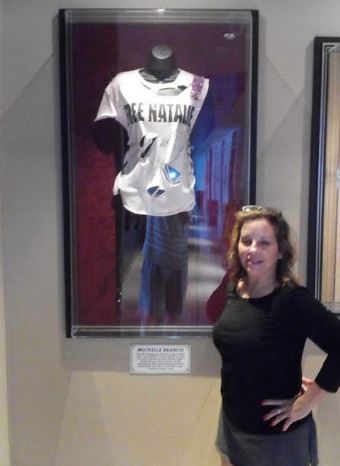
Two years ago, Kristina and I spent time together at the Hard Rock Cafe in Panama City, Panama. On the eve of Natalie's death anniversary, we wandered around the hotel in search of any AC/DC memorabilia. As our search was coming to an end, I noticed a T-Shirt in a glass cage. The shirt once belonged to Dixie Chicks singer/songwriter, Natalie Maines.
Regular readers of the Fiddaman blog may have been keeping a close eye on an old study from the early 90's (08 Apr 1993 – 25 Oct 1994) that I've recently found via GSK's clinical trial registry website.
The study, known as GSK Study 356, reported 7 suicide attempts (2 of which were completed suicides). However, these attempts at suicide are not mentioned within the documents GSK has made public. Moreover, the actual number of suicide attempts in Study 356 was 9. (2 of which were completed suicides)
How do we know this?
Documents obtained from the Australian drug regulator, the TGA, show us this but strangely do not tell us in which group the attempts at suicide occurred...until now.
For those who are unfamiliar with the study, it was, to my knowledge, an attempt at finding which of the two antidepressants, namely Prozac and Paxil, were better at treating major depression. The study was sponsored by GSK.
However, rather than trying to add clarity to my previous two blogs, the TGA has opened a pretty big can of worms.
In asking them why GSK failed to report the missing suicide attempts they told me the following. It makes for very interesting reading.
Good Afternoon Mr Fiddaman I have followed up your enquiry about the presentation of information about the Clinical Trial - GSK Study ID - 29060/356 on the GSK study website. The nine events you have referred to were discussed with investigators at a meeting on November 26th 1993, whilst the study was still ongoing and blind. Seven of those same events were also included in the Dear Investigator Letter which went out to investigators in August 1993. Of the nine events that were discussed with the investigators five events were subsequently coded to the WHO preferred term of drug abuse, through the methodology applied at that time. On the trial summary these are presented as cases of “Drug Abuse (Overdose)”. There were two of these recorded for paroxetine (patients 139 and 147) and three of them recorded for fluoxetine (patients 18, 76 and 144) The remaining four cases were coded to the WHO preferred term of “Suicide Attempt”. On the trial summary two of these events are listed as “Suicides” (in the fatal SAE section) with one for paroxetine (patient 92) and one for fluoxetine (patient 122). The two other cases are presented as “Suicide attempt”, both for fluoxetine (patients 87 and 142). The information as presented in the clinical trial summary accords with the safety information as provided in the full study report. I trust that the information provided is of assistance. Regards
Bernadette Barton
Assistant Director
Adverse Event and Medicine Defect
Pharmacovigilance and Special Access Branch
Therapeutic Goods Administration
Department of Health
PO Box 100
Woden ACT 2606 Australia
--
So, there you have it, folks. The missing suicide attempts were coded as "drug abuse." They did this, according to the TGA, because this was the preferred term, at the time, used by the World Health Organisation (WHO)
So, breaking down the 9 who attempted suicide we have 6 from the Prozac group and 3 from the Paxil group. (1 patient from each of the groups completed suicide)
It's a head-scratcher for me - why would WHO use such a system?
The medical definition of "suicide attempt" and "drug abuse" differ somewhat.
Suicide Attempt
A non-fatal, self-directed, potentially injurious behavior with an intent to die as a result of the behavior; might not result in injury
This begs the question: How many other GSK sponsored studies buried suicide attempts in the drug abuse category?
Study 356 was carried out in the early 90's. By the late 90's there was growing concerns regarding Prozac, the concerns surrounding Paxil came later.
Here's a Guardian article from 1999. I'll just post the sub-heading and the link:
It was too good to be true. Prozac, the wonderdrug hailed as the answer to the war against depression and taken by some 37 million people worldwide, is not as harmless as we've been led to believe. Disturbing evidence has now emerged, showing that, after the initial relief and euphoria of the first dose, Prozac can push some patients into so agitated a state of mind that they are a danger not only to themselves, but to others, too. (Full Article)
One has to remember here that Study 356 was sponsored by GSK, the manufacturers of Paxil who, at the time, wanted Paxil to be the blockbuster drug that Prozac already was.
Would doctors have prescribed Prozac knowing that there was a high ratio of suicides in a clinical trial - personally, I think they would have. The marketing for these two drugs was heavy and included incentives for doctors to prescribe them. Eli Lilly reps dining and dashing', whilst GSK reps would persuade doctors at strip bars, amongst other places.
Now we know. It's taken the best part of 12 months to get to the bottom of this study, a study that is almost 25 years old!, and I couldn't have done it without the help of Kathy, who is the moderator of the Facebook page, Australian Antidepressants Class Action & Awareness and an administrator for the Australians For Safe Medicines Facebook page.
Special thanks to the TGA too. They seem a little bit more transparent than their counterparts, the FDA and MHRA.
The British, American, and, indeed, Australian media are disinterested.
Earlier this month I posted previously unseen documents that clearly showed how GlaxoSmithKline (GSK) hid 9 suicide attempts from the results of a 1993 clinical trial posted on their website. See - GSK Study ID - 29060/356 - The Missing Suicide Attempts
After publishing my findings, Kathy wrote to the Therapeutic Goods Administration (TGA) and asked if they would be taking action against GSK for failing to report the 9 suicide attempts in the Aropax clinical trials, known as GSK Study #356.
The TGA's response is staggering, to say the least.
Dear Kathy Thank you for emailing the Therapeutic Goods Administration (TGA). I acknowledge your concerns about the GSK clinical trial (A double-blind, multicentre study to compare paroxetine and fluoxetine in the treatment of patients with major depressive disorder with regard to antidepressant efficacy, effects on associated anxiety and tolerability) that was conducted in 1993-1994. However, the TGA is unable to comment about the clinical trial as it was completed twenty four years ago. As has been explained to you previously, the TGA’s safety monitoring is based on rigorous pre-market assessment and then the post-market signal investigation area of the TGA monitors the safety of medicines, to contribute to a better understanding of their possible adverse effects when they are used outside the controlled conditions of clinical trials. Thank you for your interest in medicine safety. Regards
Bernadette Barton
Assistant Director
Adverse Event and Medicine Defect
Pharmacovigilance and Special Access Branch
--
On the 'About TGA' section of their website, they state: "TGA's approach to therapeutic product vigilance is to continually monitor and evaluate the safety and efficacy (performance) profile of therapeutic products and to manage any risks associated with individual products.
Just to be clear, the results of GSK Study #356 failed to mention 9 suicide attempts, moreover, they failed to say which group these 9 suicide attempts pertained to. Study #356 had two active drugs, namely paroxetine and fluoxetine, both of which are selective serotonin reuptake inhibitors (SSRIs). There was no placebo group in the study.
As a regulator who claims to "manage any risks associated with individual products" I am utterly gobsmacked by their response above.
Surely a regulator should be asking GSK why they failed to include these 9 suicide attempts. Surely they should be telling GSK to publish the correct statistics and not a watered down version of what actually occurred during the study.
In essence, the TGA is saying, we don't care if the public doesn't know how many suicide attempts occurred in either the paroxetine or fluoxetine group. We don't care that GSK failed to report that the percentage of suicide attempts was a staggering 11.11%. We don't wish to manage these risks, even though we claim on our website that we do. We don't care the public isn't armed with this information when visiting their doctor or psychiatrist. We don't think 9 suicide attempts in a clinical trial is important.
I find the last line of the email kind of ironic: "Thank you for your interest in medicine safety."
Fluoxetine - AKA Prozac
Paroxetine - AKA Aropax, Seroxat, Paxil Study ID- 29060/356
A double-blind, multicentre study to compare paroxetine and fluoxetine in the treatment of patients with major depressive disorder with regard to antidepressant efficacy, effects on associated anxiety and tolerability.
Snapshot was taken 3rd September 2018
Study ID- 29060/356/_1
Extension phase for a double-blind, multicentre study to compare paroxetine and fluoxetine in the treatment of patients with major depressive disorder with regard to antidepressant efficacy, effects on associated anxiety and tolerability.
Both studies appear on the GSK Study Register website, the second study is a continuation (extension) of the first.
As you can see, both studies were double-blind, which means neither the patient or investigator knew what drug they were taking/prescribing. After the trials have been completed, GSK can break the code and find out on which drug the adverse events occurred. In this case, one suicide in the paroxetine group and one in the fluoxetine group; no suicide attempts in the paroxetine group, and; two in the fluoxetine group, one of which was a completed suicide. In both groups, there was one suicide each, both were women.
According to recently obtained documents from the Therapeutic Goods Administration (TGA), the #356 trial reported 7 suicide attempts* (2 of which were completed suicides). However, there is no mention of the 5 attempted suicides on the GSK Study Register website, at least not for paroxetine. They do, however, cite two suicide attempts for patients taking fluoxetine during the trial, one of which was a completed suicide.
*Further, more documents show that there were in fact 9 suicide attempts in Study #356, however, there is no mention of this on the GSK Study Register website.
Masking the suicide attempts
GSK report that there were 6 subjects with non-fatal serious adverse events (SAEs) in the paroxetine group and 10 in the fluoxetine group. A total of five (2 paroxetine, 3 fluoxetine) are in the Drug Abuse (Overdose) category.
Drug overdoses
Could these be deemed as attempted suicides or were the overdoses unintentional? If, indeed, they were attempts at ending one's own life, then why is it not reported as such? Well, according to recently obtained documents, no suicide attempts were made by overdose.
Therapeutic Goods Administration (TGA)
Who are the TGA?
The TGA is Australia's regulatory authority for therapeutic goods. They carry out a range of assessment and monitoring activities to ensure therapeutic goods available in Australia are of an acceptable standard. They are the American equivalent of the FDA and British equivalent of the MHRA.
The Previously Unseen Documents for Study ID - 29060/356
These were obtained under the Freedom of Information Act and forwarded to me by 'Kathy' who runs the Australian Antidepressants Class Action & Awareness Facebook page. Kathy copied me in on a lot of the correspondence between herself and the TGA. The process of obtaining the following documents took a considerable amount of time; I'd estimate the best part of a year. Kathy's tenacity and doggedness paid off.
After initially requesting payment for the documents, the TGA apparently had a change of heart and released many documents pertaining to Study #356, most of which make for very interesting reading. Before I publish them, it's important you understand the reasons why there are many redactions (black-outs) in the documents. According to the Australian Freedom of Information Act 1982, there are a number of exemptions where certain information may be redacted. They include: protecting patient privacy; irrelevant material; documents disclosing trade secrets or commercially valuable information and; documents subject to legal professional privilege.
Human Research Ethics Committees (Australia)
It may be unethical for a researcher to continue a trial if:
(a) there are or have been substantial deviations from the trial
protocol;
(b) side effects of unexpected type, severity, or frequency are encountered
National Statement on Ethical Conduct in Research Involving Humans
You'll hear more about the Human Research Ethics Committees (HREC) in the documents below.
First off, the two suicides...
32-year-old female
Causality: "Possible"
Outcome: Death, maybe drug
46-year-old female
Causality: "Possible"
Outcome: Death, maybe drug
Attempted Suicides
According to the study posted on the GSK website, there were only two suicide attempts, both of which occurred in the fluoxetine group. One of these was fatal. However, the documents obtained from the TGA say something quite different. There is a contradiction as to exactly how many suicides attempts occurred. Firstly, according to a Paroxetine Clinical Study Meeting, Dr Sykes claimed there were 9 reported suicide attempts, two of which were completed suicides.
The study meeting, according to the document, was held on Friday the 26th of November, 1993
However, 4 months prior to Dr Sykes' claims, GSK, then SmithKline Beecham, sent a letter to all investigators involved in the trial. They stated, "...we have now received reports of 7 suicide attempts (including two deaths) for the 356 study comparing paroxetine to fluoxetine."
The letter, below, goes on to state how confident they are that, "the number of suicide attempts in this study is within that expected as a consequence of the depressive illness per se."
In other words, it wasn't the drug, it was the illness.
In between these two letters, we have a document from a Professor (dated September 1993). The letter was sent to the Research Ethics Committee.
GSK had made contact and told him about the suicides and suicide attempts. Here it gets interesting because it gives us the number of those enrolled (63). The Professor states, "...there have been seven suicide attempts including two deaths in the first 63 patients included in this Australian multicentre study." (11.11%)
The letter,, signed off by an Associate Professor at the School of Psychiatry, goes on to say how he had researched data and had found no evidence that either paroxetine or fluoxetine increase suicide rate or ideation in depressed patients. Remember, this was 1993 - no lawsuits had yet revealed the extent of those who had died or attempted suicide on paroxetine, or indeed Prozac.
In November 1993, the Research Ethics Committee ceased enrollments for the study because of the "reported cases of suicidal gestures'. A review of the attempted suicides was needed before #356 could proceed.
#356 was halted and, it seems, an independent review of the study took place one year later. The independent review clarifies that there were actually nine suicide attempts, two of which were successful. In all, according to the review, there were 100 patients enrolled. The review, however, found no reason why the study shouldn't continue. (Attempted suicides = 9%)
Of the 91 patients who did not attempt suicide, the review states, "26 either withdrew or were withdrawn prematurely from the trial." No reason is given for this.
According to the review, no suicide attempts were made by means of a drug overdose.
Where are these missing suicide attempts? Why are they not reported on the GSK Study Register website?
There were 7 suicide attempts when 63 patients were enrolled (11.11%) . Surely this figure should have raised a red flag?
There were 9 suicide attempts when 100 patients were enrolled (9%) . Even this figure is astronomically high.
Investigators and review panels didn't really have much to go on back in 1993/94, apart from, of course, GSK's own information and published literature that was mainly ghostwritten by PR companies hired by GSK.
From the early onset of this study, GSK made it abundantly clear to investigators (prescribers) that there was no supporting evidence that suggested paroxetine could induce suicidal ideation. The study was double-blind so the patients and investigators didn't know what drug was being used.
Today, on the GSK Study Register website we see that since the study completion, GSK broke the code (so they could see what patient took what drug). They admit to having one suicide in the paroxetine group and one in the fluoxetine group. What they don't do, and they've had 25 years to rectify, is show us what drug caused the suicide attempts. According to the findings, we see no attempts in the paroxetine group and 2 (one completion) in the fluoxetine group. This would suggest that they also broke the code for the suicide attempts but only showed 2 (both in the fluoxetine group) when the documents obtained from the TGA show that there were 7 attempts when 63 patients were enrolled and 9 attempts when the enrollment reached 100.
The 356 Study that sits on the GSK website today doesn't really raise any red flags in its current format. With documents I've published today should we have a need to be concerned?
It is unknown in what group the non-fatal suicide attempts occurred. For all we know they could have all occurred in the fluoxetine group. I'm unsure why GSK have omitted such important data but I can speculate.
It leaves me wondering that if such a trial was carried out today, would the review board still claim there is no link between either paroxetine or fluoxetine and suicidal ideation?
Since the year of this #356 study (1993) GSK has paid $390 million for suicides or attempted suicides said to be linked to paroxetine. This has included an average of $300,000 to resolve 300 attempted suicide cases and an average of $2 million for 150 suicide cases. (Source)
The most recent paroxetine suicide case involves former corporate lawyer Stewart Dolin, whose life ended when he jumped in front of a Chicago Transit Authority train on July 15, 2010, while taking a generic version of Paxil. On April 20, 2017, an Illinois federal jury found GSK liable for Stewart Dolin’s death and ordered the pharmaceutical company to pay $3 million to Wendy Dolin. However, on August 22, 2018, the Seventh Circuit Court of Appeals overturned the verdict claiming, "GSK had presented sufficient evidence time and again through the proceedings – before, during and after trial – to demonstrate it had no control of the drug labeling at the center of the case. Therefore, they said, the lawsuit should have been dismissed." Further, they added, "Court judges erred when they allowed to go to trial a lawsuit brought by Stewart Dolin's widow (Wendy Dolin)"
By 2000, Eli Lilly had reportedly paid more than $50 million to settle more than 30 Prozac (fluoxetine) lawsuits related to murders or suicides. There were also undisclosed settlements. While Prozac suicide lawsuits spiked in the 1990s, Lilly faced less litigation after the drug lost patent in 2001 and generics flooded the market. An FDA-required black box warning for suicide ended all “failure to warn” lawsuits. (Source)
In 2015 an amendment to the Coroners' Bill was put forward in Ireland on behalf of John and Stephanie McGill Lynch. Their 14-year-old son, Jake (pictured), died after experiencing critical ADR's caused by the SSRI drug Prozac.
Currently, coroners can return an "open verdict" in such deaths. The open verdict means the jury confirms the death is suspicious but sidesteps a definitive verdict. Mr. and Mrs. Lynch wanted this amended to include a new verdict. They proposed the term “iatrogenic suicide” which, in a nutshell, means “the ending of one’s own life where the effect of medical treatment undertaken by the deceased, including any prescribed medication, is the primary cause of such an action."
Yesterday the Irish Times reported on the outcome of Jake’s Amendment.
Minster for Justice Charlie Flanagan ruled out the introduction citing that:
“The proposal from the McGill Lynch family is well-intentioned but cannot be supported. This is mainly because the verdict would apportion some liability on the medical practitioner who may have prescribed the treatment or medication for the deceased person”
I find Flanagan's ruling bizarre and I'm not alone in this assessment. Sinn Féin Senator, Pádraig MacLochlainn, who presented Jake’s Amendment on behalf of the McGill-Lynch family, said it was originally “uncontentious” among all parties in the Seanad but was blocked at the “11th hour.” “My suspicion is that senior medical professionals spooked the minister.”
MacLochlainn makes a valid point. Adding more insult to injury, the Office of the Attorney General advised the proposed verdict would be legally unsound because a new verdict would be capable of ascribing criminal liability to person or persons who are readily identifiable. Unsurprisingly, the Coroners Society of Ireland was opposed to the proposal. It seems the only people the government wants to hold accountable for these avoidable deaths is the victim who died.
The current choice of verdicts open to a coroner or, in legal cases, to a jury, include accidental death; misadventure; suicide; open verdict; natural causes, and; unlawful killing. When a person dies from self-sustained injury, mainstream terminology still labels such deaths as "suicides" despite that many pharma products can and do cause unwanted, ego-dystonic death. Ego-dystonic deaths are "against one's will." That is, if the consumer was not experiencing ADRs caused by pharma products, they would not in their normal undrugged mind, have wanted to die nor died.
Like thousands of other ADR victims, Jake's young mind was chemically abducted by Prozac. Prozac and all SSRIs cause akathisia, psychosis and suicidal thoughts and actions among many unsuspecting consumers. In the US, all SSRIs carry the FDA's most serious Black Box warning stating they can cause life-threatening ADRs. The FDA was forced to include the Black Box warning on SSRIs after thousands of reported deaths and extensive testimony by courageous family members left behind. Unfortunately, the FDA essentially buries the dire warning in tiny print tucked inside a paper envelope most trusting consumers unintentionally discard.
Justice Charlie Flanagan's ruling seems absurd as does his reasoning. Ms. Lynch told the Irish Times she and her husband, from Clondalkin, west Dublin, were “absolutely disgusted, traumatized,” adding that the proposed amendment “would have said ‘without apportioning blame.'" We are not looking for anyone’s head on a plate. But we are looking for some kind of accountability.”
Coroners are first and foremost doctors who sit on the fence regarding prescription drug-induced deaths. Coroners know they can't definitively label any of these deaths "suicides" but they won't protect the public by acknowledging lethal drug effects. If coroners did so, they would then honestly speak for the dead to protect the living. As it stands, coroners continue to deceitfully "speak for the dead" to protect fellow doctors and the drug industry.
The Irish Times article can be read in its entirety here.
Today marks the 12 year anniversary of this blog and with over 2 million views since its conception I find myself posting a recent radio show asking "What can we do?" Over the years I've covered many advocates and their efforts to increase awareness so others might avoid dangerous ineffective drugs. I've covered wrongful death court trials, organizations dedicated to exposing psychiatry and pharma's deceit, tragic losses of life too numerous to count.
Today, I'd like to pose a question to my readers: What can we do? We all have diverse talents, compassion, wisdom that often comes from ADR experiences, and a commitment to positive change. Perhaps there are some great ideas for collaboration out there?
The following interview with Kristina Gehrki went out live on KCAA Radio on Wednesday evening. In it, she explains how she tragically lost her daughter, Natalie (19) to prescription drugs, namely Prozac and Zoloft.
As an advocate for drug safety, I sometimes feel as if I'm pissing in the wind. Today is one of those times. (For American readers, the Cambridge Dictionary describes pissing in the wind as "trying to do something when there is no hope of succeeding.")
This week President Trump nominated Alex Azar as the next Secretary of the Department of Health and Human Services (HHS). Azar is former senior vice president of corporate affairs and communication for US pharmaceutical giant Eli Lilly. This US announcement comes on the heels of similar incestuous behavior by the UK government which recently announced Andrew Witty, former head of GlaxoSmithKline, has been selected to head its new pathway, 'Accelerated Access Review' (AAR). Days later, GSK's website highlighted another kick in the teeth for British drug consumers: Patrick Vallance, who is currently GSK's president of research and development, will become the UK government's new Chief Scientific Adviser.
What a sick few weeks for health consumers. Three top executives from Big Pharma land positions that are supposed to better protect health consumers by ensuring scientific information is accurate, and drugs are safe and effective. These three appointments should prompt Britain and US residents to take notice and be on full DEFCON alert. I'm certain families across the globe who have lost loved ones to Prozac and Paxil won't be jumping for joy at this week's announcements, and I imagine their dead relatives are turning in their graves.
Lilly & GSK are two companies that have frequently been sued by consumers who were harmed by their dangerous products. Further, both companies have engaged in abhorrent and illegal tactics to peddle their pills. Some of these unscrupulous behaviors include paying doctors to prescribe, bribing government officials, and fraudulently marketing drugs for unapproved uses. But apparently, this type of leadership is rewarded by governments that prefer corporate collusion to consumer care.
GSK and Lilly have paid billions in fines and lawsuits because their illegal activities caused the suffering and deaths of countless innocent men, women, and children. In 2009, Lilly was fined $1.42 billion to resolve a government investigation regarding off-label promotion of the antipsychotic Zyprexa. Zyprexa had been approved for the treatment of certain psychotic disorders, but Lilly admitted to promoting the drug in elderly populations to treat dementia. The government also alleged that Lilly targeted primary care physicians to promote Zyprexa for unapproved uses and “trained its sales force to disregard the law."
Similarly, in 2012, GSK agreed to pay a fine of $3 billion to resolve civil and criminal liabilities regarding its promotion of drugs and its failure to report safety data. This is the largest healthcare fraud settlement in the United States to date. The company pled guilty to misbranding the drug Paxil for treating depression in patients under 18, even though the drug was not approved for children. GSK also pled guilty to failing to disclose safety information to the FDA about the diabetes drug Avandia. These pharmaceutical companies don't mind paying a couple of billion dollars here and there for criminal violations because shady criminal behavior reaps more sales profits than does subsequent fines. This unethical behavior is just part of pharma's business plan.
Back to Those Incestuous Appointments
Alex Azar has had previous connections to the US government. He was deputy secretary of Health and Human Services under George W. Bush and served as the chief operating officer for two years. In that role, Azar oversaw such agencies as the Food and Drug Administration (FDA), the National Institutes of Health, the Centers for Disease Control and Prevention, and the Centers for Medicare and Medicaid Services. In May 2007, Azar became senior vice president of corporate affairs and communication for Lilly. This revolving door employment agency is standard US practice. Corporate execs leave the industry for cushy jobs in government, then they leave government for industry and lobbying jobs, etc.
This incestuous fox guarding the hen house is commonplace and will continue to put consumers at great risk. It was US President George W. Bush who named Eli Lilly President and CEO, Sidney Taurel, as a Homeland Security Advisory Council member in 2002. Further, soon after the Homeland Security Act was signed in 2002, New York Times columnist Bob Herbert discovered what had been slipped into the Act at the last minute. On November 25, 2002, he wrote, “Buried in this massive bill, snuck into it in the dark of night by persons unknown…was a provision that incredibly will protect Eli Lilly and a few other big pharmaceutical outfits from lawsuits by parents who believe their children were harmed by thimerosal.” (Thimerosal is a mercury-based preservative that is used in vaccines. It was developed by Lilly in the 1920s and by the 1990s its use was widespread)
In 2003, Bush appointed Taurel to the President’s Export Council. The same year, “60 Minutes II” aired a segment on Lillygate and Prozac. Lilly's patent for Prozac had run out so they began marketing a new drug, Prozac Weekly. According to 60 Minutes II, Lilly sales reps gained access to “confidential” patient information records and mailed out free samples of Prozac Weekly. Regulations, proposed under Bill Clinton and later implemented under George Bush, contained a provision that allowed healthcare providers the right to sell a person’s confidential medical information to marketing firms and drug companies.
Bush was later rewarded for his job placements and overseeing provisions when he left the White House. He went straight to Eli Lilly headquarters where he served as an Eli Lilly Board of Director.
You scratch my back, I'll scratch yours, huh?
Assuming he's confirmed, Azar will oversee 11 agencies including the FDA, Center for Disease Control (CDC), National Institutes of Health (NIH), Administration for Children and Families (ACF) and Centers for Medicare & Medicaid Services (CMS).
When Patrick Vallance of GSK takes over the role of UK Government Chief Scientific Adviser, he will oversee science and technology-related activities and recommend policies to the Prime Minister and Cabinet. He will also sit as chair of the UK’s Scientific Advisory Group for Emergencies.
Witty's new title is self-explanatory. He will head a new UK government initiative known as 'Accelerated Access Review' (AAR) where his role is to get new drugs and devices on the market quickly.
If you want to know more about how Lilly operates, I highly recommend John Cornwell's book, "The Power to Harm: Mind, Medicine, and Murder on Trial." It's a jaw-dropping insight regarding how far Lilly went to cover up the deadly ADRs caused by their lucrative drug, Prozac. If you want to know how GSK operate, well, there are more than 2,000 posts about GSK's shenanigans on my blog alone.
Unreported Terror & Risk
These appointments are scary and put citizens at greater risk of being harmed by unsafe, ineffective drugs, many of which should never have been approved. In both the UK and the US, we see frequent media reports about terrorist threats and acts, but we almost never hear news about pharma created deaths. When was the last time you heard a news report or read an article highlighting that prescription drugs are the fourth leading cause of death? In America, I chalk this up to the lucrative drug advertisements that essentially pay for TV news production. In the UK we don't have drug ads, but we still have pharma money negatively influencing government policy and political appointments.
Hiring CEO's of criminal corporations to protect citizens is wrong. But these types of crimes pay. If you don't like the status quo, you can petition your respective government and share your disgust. I'm sure they'll be happy to send you a form letter response within 30 days...
So, back to pissing in the wind: It's understandable I'm disgusted by this week's news. It's easy to throw up my hands when hearing such outrageous appointments. But sometimes those who've lost a loved one to pharma help me persevere. As one mom whose child died from pharma products recently said, "To the world, my child was just one person, but to me, she was the world. If my advocacy saves even one child, I have saved someone else's world."
In other news involving incestuous revolving doors, the FDA has now approved a new "digital pill." The pill contains a sensor that digitally tracks whether or not patients have ingested their medication. And what pill has this sensor been embedded into? ~ aripiprazole, (Abilify) a drug used to treat multiple mental mood disorders, including bipolar disorder and schizophrenia.
On top of this, the commissioner of the FDA, Scott Gottlieb, is opposing a natural plant, Kratom, (mitragyna speciosa) that could help people effectively treat an addiction caused by opioids.
More on the aripiprazole and kratom scandals next week.
Most believe the author of Three Blind Mice was a teenager named Thomas Ravenscroft. The origin of the words, according to many historians, stem from Queen Mary I and her staunch Catholic beliefs. due to her violent persecution of Protestants, she was known as 'Bloody Mary'. The reference to 'farmer's wife' in Three Blind Mice refers to the huge estates she possessed. The 'three blind mice' were three Protestants convicted of plotting against Queen Mary I. She did not have them dismembered and blinded as inferred in Three Blind Mice, she had them burnt at the stake!
Ah, don't you just love the morals and ethics of religion! Even today we still see people being killed in the name of something that cannot be seen or heard. History shows that religious books have been responsible for many deaths, or rather the way religious scriptures are been interpreted. The Three Blind Mice rhyme has similarities to a recent study in Japan.
The study, sponsored in part by Takeda Pharmaceutical Co. Ltd., involved mice pups bred to mimic the distinctive behaviors and brain abnormalities seen in autism. After inducing autistic traits, the mice were fed Prozac. The authors claim Prozac caused dramatic improvements in the animal's social interactions and communication patterns. The Prozac, which was administered through the mother’s milk for 19 days. Furthermore, according to the study, "newborn mice got a daily injection of Prozac in their first six days of life, the treatment appeared to restore normal vocalization patterns and reduce anxiety-like behaviors well into adulthood."
The study is littered with assumptions and seems to promote a chemical imbalance theory that both humans and mice allegedly have. The study doesn't seem to explain what was done to impair the animal's brain function. What it does claim is that Prozac improved the brain damage the researchers caused.
It claims to show that Prozac cleared whatever was induced in the mice so, in essence, this could just possibly be one drug counteracting another drug.
The spin in this study is obvious. The authors have induced a series of brain abnormalities in mice pups then made claims that these abnormalities are almost identical to the abnormalities found in people with autism.
Here's the irony: Toxic exposures during pregnancy, such as the use of antidepressants, can disrupt brain processes before birth and shortly afterward. So, if antidepressants can disrupt the brain process before and after birth, why not treat that with, um, another antidepressant!
It must have been a slow news day at the Los Angeles Times whose health corespondent, Melissa Healy, ran with the study. Her article is littered with assumptions. She claims Prozac, "is thought to elevate mood and quell anxiety by increasing the availability of the neurotransmitter serotonin in the spaces between certain types of brain cells." I suspect her article is mainly a reprinted press release.
The key word here is "thought." Anything that follows it can, and should, be taken with a pinch of salt. It's clever marketing because our eyes are drawn to the science when, in actual fact, there is no science, it's just supposition.
Furthermore, the jounalist states, "Research on humans suggests that, during early brain development, those who will go on to develop autism have unusually low levels of serotonin in critical areas of the brain."
Now, here's a game for you all. What is the keyword in the above sentence?
Answers in the comments section or on my Facebook page please.
Science is an intellectual and practical activity encompassing the systematic study of the structure and behavior of the physical and natural world through observation and experiment. This Japanese study has done none of that.
Don't you just love the morals and ethics of clinical trials and unscientific journalsm reporting!
Take a good look at the beautiful young woman pictured above. Heather Blower was just 18 when she was found hanging in her bedroom by her sister, Heidi.
Earlier today I was alerted to a post that featured Heather and Heidi's mother, Paula.
I was halfway through the post when I had to stop. Tears were welling and I had to dry my eyes. Anger was also rearing its ugly head because the incompetence highlighted in Paula's guest post is all too familiar.
One would have thought that after 11 years of researching and blogging about this I'd be almost immune to the pain and suffering felt by those left behind when they lose children under such tragic circumstances. The tragedy here is heightened because of the ignorance of apparent health care professionals and a spineless regulator who have been alerted to stories like this time and time again and done absolutely nothing!
Heather was dragged through the system, her mind, body and soul tortured by raving lunatics who chose to ignore obvious signs of antidepressant adverse reactions.
Once dead and with her lifeless body barely put to rest, those same health care professionals thought it their duty to target Heather's surviving sister, Heidi. They offered her antidepressants, this was refused. They then, with their infinite knowledge of "we know better than you", recommended that Heidi be moved into an apartment because, they told her mom, “you’re stopping her having antidepressants and getting well.”
The guest post is difficult to read, it will make you sad and, hopefully, make you angry enough to share it far and wide. If you have health care professionals in your family or if you have them as friends then you have a moral and ethical duty to tell them (not ask them) to sit down and actually let this sink in.
Paula has shown courage for speaking out, a courage that comes in the face of adversity. It's time for us all to show courage. It's time for us to say enough is enough.
Losing Heather is featured on the brilliant AntiDepAware website here.
Back in April this year my blog reached a milestone. It was the ten year anniversary of when I first launched this blog and as part of its 10 year birthday I decided to run a series of Q&A's with fellow advocates and people who have been part of my 10 year journey. Previous Q&A's can be seen at the foot of Kristina's (Pictured above) Q&A session.
I first became aware of Kristina after I had read the history surrounding her daughter, Natalie, whom at the age of 19 took her life, shortly after her dosage of Zoloft was increased over the telephone by her prescribing physician. Kristina has wrote a two part series for David Healy's blog, RxISK. Kristina's two accounts of her daughter were beautifully written, so much so that it prompted me to leave a message in the comment section of RxISK commending her on her excellent writing skills. (Natalie's Story can be read here & here.)
Some months later I opened my email and saw a message in my inbox from Kristina. I knew straight away who she was as her two accounts about Natalie's prescribed death had penciled her name into my subconscious. I am a fan of writers, those who have the ability to paint pictures with words. Kristina has this ability. This prompted me to ask Kristina to write a guest post for my blog, a post which has attracted over 3,000 views to date and one which has been 'liked' and shared on Facebook hundreds of times. See - Guest Post: Let's Bring Akathisia Out of the Darkness.
Today sees the birthday of her daughter, Natalie, she would have been 23. I feel it's fitting to publish Kristina's Q&A today, much of which will astound you if you are unfamiliar with the background of Natalie's treatment by apparent health care 'professionals'.
Pay particular attention to Kristina's explanation of the state of Virginia's negligence laws - I must admit, these laws are absurd given the number of deaths by prescription drugs throughout America these days.
Also, you HAVE to see Kristina's outstanding delivery to members of an FDA Advisory Panel, a delivery that left FDA employees stunned into complete and utter silence - link to the footage is within Kristina's answers below.
We shall be meeting in person soon and both heading off to Chicago for a showdown with a major pharmaceutical company. We're also going to be sharing stories over a pint or two in her hometown of Virginia, hopefully not in a jazz bar though. More on that in a future post.
Anyway, here's Kristina's Q&A. Bob Fiddaman.
--
Full Name: Kristina Kaiser Gehrki Age: 51 Location: Fairfax, Virginia
Natalie
Q: Kristina, Natalie would have been 23 today (Dec 8, 2016), this may be a difficult question, so forgive me if it's painful for you. What is your fondest memory of Natalie?
A: There are so many fond memories it is difficult to choose just one. Natalie was a petite girl with a super-sized laugh and witty sense of humor. Overall, my fondest memory is simply hearing the beautiful sound of my daughter's laughter. It is something I dearly miss.
Natalie often used humor to spotlight the cruel ironies of the world. My fondest specific memory is a letter to the editor she wrote our local paper, the Washington Post. Natalie was sixteen at that time, and the U.S. planned to execute a man whose IQ was so low he was legally “mentally retarded.” Natalie shared her death penalty views and pointed out the absurdity of killing a person who was “mentally retarded.” She said the execution clearly reflected the lowest IQ’s— that of the politicians who made this decision.
I still have her letter and reading it encourages me as I advocate for fully Informed Consent. Informed Consent is a fundamental human right. Consumers have a right to know what they are consuming, whether it’s a genetically-modified tomato or a Black Box drug that can cause violent death. Fully Informed Consent should be provided by prescribing doctors and by pharmacies. It is critical and something we, unfortunately, never received.
Q: What do you say to people who believe that antidepressants are safe and effective?
A: I have several family members who work in the health care field. I am not anti-drug, I am simply pro-information. The fact is “antidepressant” drugs are neither safe nor effective for children. This has, belatedly, been reported in scholarly journals and by some of the few remaining independent journalists. My daughter was prescribed SSRI drugs (Prozac and Zoloft) not for depression but for what the doctor labeled “OCD-like symptoms.” Natalie didn’t receive a specific diagnosis; she was assigned a rather ambiguous billable code that enables doctors to collect insurance money. We asked for a specific diagnosis many times and our questions were often met with excuses. The intense anxiety (Akathisia), confusion, memory loss, change of gait, nausea, etc., Natalie experienced after consuming the products were not presenting symptoms: They were adverse drug reactions.
I’ve learned a lot about unethical pharmaceutical marketing tactics and FDA failures since my daughter’s death. Unfortunately, like many parents who unwittingly gave their children dangerous, ineffective drugs, I learned too many facts far too late, despite that I asked all the right questions I knew to ask. Ironically, my academic and professional background is in communication and marketing. Before Natalie’s death, I presented conference workshops regarding how to communicate crisis and risk. I share this information only to stress that if this tragedy can happen to us, it can happen to anyone. And when I say “tragedy” I am not speaking only of Natalie’s akathisia-induced death. Rather, Natalie was poisoned for many years. Even when she stopped taking the drugs, many of the adverse drug side effects were still present. We simply didn’t recognize then what was happening nor why.
It is difficult if not impossible to recognize signs of adverse drug reactions when consumers are intentionally left in the dark. Several internal memos from Eli Lily (Prozac), Pfizer (Zoloft) and GlaxoSmithKline (Paxil) show these companies knew their respective products were dangerous and no more effective than a sugar pill. The FDA also appears to have known about these risks long before my daughter was ever conceived and before the Black Box warning. Natalie was first prescribed Prozac prior to the Black Box warning. The FDA warning came out while she was taking the drug, but the doctor never informed us. Years later when she was prescribed Zoloft, the doctor assured us "Zoloft is a different drug than Prozac.” This doctor communicated nothing at all about the existence of a Black Box warning. The pharmacy never communicated it. While I believe Black Box warnings have saved lives, I also have spoken to many parents who stated their doctors actively discounted the Black Box warning, claiming the warning is overblown and unnecessary. One doctor dismissed it by telling the parent, whose son later died an SSRI-induced death, “Don’t worry. The FDA puts that label on everything.”
Q: What advice would you give to Coroners faced with suspected suicides of teenagers?
A: It seems many coroners don’t speak for the dead. Too often they seem to protect fellow doctors and the pharmaceutical companies by failing to recognize and/or report adverse drug reactions associated with polypharmacy and metabolism. My daughter died a horrifically violent death one day after first taking 200 mg. of Zoloft, a dose prescribed over the phone, by a doctor who never physically saw Natalie. The doctor never informed me that she had directed such an increase.
After Natalie died, I asked the coroner for blood samples because I wanted my daughter's blood tested for metabolism. The coroner rather casually declared she might not have enough of my child’s blood left after she was done conducting the state’s tests. The state of Virginia would not test for metabolism when I requested it. I was able to obtain a small sample of Natalie's blood which was sent to an independent lab. The results showed Natalie was not a very effective metabolizer of SSRI drugs.
Q: What advice would you give to parents whose children/teenagers are on antidepressant medication?
A: I’ve previously stated it seems our society has gone from one in which “Mother knows best” to “Mother knows nothing.” I believe “modern medicine,” the pharmaceutical and psychiatric industries and government regulators have helped create this paradigm shift. My first advice to mothers is, "Don't be intimidated and coerced. Take back your motherly instinct and parental power. Recognize that it is you who knows your child best. Follow your gut instinct."
My second piece of advice is do not believe the “chemical imbalance” theory, and that so-called “antidepressant” drugs are a safe and effective treatment for children. I now have to live the rest of my days missing my child and feeling profound guilt for having believed such fallacies.
My third piece of advice to parents is to reflect on your child’s presenting symptoms vs. your child’s current symptoms. It is sometimes easy to forget what your child was like before the drugging began, particularly when these adverse drug reactions create more desperation to help your child. Doctors, many of whom are also duped, may convince parents that they are doing a great job parenting because they are actively “treating” their child. My daughter’s personality changed dramatically after consuming these drugs. They robbed Natalie of her soul, her spirit and, in the end, took her very life. It was a slow, painful death.
Lastly, I'd like to encourage parents not to buy into the medicalization of anxiety, sadness and worries. Try safer, more effective ways to reduce such feeling such as exercise, diet, art therapy, etc.
Q: You are in the process of writing a book, can you, without giving too much away, tell me a little bit about the whole process of book writing, and in particular, the difficulties you face as a parent who has lost a child.
A: The book has some similarities to the Diary of Anne Frank, considering it is Natalie, herself, speaking from the dead. She was an intelligent, prolific writer who kept a diary of sorts. You can see some of Natalie's writing in the documentary “Letters From GenerationRx.” She documented many adverse drug reactions without ever knowing she was experiencing and documenting them. She believed what the doctors repeatedly declared: that her physical and mental suffering was a sign of a disease and not signs of drug toxicity. Drug-induced psychosis and akathisia causes extreme anxiety and fear. I’m amazed Natalie did as well as she did for as long as she did considering that, as her side effects worsened, doctors routinely increased the offending drug.
The book is quite difficult for me to write and compile because it requires a careful review of Natalie’s medical records and diaries. These records clearly highlight signs of drug toxicity, yet the doctors repeatedly failed to recognize this reality. I should also add that the psychiatrist responsible for the ultimately fatal 200 mg of Zoloft did not provide us with Natalie’s complete medical records. This psychiatrist stalled, giving us only a few records at a time. Finally, the doctor called and left a voice mail message—a message I still have. She claims an “office flood” destroyed Natalie’s remaining medical records.
Q: You and I have briefly discussed the state of Virginia negligence laws. For the benefit of the readers, can you explain in laypersons terms how difficult it is for residents of Virginia to file suit for negligence?
A: This is an unbelievable injustice and one I learned about only after Natalie's death. Virginia is one of only three states in the U.S. that has an archaic law called contributory negligence. It requires a jury to find the defendant 100% responsible for the outcome or the victim gets nothing. In cases such as Natalie’s it means we must prove her death was 100% the result of the doctor’s negligence and/or the product manufacturer. Given that the general public does not want to believe the truth surrounding SSRI-induced “suicide,” it is extremely difficult to meet the Virginia requirements and also challenging to find attorneys who will take these cases. If I were a doctor, I’d choose to practice medicine in Virginia. And I do mean “practice” in the true sense of the word…
For more information about the contributory negligence law, see: Link.
Q: Would you recommend blogging to parents, or anyone for that matter, who had lost someone dear to them through antidepressant-induced suicide?
A: Bob, I don’t know enough about this to answer here.
Q: Back in September you kindly wrote a guest post for my blog, entitled, 'Let's Bring Akathisia Out of the Darkness.' The post featured a letter you wrote to Christine Moutier, Chief Medical Officer of the American Foundation for Suicide Prevention (AFSP) - Can you tell me what feedback, if any, you have had from the letter you sent them?
A: The American Foundation for Suicide Prevention (AFSP) takes a lot of money from the pharmaceutical companies, and their board of directors contains several people with direct ties to the pharmaceutical industry. These incestuous relationships remind me of the FDA’s revolving-door employment agency. AFSP has never responded to my letter in which I requested they help increase akathisia awareness and reduce drug-induced “suicides.” I put the word “suicide” in quotes because I don’t believe people who die from prescription-drug induced self-harm while suffering from SSRI-induced akathisia have died by their own hand, so to speak. These deaths are sometimes labeled ego-dystonic suicides or suicide beyond one’s will. I simply call it prescripticide.
Q: Have you ever had any correspondence with either Eli Lilly (Prozac) or Pfizer (Zoloft)?
A: No. I learned that Eli Lilly was largely responsible for starting the whole “antidepressant” industry scam by intentionally skewing the real data in their Prozac clinical trials. I consider Eli Lilly my daughter’s first killer. Pfizer comes in next as killer number two as their internal documents show Pfizer knew their product, Zoloft, caused akathisia and suicidality among healthy volunteers in their clinical trials. Glaxo Smith Klein was so impressed by the “Lilly Protocol” deceit that helped gain Prozac FDA approval they then recruited the same employee to conduct similar trials for Paxil. Natalie never was prescribed Paxil, but it is interesting to note how the pharmaceutical industry shares their top talent.
Drug company fraud and corruption—all designed to put profits before people—ought to be made into a Hollywood movie. People might not believe such evil is real. But my daughter went off in a coffin instead of off to college. Her violent death is our reality forever more.
Q: You have met many fellow advocates on your journey, many of whom who have suffered personal tragedies with regard to antidepressant induced death. How has this helped you and do you still keep in contact with this network of fellow advocates?
A: Shortly after Natalie died, I started googling “Zoloft causes suicide” and similar searches. I quickly found stories of many families, such as Woody Witzack, Stewart Dolin and Candace Downing, families whose loved ones also died SSRI-induced deaths. Mathy Downing, who lost her twelve-year-old daughter after Zoloft, told me “Ours is a sad club to belong to, but you will meet a lot of wonderful, caring people.” She was right. I’ve met many wonderful people similarly dedicated to helping others avoid our tragedies. I very much appreciate these fellow advocates and friends.
Q: I was recently privy to witness a speech/statement to you gave to members of an FDA Panel. Can you tell me what that was about and, for the benefit of the readers who never saw this, could you tell me what you said to those panel members? (Footage of Kristina's delivery to the FDA after her answer)
A: I attended the FDA’s recent hearing on “Manufacturer Communications Regarding Unapproved Uses of Approved or Cleared Medical Products.” I had no plans to speak and wasn’t on the speakers’ list. However, after listening to hours of pharmaceutical industry propaganda and industry-funded shills, to include the National Alliance for the Mentally Ill, I felt upset and nauseous. Many of the so-called “patient advocates” were sent to the hearing by the pharmaceutical companies and their funded organizations. Few people can afford to travel to the Washington Metro area and speak up for their loved ones who were harmed or killed. I was glad I did.
I arrived with no prepared speech and simply spoke from my heart. Perhaps I could have been a bit more cordial and succinct, but, really, who can expect parents to be pleasantly deferential when speaking to the government body whose actions and inactions caused the torture and death of their child?
Q: Where do you see yourself in 10 years’ time?
A: Like other people whose loved ones have been harmed and/or killed, I will continue advocating to help prevent this from happening to other families. Losing a child, or any family member, to avoidable death, is terribly painful. However, the best thing we can do to honor our loved ones is to cherish their memory, create happy moments and live our lives with meaningful purpose. Ten years down the road, I will still be advocating, but, hopefully living in a sunny place surrounded by lush greenery and a little garden.
Q: Finally Kristina, some personal questions... 1. What book are you currently reading?
A: Ah, this is a difficult question. I have a large stack of books I want to read, some for pleasure and others for research related to my own book. None of the research related books are happy reads, but the authors--Robert Whitaker, David Healy, and Peter Breggin--are all excellent writers.
2. What was the last CD you listened to (in full)?
A: Vienna Teng’s Waking Hour. She is a talented musician with a beautiful voice. Natalie loved Vienna Teng. Shortly before she died, she downloaded the song “Lullaby for a Stormy Night.” Natalie was suffering from Zoloft-induced psychosis, complained of violent nightmares and insomnia. I doubt she was able to truly understand she was going to die. Akathisia is so overwhelming; perhaps Natalie just wanted to go to sleep. Hence, the lullaby.
3. What is the best movie you have seen this year?
A: The Edge of Seventeen with Woody Harrelson. It’s an entertaining comedy about the awkward challenges of the teenage years. Given that I taught high school marketing for many years, the movie resonated with me. It was realistic and made me laugh. Laughter is a very important part of my life.
4. What country would you most like to visit?
A: While I’ve traveled a lot, I would like to see Ukraine. Given that my grandparents were Ukrainian, I grew up eating Ukrainian food and have fond memories of my grandfather playing the accordion and dancing the polka.
5. If you had the choice of being either a defense or prosecution lawyer, which would you choose and why?
A: I would aim to be proficient at both, but would prefer defense. It seems the U.S. system is increasingly stacking the deck against the “common person” and not just regarding pharmaceutical fraud. Unfortunately, the U.S. imprisons more people at a higher rate than any country. Every person should have the right to adequate legal representation. The notion of the right to a fair trial, along with “anyone can grow up to be president,” are two quaint, Disney-like notions that are U.S. fallacies.