"It's not about what they tell you, it's about what they don't."
~ Bob Fiddaman, Author, Blogger, Researcher, Recipient of two Human Rights awards
Researching drug company and regulatory malfeasance for over 16 years
Humanist, humorist
Showing posts with label Australia. Show all posts
Monday, October 22, 2018
GSK Study 356 - The Truth is Out - 25 years Too Late!
Regular readers of the Fiddaman blog may have been keeping a close eye on an old study from the early 90's (08 Apr 1993 – 25 Oct 1994) that I've recently found via GSK's clinical trial registry website.
The study, known as GSK Study 356, reported 7 suicide attempts (2 of which were completed suicides). However, these attempts at suicide are not mentioned within the documents GSK has made public. Moreover, the actual number of suicide attempts in Study 356 was 9. (2 of which were completed suicides)
How do we know this?
Documents obtained from the Australian drug regulator, the TGA, show us this but strangely do not tell us in which group the attempts at suicide occurred...until now.
For those who are unfamiliar with the study, it was, to my knowledge, an attempt at finding which of the two antidepressants, namely Prozac and Paxil, were better at treating major depression. The study was sponsored by GSK.
After posting two blogs on the subject, GSK Study ID - 29060/356 - The Missing Suicide Attempts and No Action to be Taken Against GSK for Hiding Suicide Data, the TGA have written to me in efforts to clarify what was revealed by me last month.
However, rather than trying to add clarity to my previous two blogs, the TGA has opened a pretty big can of worms.
In asking them why GSK failed to report the missing suicide attempts they told me the following. It makes for very interesting reading.
Good Afternoon Mr Fiddaman
I have followed up your enquiry about the presentation of information about the Clinical Trial - GSK Study ID - 29060/356 on the GSK study website.
The nine events you have referred to were discussed with investigators at a meeting on November 26th 1993, whilst the study was still ongoing and blind. Seven of those same events were also included in the Dear Investigator Letter which went out to investigators in August 1993. Of the nine events that were discussed with the investigators five events were subsequently coded to the WHO preferred term of drug abuse, through the methodology applied at that time. On the trial summary these are presented as cases of “Drug Abuse (Overdose)”. There were two of these recorded for paroxetine (patients 139 and 147) and three of them recorded for fluoxetine (patients 18, 76 and 144)
The remaining four cases were coded to the WHO preferred term of “Suicide Attempt”. On the trial summary two of these events are listed as “Suicides” (in the fatal SAE section) with one for paroxetine (patient 92) and one for fluoxetine (patient 122). The two other cases are presented as “Suicide attempt”, both for fluoxetine (patients 87 and 142).
The information as presented in the clinical trial summary accords with the safety information as provided in the full study report.
I trust that the information provided is of assistance.
Regards
Bernadette Barton
Assistant Director
Adverse Event and Medicine Defect
Pharmacovigilance and Special Access Branch
Therapeutic Goods Administration
Department of Health
PO Box 100
Woden ACT 2606 Australia
--
So, there you have it, folks. The missing suicide attempts were coded as "drug abuse." They did this, according to the TGA, because this was the preferred term, at the time, used by the World Health Organisation (WHO)
So, breaking down the 9 who attempted suicide we have 6 from the Prozac group and 3 from the Paxil group. (1 patient from each of the groups completed suicide)
It's a head-scratcher for me - why would WHO use such a system?
The medical definition of "suicide attempt" and "drug abuse" differ somewhat.
Suicide Attempt
A non-fatal, self-directed, potentially injurious behavior with an intent to die as a result of the behavior; might not result in injury
Prescription Drug Abuse
Taking medication in a manner or dose other than prescribed
This begs the question: How many other GSK sponsored studies buried suicide attempts in the drug abuse category?
Study 356 was carried out in the early 90's. By the late 90's there was growing concerns regarding Prozac, the concerns surrounding Paxil came later.
Here's a Guardian article from 1999. I'll just post the sub-heading and the link:
It was too good to be true. Prozac, the wonderdrug hailed as the answer to the war against depression and taken by some 37 million people worldwide, is not as harmless as we've been led to believe. Disturbing evidence has now emerged, showing that, after the initial relief and euphoria of the first dose, Prozac can push some patients into so agitated a state of mind that they are a danger not only to themselves, but to others, too. (Full Article)
One has to remember here that Study 356 was sponsored by GSK, the manufacturers of Paxil who, at the time, wanted Paxil to be the blockbuster drug that Prozac already was.
Would doctors have prescribed Prozac knowing that there was a high ratio of suicides in a clinical trial - personally, I think they would have. The marketing for these two drugs was heavy and included incentives for doctors to prescribe them. Eli Lilly reps dining and dashing', whilst GSK reps would persuade doctors at strip bars, amongst other places.
Now we know. It's taken the best part of 12 months to get to the bottom of this study, a study that is almost 25 years old!, and I couldn't have done it without the help of Kathy, who is the moderator of the Facebook page, Australian Antidepressants Class Action & Awareness and an administrator for the Australians For Safe Medicines Facebook page.
Special thanks to the TGA too. They seem a little bit more transparent than their counterparts, the FDA and MHRA.
The British, American, and, indeed, Australian media are disinterested.
Bob Fiddaman
Sunday, September 16, 2018
No Action to be Taken Against GSK for Hiding Suicide Data
Earlier this month I posted previously unseen documents that clearly showed how GlaxoSmithKline (GSK) hid 9 suicide attempts from the results of a 1993 clinical trial posted on their website. See - GSK Study ID - 29060/356 - The Missing Suicide Attempts
The documents were sent to me by 'Kathy', who is the moderator of the Facebook page, Australian Antidepressants Class Action & Awareness and an administrator for the Australians For Safe Medicines Facebook page.
After publishing my findings, Kathy wrote to the Therapeutic Goods Administration (TGA) and asked if they would be taking action against GSK for failing to report the 9 suicide attempts in the Aropax clinical trials, known as GSK Study #356.
The TGA's response is staggering, to say the least.
Dear Kathy
Thank you for emailing the Therapeutic Goods Administration (TGA). I acknowledge your concerns about the GSK clinical trial (A double-blind, multicentre study to compare paroxetine and fluoxetine in the treatment of patients with major depressive disorder with regard to antidepressant efficacy, effects on associated anxiety and tolerability) that was conducted in 1993-1994. However, the TGA is unable to comment about the clinical trial as it was completed twenty four years ago.
As has been explained to you previously, the TGA’s safety monitoring is based on rigorous pre-market assessment and then the post-market signal investigation area of the TGA monitors the safety of medicines, to contribute to a better understanding of their possible adverse effects when they are used outside the controlled conditions of clinical trials.
Thank you for your interest in medicine safety.
Regards
Bernadette Barton
Assistant Director
Adverse Event and Medicine Defect
Pharmacovigilance and Special Access Branch
--
On the 'About TGA' section of their website, they state: "TGA's approach to therapeutic product vigilance is to continually monitor and evaluate the safety and efficacy (performance) profile of therapeutic products and to manage any risks associated with individual products.
Just to be clear, the results of GSK Study #356 failed to mention 9 suicide attempts, moreover, they failed to say which group these 9 suicide attempts pertained to. Study #356 had two active drugs, namely paroxetine and fluoxetine, both of which are selective serotonin reuptake inhibitors (SSRIs). There was no placebo group in the study.
As a regulator who claims to "manage any risks associated with individual products" I am utterly gobsmacked by their response above.
Surely a regulator should be asking GSK why they failed to include these 9 suicide attempts. Surely they should be telling GSK to publish the correct statistics and not a watered down version of what actually occurred during the study.
In essence, the TGA is saying, we don't care if the public doesn't know how many suicide attempts occurred in either the paroxetine or fluoxetine group. We don't care that GSK failed to report that the percentage of suicide attempts was a staggering 11.11%. We don't wish to manage these risks, even though we claim on our website that we do. We don't care the public isn't armed with this information when visiting their doctor or psychiatrist. We don't think 9 suicide attempts in a clinical trial is important.
I find the last line of the email kind of ironic: "Thank you for your interest in medicine safety."
Are they taking the piss?
Bob Fiddaman
Tuesday, September 04, 2018
GSK Study ID - 29060/356 - The Missing Suicide Attempts
Fluoxetine - AKA Prozac
Paroxetine - AKA Aropax, Seroxat, Paxil
Study ID - 29060/356
A double-blind, multicentre study to compare paroxetine and fluoxetine in the treatment of patients with major depressive disorder with regard to antidepressant efficacy, effects on associated anxiety and tolerability.
Snapshot was taken 3rd September 2018
Study ID - 29060/356/_1
Extension phase for a double-blind, multicentre study to compare paroxetine and fluoxetine in the treatment of patients with major depressive disorder with regard to antidepressant efficacy, effects on associated anxiety and tolerability.
Both studies appear on the GSK Study Register website, the second study is a continuation (extension) of the first.
As you can see, both studies were double-blind, which means neither the patient or investigator knew what drug they were taking/prescribing. After the trials have been completed, GSK can break the code and find out on which drug the adverse events occurred. In this case, one suicide in the paroxetine group and one in the fluoxetine group; no suicide attempts in the paroxetine group, and; two in the fluoxetine group, one of which was a completed suicide. In both groups, there was one suicide each, both were women.
According to recently obtained documents from the Therapeutic Goods Administration (TGA), the #356 trial reported 7 suicide attempts* (2 of which were completed suicides). However, there is no mention of the 5 attempted suicides on the GSK Study Register website, at least not for paroxetine. They do, however, cite two suicide attempts for patients taking fluoxetine during the trial, one of which was a completed suicide.
*Further, more documents show that there were in fact 9 suicide attempts in Study #356, however, there is no mention of this on the GSK Study Register website.
Masking the suicide attempts
GSK report that there were 6 subjects with non-fatal serious adverse events (SAEs) in the paroxetine group and 10 in the fluoxetine group. A total of five (2 paroxetine, 3 fluoxetine) are in the Drug Abuse (Overdose) category.
Drug overdoses
Could these be deemed as attempted suicides or were the overdoses unintentional? If, indeed, they were attempts at ending one's own life, then why is it not reported as such? Well, according to recently obtained documents, no suicide attempts were made by overdose.
Therapeutic Goods Administration (TGA)
Who are the TGA?
The TGA is Australia's regulatory authority for therapeutic goods. They carry out a range of assessment and monitoring activities to ensure therapeutic goods available in Australia are of an acceptable standard. They are the American equivalent of the FDA and British equivalent of the MHRA.
The Previously Unseen Documents for Study ID - 29060/356
These were obtained under the Freedom of Information Act and forwarded to me by 'Kathy' who runs the Australian Antidepressants Class Action & Awareness Facebook page. Kathy copied me in on a lot of the correspondence between herself and the TGA. The process of obtaining the following documents took a considerable amount of time; I'd estimate the best part of a year. Kathy's tenacity and doggedness paid off.
After initially requesting payment for the documents, the TGA apparently had a change of heart and released many documents pertaining to Study #356, most of which make for very interesting reading. Before I publish them, it's important you understand the reasons why there are many redactions (black-outs) in the documents. According to the Australian Freedom of Information Act 1982, there are a number of exemptions where certain information may be redacted. They include: protecting patient privacy; irrelevant material; documents disclosing trade secrets or commercially valuable information and; documents subject to legal professional privilege.
Human Research Ethics Committees (Australia)
It may be unethical for a researcher to continue a trial if:
(a) there are or have been substantial deviations from the trial
protocol;
(b) side effects of unexpected type, severity, or frequency are
encountered
National Statement on Ethical Conduct in Research Involving Humans
You'll hear more about the Human Research Ethics Committees (HREC) in the documents below.
First off, the two suicides...
32-year-old female
Causality: "Possible"
Outcome: Death, maybe drug
46-year-old female
Causality: "Possible"
Outcome: Death, maybe drug
Attempted Suicides
According to the study posted on the GSK website, there were only two suicide attempts, both of which occurred in the fluoxetine group. One of these was fatal. However, the documents obtained from the TGA say something quite different. There is a contradiction as to exactly how many suicides attempts occurred. Firstly, according to a Paroxetine Clinical Study Meeting, Dr Sykes claimed there were 9 reported suicide attempts, two of which were completed suicides.
The study meeting, according to the document, was held on Friday the 26th of November, 1993
The letter, below, goes on to state how confident they are that, "the number of suicide attempts in this study is within that expected as a consequence of the depressive illness per se."
In other words, it wasn't the drug, it was the illness.
In between these two letters, we have a document from a Professor (dated September 1993). The letter was sent to the Research Ethics Committee.
GSK had made contact and told him about the suicides and suicide attempts. Here it gets interesting because it gives us the number of those enrolled (63). The Professor states, "...there have been seven suicide attempts including two deaths in the first 63 patients included in this Australian multicentre study." (11.11%)
The letter,, signed off by an Associate Professor at the School of Psychiatry, goes on to say how he had researched data and had found no evidence that either paroxetine or fluoxetine increase suicide rate or ideation in depressed patients. Remember, this was 1993 - no lawsuits had yet revealed the extent of those who had died or attempted suicide on paroxetine, or indeed Prozac.
In November 1993, the Research Ethics Committee ceased enrollments for the study because of the "reported cases of suicidal gestures'. A review of the attempted suicides was needed before #356 could proceed.
#356 was halted and, it seems, an independent review of the study took place one year later. The independent review clarifies that there were actually nine suicide attempts, two of which were successful. In all, according to the review, there were 100 patients enrolled. The review, however, found no reason why the study shouldn't continue. (Attempted suicides = 9%)
Of the 91 patients who did not attempt suicide, the review states, "26 either withdrew or were withdrawn prematurely from the trial." No reason is given for this.
According to the review, no suicide attempts were made by means of a drug overdose.
Here is the 25-page Independent Report.
Comment
Where are these missing suicide attempts? Why are they not reported on the GSK Study Register website?
There were 7 suicide attempts when 63 patients were enrolled (11.11%) . Surely this figure should have raised a red flag?
There were 9 suicide attempts when 100 patients were enrolled (9%) . Even this figure is astronomically high.
Investigators and review panels didn't really have much to go on back in 1993/94, apart from, of course, GSK's own information and published literature that was mainly ghostwritten by PR companies hired by GSK.
From the early onset of this study, GSK made it abundantly clear to investigators (prescribers) that there was no supporting evidence that suggested paroxetine could induce suicidal ideation. The study was double-blind so the patients and investigators didn't know what drug was being used.
Today, on the GSK Study Register website we see that since the study completion, GSK broke the code (so they could see what patient took what drug). They admit to having one suicide in the paroxetine group and one in the fluoxetine group. What they don't do, and they've had 25 years to rectify, is show us what drug caused the suicide attempts. According to the findings, we see no attempts in the paroxetine group and 2 (one completion) in the fluoxetine group. This would suggest that they also broke the code for the suicide attempts but only showed 2 (both in the fluoxetine group) when the documents obtained from the TGA show that there were 7 attempts when 63 patients were enrolled and 9 attempts when the enrollment reached 100.
The 356 Study that sits on the GSK website today doesn't really raise any red flags in its current format. With documents I've published today should we have a need to be concerned?
It is unknown in what group the non-fatal suicide attempts occurred. For all we know they could have all occurred in the fluoxetine group. I'm unsure why GSK have omitted such important data but I can speculate.
It leaves me wondering that if such a trial was carried out today, would the review board still claim there is no link between either paroxetine or fluoxetine and suicidal ideation?
Since the year of this #356 study (1993) GSK has paid $390 million for suicides or attempted suicides said to be linked to paroxetine. This has included an average of $300,000 to resolve 300 attempted suicide cases and an average of $2 million for 150 suicide cases. (Source)
The most recent paroxetine suicide case involves former corporate lawyer Stewart Dolin, whose life ended when he jumped in front of a Chicago Transit Authority train on July 15, 2010, while taking a generic version of Paxil. On April 20, 2017, an Illinois federal jury found GSK liable for Stewart Dolin’s death and ordered the pharmaceutical company to pay $3 million to Wendy Dolin. However, on August 22, 2018, the Seventh Circuit Court of Appeals overturned the verdict claiming, "GSK had presented sufficient evidence time and again through the proceedings – before, during and after trial – to demonstrate it had no control of the drug labeling at the center of the case. Therefore, they said, the lawsuit should have been dismissed." Further, they added, "Court judges erred when they allowed to go to trial a lawsuit brought by Stewart Dolin's widow (Wendy Dolin)"
Bob Fiddaman
Special thanks to 'Kathy' of the Australian Antidepressants Class Action & Awareness Facebook Group
Kathy is also an administrator for the Australians For Safe Medicines Facebook page.
She is now in the process of requesting suicide information from Venlafaxine trials in Australia.
Friday, May 05, 2017
Disdain Shown Toward Kids by Australian Medicines Regulator
dis·dain
noun
the feeling that someone or something is unworthy of one's consideration or respect; contempt.
So, Australia, a country I hold dear to my heart, apparently has a limp-wristed regulator in charge of it's drugs. Here's a news story from TodayTonight, a current affairs show broadcast in Adelaide, Australia, that may shock you. It was aired on Thursday May 4.
I can't find the words.
I know how Aropax (more commonly known as Paxil and Seroxat) can screw with your head. I know how it can make you feel like you want to kill yourself. I know the horrific withdrawal effects can make you feel like punching walls, and even people.
I know how GlaxoSmithKline wanted children to take it.
Also featured in this video is the story of a young girl who took Zoloft. Pfizer, it's manufacturer, don't seem to mind if kids take their drug either.
I honestly have never known an industry as sick as this one. It's difficult to put in to words because there seems to be such an incestuous relationship with pharmaceutical companies and global regulators. This relationship grows yearly and, it appears, not one medicine regulator seems to give a damn about children (as depicted in this video segment) being prescribed mind-altering drugs that aren't safe for adults, let alone 5 year-olds!
For more information on the SSRI problem in Australia join the Australian Antidepressants Class Action & Awareness Facebook group.
Bob Fiddaman
Sunday, March 13, 2016
Glaxo's Paxil Kids Down Under
It's not uncommon to think that only in America lawsuits against pharmaceutical companies are filed, settled and/or won. For many years I was under the impression that it was nigh on impossible to get GlaxoSmithKline into court in the UK. Stumbling blocks, legal wrangles and funding just being some of the hurdles those of us involved in the UK group action against GSK have had to endure over the past ten years or so. Thankfully, against GSK's wishes, the group has now been granted access to trial by the presiding Judge (Back Story)
So, what about other countries? We rarely hear of pharmaceutical companies getting hauled in front of Judges outside of America (and now the UK)
Canada, for example, sits on the border of America yet, to my knowledge, no class action lawsuit has ever been brought against any pharmaceutical company where antidepressants are concerned. Maybe I'm wrong or maybe the Canadian media just don't want to report on any such action?
Step forward Australia. A country I hold dear to my heart.
Drayton Sher, a Sydney based law firm, are now working on a group action on behalf of people who, as children and adolescents, were prescribed the antidepressant drug paroxetine, known as Aropax in Australia.
It's a brave move and they should be applauded.
Aropax, which is known as Seroxat in Europe and Paxil in the US and Canada, has been the subject of many lawsuits ranging from it inducing suicide, homicide, birth defects and severe withdrawal reactions for a large number of people who have taken it.
The proposed class-action lawsuit comes on the back of recent findings that Glaxo played down the risk of Aropax use in children.
Last September a damning reanalysis of GlaxoSmithKline's infamous Study 329 went public. (Back story)
The original 329 study showed that...
"Paroxetine is generally well tolerated and effective for major depression in adolescents."However, after reanalyzing the study, it was found that the claims and subsequent support of the claims were misleading and, in actual fact, false.
Glaxo have remained tight-lipped regarding 329 for many years, on the odd occasion (slip-up) they have drawn attention to the abhorrent scale of those who could have been at risk but, as usual, those risks have either been spun or played down.
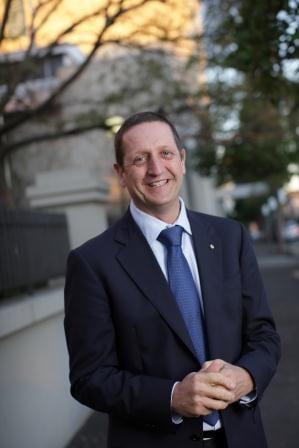
In 2003, GSK's then Head of Psychiatry, Alastair Benbow (pictured above) went on national television and claimed that, "less than a small class size would have these suicidal thoughts."
For those of you interested in Benbow's actual class size please feel to read Alastair Benbow: The Devil is in the Details - it makes interesting reading.
Drayton Sher can be contacted here.
A Facebook page has also been created where you can learn more about other lawsuits in the pipeline - here.
Bob Fiddaman.
Labels:
Aropax,
Australia,
children,
Drayton Sher,
GLAXOSMITHKLINE,
Lawsuit,
Paroxetine,
Paxil,
Seroxat,
Teenagers
Sunday, October 12, 2014
No Advertising Please, Pharma Reps Under Fire.
Pharmaceutical reps, to me at least, have had it their way for far too long... as have the healthcare professionals who accept cash payments, muffins, concert tickets and dinners from them.
Ironically, many of these doctor's profess to have some sort of insight into the brain, often seen prescribing millions of antidepressants because their patients have some sort of psychological disorder.
What I find astounding is that many of these pill-pushers don't recognise their own psychological disorders, namely living in denial that their acceptance of such gifts makes them prescribe more pharmaceutical wares.
Now, a new campaign is under way to stop the pimping of pharmaceutical wares to healthcare professionals.
“No Advertising Please” was conceived by Dr Justin Coleman, a General Practitioner and President of the Australasian Medical Writers Association.
The campaign is trying to encourage doctors to avoid using drug representatives as their ‘educational’ resource, by pledging to not see drug reps at their practice for one year. Healthcare professionals are being encouraged to add their names to this initiative by signing 'The Pledge' on the “No Advertising Please” website.
It's predominantly Australian based but is receiving worldwide attention.
So, what do medicine regulators think about all of this?
Well, the Australian medicines regulator, Medicines Australia, have taken the unusual step of issuing their thoughts on the whole campaign.
Health journalist Melissa Sweet is reporting that Medicines Australia have issued their own press release stating that...
“…the idea that you can ignore information from a pharmaceutical company that has conducted extensive research and development to help treat disease is laughable at best and negligent at worst,”Once again we see a medicines regulator with its tongue down the rear end of the proverbial pharmaceutical trousers. Hardly surprising given that global medicines regulators are made up of former pharmaceutical employees. One only has to look at who is in charge of the British drug regulator to understand how this mafia-type industry operate.
Dr Ian Hudson is head of British drug regulator, the MHRA. He was the former World Safety Officer at SmithKline Beecham (GlaxoSmithKline) - He even gave evidence (if you can call it that) defending Glaxo and their antidepressant Paxil.
You can watch part of his performance in the video below.
Hudson's video deposition and involvement in the concealment of the Paxil suicide link can be seen around the 19 mins 50 second mark.
“No Advertising Please” is a great concept and it's taken a clash of conscience to get the ball rolling no doubt. It's going to take more now from healthcare professionals to get on board the campaign and to refuse those latte's and sandwiches from the traveling pharmaceutical reps who have had conscience removed by heavy-handed tactics of pharmaceutical managers.
Pharmaceutical reps push products on doctors in efforts to fatten their own bank balances and not to help patients... of course, I'm generalizing here, some reps do have a conscience, we normally see this with whistleblowers who refuse to promote unsafe drugs anymore, they are usually threatened with dismissal so, in turn, blow the whistle on the off-label promotional practices of the pharmaceutical companies. Some would suggest that these whistleblowers have, themselves, been paying doctors to promote drugs...but here's the rub - they decided enough was enough, they decided that what they once did was wrong. Yeh, a whistleblower can reap the rewards of any such lawsuits against their employers but it's not an easy ride. More often than not they are lambasted by fellow reps and left penniless during the lengthy process of Qui Tam litigation. They'll also find it difficult to find work in the pharma field during any such litigation due to their employers refusing to give them references or, worse still, laying down poison to any prospective employer.
It was notoriously difficult for members of the Mafia to leave - particularly if they threatened to 'spill the beans' on how the organisation was run. The pharmaceutical industry is your modern day Mafia. Bribery, corruption, death and concealment of unsafe products.
Moreover, we have medicines regulators, like Medicines Australia, coming to the aid of the industry when they feel threatened that drug sales will slump as a result of any outside action.
The medicine regulators wrap the pharmaceutical industry in cotton wool, they put an electrical fence around them that protects them from any outside interference. They then sit back and police unsafe drugs made available to the public via websites designed to make a fast-buck on erectile dysfunction problems. "These drugs are not fit for human consumption", they cry. Dig deep and you will find that they are only protecting the pharmaceutical industry. They also do it with natural supplements that lay claim that their product can, for example, 'keep depression at bay' or 'keep your cholesterol levels in check'.
Medicines regulators, I believe, are just as bad as the pharmaceutical industry. They are part of the problem and will feel threatened by the 'No Advertising Please' campaign. What could be a bigger threat to an agency than doctors not prescribing drugs based on a chocolate muffin feast?
Scouring through the thousands of pharmaceutical documents that I've been privy to over the years has seen a smooth operation fueled by greed. Most doctors will be unaware that their prescribing habits are recorded by the pharmaceutical industry, they know exactly how many scripts doctors write for each of their products. When a doctor is not seen to be prescribing their particular brands they up the ante, usually in the form of a lavish dinner for the doctor.
Pharmaceutical reps are trained to learn everything about the doctors on their patch. How many children they have, what their wives names are, what their pet dog is called. They do this to strike up a relationship with a doctor, a personal relationship.
Those doctors who believe their reps are decent folk who always remember minor details such as family members ("Hey, how's your wife, Cathy and the kids, Ron, Deb and Jack?") will be unaware that they are trained in such psychology. "Get to know your doctor on a personal level and he will warm to you, this results in the doctor prescribing the drugs you promote to him."
As for Australian regulators, well, I've had run-ins with them before.
Some ads for Paxil (known as Aropax in Australia) appeared on the website of the Delphi Centre in Australia. These ads ran counter to the law in Australia which does not permit direct-to-consumer advertising of pharmaceuticals.
I wrote to the TGA [Australia's regulatory agency for medical drugs and devices], told them and they gave me assurances that the Paxil ads had now been removed from the website. Thing is, the ads weren't removed. Here's how the Delphi Centre's webpage looked back in 2007.
it took some weeks before the ads were taken down.
For a Pom to bring it to the attention of Australian drug regulators must have been a tad embarrassing. If they can't regulate their own back yard then what hope do we have?
Medicines Australia can, if they so desire, criticize the efforts of the 'No Advertising Please' campaign. I love the fact that they are because it highlights how tied to the industry they are.
It also highlights how they, along with other global medicine regulators, just want to keep the money-making Pharmafia machine ticking over, regardless of unsafe drugs that disfigure and kill people.
The No Advertising Please Campaign webpage is well worth the read, even if you aren't a doctor.
For anyone reading this it may be worth writing down the url and urging your own doctor to take the pledge.
noadvertisingplease.org
Bob Fiddaman
**Update
I've just been informed that Medicines Australia aren't even a regulator. Begs the question why they are sticking their noses in.
**Update
I've just been informed that Medicines Australia aren't even a regulator. Begs the question why they are sticking their noses in.
Sunday, February 16, 2014
The Boss Plays the Music of His CEO's
Bruce Springsteen is da man, the guy richly deserves all the plaudits. He's known as "The Boss", and rightly so. His music has inspired many, his concerts have sold out across the world. He is, without doubt, the main man.
Imagine my deep joy when a good friend of mine, and massive Springsteen fan, Arun Bhanot, sent me a link to a video of Springsteen opening his show in Adelaide.
Springsteen has been touring Australia and opening up his shows with AC/DC's Highway To Hell. Most of you will know I am a huge fan of AC/DC. In fact, chapter one of my book is subtitled 'Highway To Hell'
So, why am I writing about Springsteen and AC/DC on a blog that is predominently about pharmaceutical companies and piss poor regulators? Well, because even I need a break from all this dark, seedy stuff.
Writing and researching about the death of someone kinda takes its toll... so allow me to indulge.
Here's Springsteen covering AC/DC's Highway To Hell.
For Bon
AC/DC are set to hit the studio in May this year to record a new album. A 40 date tour will follow shortly after [source]
Bob Fiddaman
Bob Fiddaman
Saturday, February 16, 2013
To Hell and 'Back' With GlaxoSmithKline
It never rains but it pours for poor old GlaxoSmithKline, or should that be GlaxoSmithSpine? Fresh on the back [ahem, excuse the pun] of a $3 billion fine from the US Department of Justice they have now been told by the Australian Federal Parliament to set up a charity and look after a possible 60,000...yes, that's 60,000, victims harmed by it's product, Myodil.
There's an estimated 60,000 Aussies who have been left crippled with pain, paralysed and incontinent because they were injected with a dye during an x-ray procedure. The dye was, at the time, the only way doctor's could see the spine clearly.
Sunday, March 18, 2012
'Climate Change Delusion' - The Latest Mental Disorder From the Field of Psychiatry
Just when you'd thought you'd heard everything that the field of psychiatry could throw at you to tell you that you have an illness related to chemical changes in your brain, comes a real gem from Australia.
Climate Change Delusion is, apparently, an obsession related to climate change.
The study, carried out by Mairwen K Jones, Bethany M Wootton, Lisa D Vaccaro and Ross G Menzies found that a substantial proportion of Obsessive-compulsive disorder [OCD] patients with checking compulsions have climate change concerns.
The wizards of Oz found that fourteen of the 50 participants [28%] were identified as having OCD concerns directly related to climate change and they concluded:
"Our findings demonstrate that the types of obsessions and compulsions experienced by 28% of our sample were directly aligned with the current issue of climate change and the perceived dangers associated with this phenomenon. To our knowledge this represents the first documentation of the significant impact of climate change on the nature of the concerns experienced by people with OCD checking subtype. We suggest that mental health professionals need to be aware of, and assess for the presence of such concerns."
The last line is startling, isn't it?
We suggest that mental health professionals need to be aware of, and assess for the presence of such concerns.
The power of suggestion is, it seems, alive and well in Australia.
The study claims that, "The authors report no conflicts of interest. The authors alone are responsible for the content and writing of the paper." In other words, it wasn't, ahem, ghostwritten.
In other news... Orthorexia Nervosa, [ON] the compulsion to eat healthy foods pure or organic foods, has also been created out of thin air by those wacky white coated lunatics.
I kid you not.
This from the online abstract:
"The majority of participants stated that ON can be serious and incapacitating, and that it had mental, physical, social, and financial consequences."
It's apparent, to me at least, that the field of psychiatry have, or want to, corner every market. Turning over in your sleep will soon become a mental disorder at this rate!
Fid
ORDER THE PAPERBACK 'THE EVIDENCE, HOWEVER, IS CLEAR...THE SEROXAT SCANDAL' By Bob Fiddaman US and CANADA HERE OR UK HERE

AUSTRALIAN ORDERS HERE
Climate Change Delusion is, apparently, an obsession related to climate change.
The study, carried out by Mairwen K Jones, Bethany M Wootton, Lisa D Vaccaro and Ross G Menzies found that a substantial proportion of Obsessive-compulsive disorder [OCD] patients with checking compulsions have climate change concerns.
The wizards of Oz found that fourteen of the 50 participants [28%] were identified as having OCD concerns directly related to climate change and they concluded:
"Our findings demonstrate that the types of obsessions and compulsions experienced by 28% of our sample were directly aligned with the current issue of climate change and the perceived dangers associated with this phenomenon. To our knowledge this represents the first documentation of the significant impact of climate change on the nature of the concerns experienced by people with OCD checking subtype. We suggest that mental health professionals need to be aware of, and assess for the presence of such concerns."
The last line is startling, isn't it?
We suggest that mental health professionals need to be aware of, and assess for the presence of such concerns.
The power of suggestion is, it seems, alive and well in Australia.
The study claims that, "The authors report no conflicts of interest. The authors alone are responsible for the content and writing of the paper." In other words, it wasn't, ahem, ghostwritten.
In other news... Orthorexia Nervosa, [ON] the compulsion to eat healthy foods pure or organic foods, has also been created out of thin air by those wacky white coated lunatics.
I kid you not.
This from the online abstract:
"The majority of participants stated that ON can be serious and incapacitating, and that it had mental, physical, social, and financial consequences."
It's apparent, to me at least, that the field of psychiatry have, or want to, corner every market. Turning over in your sleep will soon become a mental disorder at this rate!
Fid
ORDER THE PAPERBACK 'THE EVIDENCE, HOWEVER, IS CLEAR...THE SEROXAT SCANDAL' By Bob Fiddaman US and CANADA HERE OR UK HERE
AUSTRALIAN ORDERS HERE
Monday, March 12, 2012
Aussie Mental Health Minister Helen Morton in Mud Slinging Campaign
| WA Mental Health Minister Helen Morton |
Well, it appears that the Western Australian Health Minister, Helen Morton, has joined the ranks of the DeLorean driving posse [Paddy McGorry et al] and slammed those who have slammed the draft of the proposed changes in the Aussie mental health legislation. One of the proposals is to allow children to consent to being prescribed mind-altering medication and treatment such as ECT.
In typical [now unfashionable] fashion, Morton has accused the Church of Scientology of running a scare campaign.
[Insert laughter here]
ABC News Australia showed how The Citizen's Commission on Human Rights Australia [CCHR] have been handing out thousands of leaflets to protest against the new proposals, prompting Morton to label them.
Oh the irony.
Does Morton think that every single person who criticises these farcical proposals is a Scientologist?
The ABC News footage can be viewed here, most striking comment comes from Morton herself, via the reporter:
"The draft bill is just that and it's unlikely than many of the proposals will end up in the final version."
Anyone else think that Morton is missing the bigger picture here?
She should be criticising rather than name-calling, although it's common place for people to refer to mental health critics as Scientologists, usually because the person mud-slinging really does not have a clue what they are talking about and even if they did...they just don't know what to do about it.
So, sit back Ms or Mrs Morton, rest those weary feet of yours and do nothing. Meantime, the draft bill proposal will be assessed and pushed by the powers that be to include the latest set of mental health illnesses that can only be cured by Pharma drugs, in turn making millions of Aussie tax dollars for the current Australian government. Even Paddy McGorry has openly criticised the draft bill.
I'm left wondering what religion Morton is behind, it's a fair enough question, isn't it?
I don't see Catholics, Muslims or any other religion speaking out against these moronic proposals. I do, however, see a growing number of academics and patient advocates rising up, many of which cannot be labelled by the likes of Morton and the rest of the DeLorean driving posse from down under.
When a cause is effective there will be those who wish to shoot it down. CCHR are effective and that, ladies and gentlemen is pissing off the hierarchy so much that the only thing they can come back with is the Scientology slur.
I'm not a Scientologist, despite being labelled one many times usually by my pensioner stalker, a mindless cretin from Northern Ireland. I have many Scientologist friends, same as I have many Catholic, Muslim and Hindu friends. I don't judge people because of their need to have a religion in their life. I do, however, question the likes of Morton who can openly claim that CCHR are scaremongering. I think if she reads the proposals for the DSM-5, she will see clearly who the ones are that are scaremongering.
You know, if I was a kid I'd like someone to watch out for me. I'm reminded of the film 101 Dalmations and the character Cruella de Vil. In this instance the victims are children and not dogs.
Words fail me. Fortunately CCHR Australia are not failing, they are creating an awareness that da man just doesn't like. Da man's only form of weaponry is his mouth and the tired, worn out excuse that those wishing to safeguard children are Scientologists.
Blow it out yer arse Australia!
For the record, I believe in Karma.
Friday, February 17, 2012
Hickie Getting Picky With Lancet
| Aussie Psychiatrist Ian Hickie |
Oh, I do love it when a professional spits his dummy out of the pram, particularly when that professional is a psychiatrist who has ties to the pharmaceutical industry.
Professor Ian Hickie, whom I've wrote about numerous times on this blog, is in a tizz, it seems, with Richard Horton, the editor of The Lancet. You see, Hickie wrote a review that appeared in The Lancet last year, a review that drew some scathing criticism from fellow psychiatrists. Hickies review was, in essence, bigging up the use of Valdoxan [agomelatine] an antidepressant marketed for the treatment of major depressive disorder. Hickie was chastised by his critics for not revealing his ties to Valdoxan manufacturer, Servier.
Now, it seems, the editor of The Lancet has joined in the fun and games. Hickie is accusing Horton of defamation because of tweeting an opinion about the review.
So, Hickie has come out fighting. A full response to Horton's tweet can be viewed on the crikey.com website where Hickie writes:
Sadly, tweeting has not only replaced the academic journal itself as the major source of credible information — the new social media is perceived to be the place where people say what they really believe. Any allegation in cyberspace is instantly assumed to be true and relayed extensively throughout the social network that is modern media.Do I sense a mild form of paranoia here? "Any allegation in cyberspace is instantly assumed to be true and relayed extensively throughout the social network that is modern media."
Oh lighten up Prof, get down off that pedestal you climbed up upon. You really are not that important.
Hickie, in typical fashion, skirts over the issues of conflict of interest [of which he has many not just Servier] and goes on to tell everyone how hard done by he is]
**Diddums
He further writes:
My professional colleagues who conduct original research, our institutions, health journalists and many of the editors of Australia’s major medical and mental health journals, are well used to receiving these social media missives from the same small band of local anti-medicine or anti-psychiatry warriors.If it were such a small band of local anti-medicine or anti-psychiatry warriors then why is Hickie getting so upset about a piddling little tweet?
Hickies professional colleagues include Patrick McGorry, an Australian psychiatrist who drives around town in a DeLorean predicting futures for children. He has a unique ability to spot signs of early psychosis in children - no x-rays, no blood samples, no PET or MRI scans or even urine samples - just a series of interviews and forms with boxes. I've also wrote about McGorry before.
Another of Hickie's professional colleagues is Professor Graham Burrows, who recently hit the news down under for prescribing experimental psychiatric drugs to his patients, a lawsuit against Burrows is pending.
Hickie has every right to come out and defend his name, quite why he would though is baffling. Personally, I believe the God factor has come into play here. Hickie et al have been group back-slapping for so many years now that they cannot see that having financial ties to a product is a conflict of interest. They cannot see how they can be criticised by academics and anti-psychiatry warriors. I've news for Hickie, there's a whole bunch of feisty anti-drug writers out here in cyberspace, most of whom have been harmed by the very same drugs he and his cronies dish out, many of whom have had children harmed by drugs he and his cronies dish out.
The anti-psychiatry warriors, as Hickie puts it, are here to stay. If Hickie does not like opposition or if he is feeling the heat then it may be wise for him to step out of the kitchen and take a good look at himself in the mirror - the image bouncing back is, it appears, living in that great Egyptian river [De Nile]
For the record - I wear a Tarzan-like loin cloth, have a bone through my nose and carry spears, arrows and other weaponry in my ruck-sack - That, I guess, makes me some sort of warrior in Hickie's eyes.
Oh, I regularly tweet too.
Hickie's full response to Twittergate can be read in full HERE, it's already creating a lot of responses, most of which continue to slam him. Will these psychs ever learn. TUT-TUT.
More about Hickie and his professional colleagues below:
Patrick McGorry: "Hey... Paddy... Leave Those Kids Alone"
Patrick McGorry - Torn Asunder Down Under
Early Intervention, McGorry, Politics & TV Shows
Psychiatrist Patrick McGorry Slams His Critics [Diddums]
Is Australia's "Number One Man" Misleading The Public?
Pre-Mental Disorder Screening & Drugging - THE PHARMACEUTICAL DELOREAN
Patrick McGorry's Delorean Pulls Over For New Passenger
The Defence of Prof. Ian Hickie
Australian Psychiatrist Ian Hickie's Lancet Paper Heavily Criticised
Hickierie Dickory Doc - McGorry Turns Back the Clock
Australian Psychiatrist Graham Burrows Denies Any "Wrongdoing"
Professor Graham Burrows - The "Cosmetic Psychiatrist?"
Fid
ORDER THE PAPERBACK 'THE EVIDENCE, HOWEVER, IS CLEAR...THE SEROXAT SCANDAL' By Bob Fiddaman US and CANADA HERE OR UK HERE
AUSTRALIAN ORDERS HERE
Friday, January 13, 2012
Professor Graham Burrows Accused of "Guinea Pig" Trial
Australian psychiatrist Graham Burrows has been accused by a former patient of using a non-approved psychiatric drug on her, 7 News has revealed. The patient told 7 News that when she confronted Burrows he threatened her with involuntary committal in a psychiatric ward
Burrows, whom I have highlighted many times on this blog, faces scrutiny as other former patients have now come forward with the intention of legal action.
Previous posts about Burrows:
News 7: More Complaints Against Prof Graham Burrows
Australian Psychiatrist Graham Burrows Denies Any "Wrongdoing"
Professor Graham Burrows - The "Cosmetic Psychiatrist?"
Burrows, whom I have highlighted many times on this blog, faces scrutiny as other former patients have now come forward with the intention of legal action.
Previous posts about Burrows:
News 7: More Complaints Against Prof Graham Burrows
Australian Psychiatrist Graham Burrows Denies Any "Wrongdoing"
Professor Graham Burrows - The "Cosmetic Psychiatrist?"
Thursday, September 29, 2011
Paddy McGorry's DeLorean Program - The Survey
The early intervention program is akin to the chemical imbalance theory in as much that it is based purely on speculation. There is no science behind it, none at all. Possibility is not an excuse for treatment, if it were, then smokers would be offered chemotherapy years in advance of "possibly" developing lung cancer. McGorry et al can no more predict a mental disorder than you or I can next weeks Lotto numbers. To fund any program based on speculation is a high risk... in as much as the same way of treating the disorders with psychiatric medications that have a proven track record of causing suicide and horrific withdrawal problems.
You can now complete an online survey and also offer your thoughts on Patrick McGorry's EPPIC model.
Take the survey HERE
More about McGorry and the DeLorean Mob:
1, 2, 3, 4, 5, 6, 7, 8, 9, 10, 11, 12, 13, 14, 15, 16, 17, 18, 19, 20, 21, 22, 23, 24, 25, 26, 27, 28,
Fid
ORDER THE PAPERBACK 'THE EVIDENCE, HOWEVER, IS CLEAR...THE SEROXAT SCANDAL' By Bob Fiddaman US and CANADA HERE
OR UK FROM CHIPMUNKA PUBLISHING
AUSTRALIAN ORDERS HERE
Sunday, September 25, 2011
Are the Australian Government Under the Spell of the Pharmaceutical Industry?
| "Huggy Bear" Fictional character who played a pimp in the 70's cop show Starsky and Hutch. |
Quite often when a reader throws me a link to research I sit and ponder whether or not it merits further investigation. When a sharp eyed Australian reader of my blog recently sent me a link to the Australian Medicines Industry webpage, I kinda shrugged my shoulders and muttered "Yup" under my breath.
The Australian Medicines Industry, formerly known as The Pharmaceutical Association, represents 80% of all Australian pharmaceutical companies. They appear to lobby the government and get consumer organisations to promote drugs, at least that's the way I see it.
What I find baffling is another body, namely Medicines Australia.
As far as I can see, Medicines Australia represents The Australian Medicines Industry but they would appear to be one and the same.
Here, Dr Brendan Shaw announces a new public website that seeks to raise awareness of the industry’s contribution to the health and wealth of the nation. The article cites Shaw as being The Australian Medicines Industry spokesman.
Yet this video sees him as the spokesperson for Medicines Australia?
Confused?
Even more confusing is the registrant of The Australian Medicines Industry website is Medicines Australia [Fig 1]
![]() |
| Fig 1 |
The Australian Medicines Industry and Medicines Australia are basically the equivalent of The Association of the British Pharmaceutical Industry [ABPI], the body that protects pharma from pesky patients requesting information about pharmaceutical products, they probably coined the term, "Talk to your doctor."
One only has to contact GSK to ask them about one of their prescription products. Any "Dear GSK, Can you help me withdraw from your product" type of letter is usually met with, "Dear Consumer, Under the ABPI Code of Practice...blah, blah, blah.... we therefore suggest you talk to your doctor....blah, blah, blah....
I can only assume that they have the same system set up in Australia.
A short time ago, I received a promotional pack of Aropax through the post. Aropax is yet another brand name or the SSRi antidepressant Seroxat, known as Paxil in the US and Canada and a whole host of different names throughout the world.
The Aropax promotional pack is from 2002 and it's my understanding that only a handful of these still exist today, luckily I have one.
I have, on two occasions, contacted GSK Australia and asked them about this particular promotion. They have never replied. With this in mind, I sent the following to Medicines Australia to see if they could have thrown some light on the 2002 promotion of Aropax in Australia:
1. How many patients were enrolled in the a plus project?
2. How many of the patients were under the age of 18?
3. Did the starter packs just contain packets of Aropax with 20mg tablets or were there starter packs with lower doses?
4. What were the qualifications and training of the counsellors on the a plus project?
5. What were the sales trends of Aropax in Australia before, during and after the a plus project?
6.How much did GlaxoSmithKline pay individual key opinion leaders, including (but not limited to) Professor Graham Burrows and Professor Bruce Singh? What were the services for which each was paid?
7. What were the goals of the a plus project?
8. How long did the a plus project run for?
9. How many adverse reactions were reported for Aropax during the project?
10. Were participants on the a plus project ever followed up or did GlaxoSmithKline Australia lose touch with the participants once the project had finished?
11. Why was the project ended?
12. Was the a plus project deemed a success by GlaxoSmithKline?
13. Has GlaxoSmithKline or its subsidiaries ever offered similar counselling sessions to patients taking other drugs manufactured by the company?
14. How much did GlaxoSmithKline pay for sponsorship of the Depression Awareness Journal around the time of the a plus project?
For an introduction into GlaxoSmithKline's promotional tool for Aropax watch this short video I made: [Forgive the Brummie accent]
I though it was reasonable of me to ask Medicines Australia about GSK's marketing tactics, they do seem to have a very good relationship with them, as a matter of fact, today sees them 'big up' Glaxo on their page. The Royal Flying Doctor Service [Queensland and Victoria] and Save the Children being two key partnerships recently secured with GSK Australia.
When I see the word 'children' and 'GSK' in the same sentence I normally hear alarm bells.
Medicines Australia replied within 48 hours, it was a peculiar email to say the least.
With the above questions, I wrote:
Dear Sirs,
I have wrote to GSK Australia on two separate occasions regarding the promotion of Aropax in Australia in 2002. Sadly, for reasons only known to them, they have failed to respond.
I therefore request that Medicine's Australia intervene and either answer the questions I put to GSK or urge GSK Australia to give me answers.
Medicines Australia replied with:
You have sent your email to a non-manned mailbox at Medicines Australia.
Medicines Australia is the industry association representing pharmaceutical manufacturers.
Medicines Australia is not interested in your services and no action has been taken with regard to your email.
Many Thanks
Medicines Australia
Non-manned? Weird that a non-manned inbox has the ability to tell me that it is not interested in my services? Weird that Medicines Australia would set up an email system to 'bounce' emails back to the sender...without actually reading what was sent?
Ignorance, as they say, is bliss.
So, the 2002 Aropax promotion by GSK in Australia still remains shrouded in secrecy. GSK won't answer me, neither will Medicines Australia. I'd ask the Aussie government but it would appear they are already having a back scratching session with Medicines Australia.
Will Delaat, Chairman of the Pharmaceutical Industry Council and former "Independent" Chairman of Medicines Australia, recently addressed Medicines Australia's 2011 Parliamentary dinner, where the theme of the evening was "Innovation for the Health of the Nation."
Here's part of Delaat's speech:
It’s about shining a light on how the health and productivity of our people, and the health our economy, benefit from the Australian medicines industry.
It’s about shining a light on the importance of the right policy settings from Government to enable and encourage a viable medicines industry.
It’s about shining a light on the importance of a robust intellectual property framework in Australia.
But it’s also about something much more straightforward than that. It’s about celebrating a great success story - the Australian medicines industry.
- An industry that delivers the latest medicines and vaccines to Australian patients and contributes to improved health and productivity outcomes.
- An industry that employs 14,000 Australians in high-skill, high wage jobs – 72 per cent of whom are tertiary educated.
- An industry that contributes more than $4.1 billion in manufacturing exports, more than any other high tech industry.
- An industry that undertakes 800 clinical trials in Australia each year.
- An industry that attracts more than $1 billion a year in global R&D investment – more than the automotive industry.In short, the medicines industry is one of Australia’s key innovative technology industries, which contributes to the nation’s social and economic development in a number of ways.
The medicines and vaccines the industry researches, develops, manufactures and brings to the community play a vital role in treating illness, and helping people live healthier, happier, more productive lives.
Tie this together with the Australian government ploughing money into Patrick McGorry's early intervention program [a model whereby children can be diagnosed with a mental disorder...before they actually get it] and you have a very cosy, exclusive pill pushing club who, when brought to task, claim that you are either a conspiracy theorist or Scientologist! [Back story]
Australian's need to start asking questions of this bed hopping. Exactly who is running your country? Is it Prime Minister Julia Gillard or is it the pharmaceutical industry?
**Footnote - The father of Prime Minister Julia Gillard is a former psychiatric nurse.
Fid
ORDER THE PAPERBACK 'THE EVIDENCE, HOWEVER, IS CLEAR...THE SEROXAT SCANDAL' By Bob Fiddaman US and CANADA HERE OR UK FROM CHIPMUNKA PUBLISHING
AUSTRALIAN ORDERS HERE
Subscribe to:
Posts (Atom)
Please contact me if you would like a guest post considered for publication on my blog.