Zantac Lawsuit


Researching drug company and regulatory malfeasance for over 16 years
Humanist, humorist
Showing posts with label Sanofi. Show all posts

Saturday, September 17, 2022

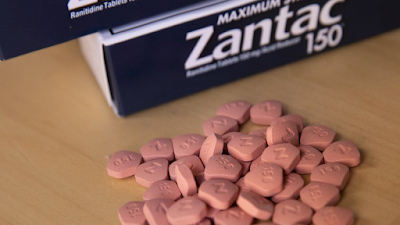
Zantac - The Heartburn Medication on Trial


There's been much talk about the popular heartburn medication, Zantac (ranitidine) causing cancer after independent laboratory testing found that one ranitidine 150 mg tablet produced 304,500 nanograms (ng) of a cancer-causing substance called N-Nitrosodimethylamine (NDMA), an amount that greatly exceeds the U.S. Food and Drug Administration’s (FDA) daily acceptable intake limit of 96 ng.

After learning this, the FDA, in April 2020, requested Zantac be removed from the market.

Zantac is manufactured by many pharmaceutical companies, several of whom have recalled it, citing "safety concerns."

The following types of cancers have developed in some people who took the Zantac:

Bladder cancer

Esophageal cancer

Gastric cancer / stomach cancer

Liver cancer

Pancreatic cancer

Prostate cancer

Breast cancer

Lung cancer

Colon cancer

On September 15, 2022 , Baum Hedlund Aristei & Goldman, attorneys headquartered in Los Angeles, California, filed Zantac lawsuits on behalf of thousands of people throughout the country who allege exposure to ranitidine causes cancer. The filing of 88 complaints on behalf of 7,291 claimants is one of the largest on behalf of Zantac cancer victims in 2022.

Allegations against the defendants, namely, GlaxoSmithKline (GSK), Pfizer Inc, Patheon Manufacturing Services LLC, Boehringer Ingelheim, and Sanofi, include:

Failure to Warn 

Manufacturing Defect 

Negligent Product Design

Negligent Manufacturing

Negligent Misrepresentation

Baum Hedlund's press release states, "...the defendants knew that Zantac (ranitidine) could degrade into a potent human carcinogen, NDMA, in the regular course of transport and storage, and within the human body, but failed to take any action to prevent consumers from being exposed." Furthermore, they add, "...lawsuits maintain that Zantac’s manufacturers made billions selling a product they knew posed an unreasonable risk to consumers. If the drug manufacturers had disclosed and disseminated the cancer risks associated with Zantac and OTC ranitidine products, the plaintiffs say they could have avoided the risk of developing cancer by instead using alternative medications that do not pose the same risk."

Baum Hedlund's Brent Wisner also said, he believes the defendants in the Zantac litigation “deliberately misled consumers because they knew that full disclosure of Zantac’s risks would limit the amount of money they could make selling the drugs.” Adding, "They
 knew that concealing the truth would protect profits. Their deception led to an epidemic of cancer in this country, and we intend to hold them accountable.”

History shows that, between them, the defendants, above, have made settlements for various violations over the years of more than 20 billion dollars. Pfizer top that list with fines/settlements of over 10 billion dollars whilst GSK run a close second with fines/settlements of over 8 billion dollars.

It remains to be seen if those figures will be increased during or after these Zantac lawsuits.


Bob Fiddaman


Friday, May 29, 2020

The GSK Covid Vaccine: Will We Be Safe?


Media reports suggest GSK, the British based pharmaceutical giant, are close to producing 1 billion doses of a coronavirus vaccine booster in 2021. Little is known about the ingredients of the vaccine, at least in the mainstream media.

GSK have merged with the French multinational pharmaceutical company, Sanofi.

Between them, GSK and Sanofi have paid out $5,063,939,512 in violation fines, GSK paying $4,422,266,058 (billion) whilst Sanofi come in at $641,673,454 (million)

GSK, who rolled out the Pandemrix vaccine for the last global pandemic, are set to make a pretty penny if they and Sanofi can get the coronavirus vaccine booster past the regulators - this process has been made easier for them due to global drug regulators giving drug companies a rapid path by allowing them to bypass animal testing.

Animal tests are a critical step in vaccine and drug development. Normally, a new vaccine can take anything between 5 to 20 years to develop before it can be made available to the public. Animal tests are carried out to determine safety and efficacy at preventing the disease in question. Regulators, such as the MHRA in the UK and the FDA in the US, usually require that a manufacturer shows a product is safe in animals before it goes into people. 

This from the European Medicines Agency:

"The regulatory workshop was held virtually on 18 March 2020 in the context of the ongoing COVID-19 pandemic. It brought together delegates from 17 different countries, representing more than 20 medicines regulatory authorities globally, as well as experts from the World Health Organization and the European Commission, to share their views on the development of vaccines against COVID-19. The meeting was co-chaired by EMA and the US Food and Drug Administration (FDA)."

The summary report of that meeting can be found here.

Pandemrix: The Swine Flu Vaccine

Research published in the BMJ in 2013 suggested a possible link between the swine flu vaccine given to children in the UK and Europe during the epidemic in 2009 and 2010 and a rare condition called narcolepsy, which causes people to fall asleep suddenly without any warning and at any time of the day.

A further report, also published in the BMJ in 2018, asked the question, 'Pandemrix vaccine: why was the public not told of early warning signs?'

In 2019, an Irish woman, Aoife Bennett, 27, who received the Pandemrix vaccine in school in 2009 as part of a state campaign against swine flu. sued the government after developing narcolepsy shortly after receiving GSK's Pandemrix. The case was settled for an undisclosed amount of compensation to the victim.

This from The Guardian:

"Bennett told RTE on Wednesday that she was active and athletic until being vaccinated in December 2009. About two weeks later the side-effects began, she said. “Things changed very drastically.” She felt “like a sloth” and became fatigued, disoriented and prone to collapse.

"She expressed dismay that it took seven years of legal proceedings to obtain compensation.

"The defendants in the case were GlaxoSmithKline Biologicals, the health service executive, the minister for health and the health products regulatory authority, formerly the Irish medicines board."

Further, in 2017, the UK high court rejected a British government appeal to withhold payments to dozens of British children who developed the sleeping disorder after swine flu vaccines. Six million people in Britain, and more across Europe, were given the Pandemrix vaccine made by GlaxoSmithKline during the 2009-10 swine flu pandemic, but the jab was withdrawn after doctors noticed a sharp rise in narcolepsy among those receiving it.

It all seems pretty clear then that GSK's Pandemrix vaccine caused narcolepsy in some who were administered it. A way to keep such news at bay is to make settlements with those who file lawsuits.

When we look into the Swine Flu pandemic, we can see similarities into what is panning out today in 2020. The same questions should be asked about the safety of any potential Covid-19 vaccine and we shouldn't have to wait until people suffer a severe adverse reaction to it as we did with the GSK's swine flu vaccine.

Incidentally, what do GSK have to say about their product, Pandemrix, causing narcolepsy? Well, only yesterday, in efforts to convince the public that there will be no problem with their new vaccine for Covid, they claimed its previous flu pandemic vaccine, (Pandemrix) which used some of the same ingredients as Covid-19 vaccines currently under development, was not linked to a rise in cases of the sleep disorder narcolepsy. 

This from RTE:

"A spokesman for GSK said the "science has moved on" since concerns were raised about links between narcolepsy and its H1N1 vaccine, called Pandemrix, which was developed during the flu pandemic 10 years ago. 

"He said evidence now suggests the link is to the H1N1 flu virus itself, not the vaccine. 

"In a statement to Reuters, the company said available scientific data suggest that "the rare occurrence of narcolepsy during the 2009/10 flu pandemic was triggered by the body confusing a protein in the wild type H1N1 flu virus with a human protein relevant in regulating the sleep cycle." 

In 2010, The Daily Mail, a British newspaper, reported on how Drug firms cashed in on scare over swine flu. Dr Wolfgang Wodarg, who at the time was head of health at the Council of Europe, branded the swine flu pandemic as 'one of the greatest medical scandals of the century.'

The 2010 Daily Mail article, which is like a version of Groundhog day playing out, also highlights how Sir Roy Anderson, a scientist who advised the UK Government on swine flu outbreak, held  a £116,000-a-year post on the board of GlaxoSmithKline.

One of the current Covid scientific advisers to the UK government, Patrick Vallance, is the former head of GlaxoSmithKline's vaccine division.

Déjà vu anyone?

Finally, although I cannot prove the authenticity of the claims in  a video that was recently uploaded to YouTube,  an independent journalist claims he has recently been contacted by a GSK whistleblower who  told him vaccines trialled out on women contained an antigen that was shown to cause a 97% increase in infertility. The antigen also allegedly makes men sterile.

The video has since been removed by YouTube but can still be accessed here.

Bob Fiddaman


Saturday, April 04, 2020

Zantac (Ranitidine): The Heartburn Carcinogen


Earlier this week the US Food and Drug Administration (FDA) requested that manufacturers pull all prescription and over-the-counter ranitidine drugs, known by the brand name Zantac, from the market immediately. Zantac was given US approval in the early 1980s.

The FDA has determined that levels of  N-nitrosodimethylamine (NDMA) in the heartburn medications increase over time and when stored at higher-than-normal temperatures, pose a risk to public health.

According to the FDA's announcement, letters are now being sent to all manufacturers of ranitidine requesting that they withdraw products from the market, and consumers are advised to stop taking any ranitidine tablets or liquid medications they currently have. As a result of this immediate market withdrawal request, writes the FDA, ranitidine products will not be available for new or existing prescriptions or over-the-counter (OTC) use in the U.S.

Sanofi, one of the companies that produces the Zantac brand, stopped doing so in October. It said in a statement that “We take this issue seriously and continue to work closely with the F.D.A. to evaluate any potential safety risks associated with Zantac.”

Ranitidine was launched in the UK in 1995 as an OTC product. At the time the recommended dosage of the product was one tablet, although if symptoms persisted for more than one hour another tablet could be taken. Consumers were told, "the maximum recommended daily dose is four tablets."

The British drug regulator, the MHRA, is not following in the footsteps of their American counterparts. In October last year, they stated, "the health risk of discontinuing the medicine is higher than the potential risk presented by the contaminant N-nitrosodimethylamine."

Los Angeles trial lawyers, Baum Hedlund Aristei & Goldman, PC, who are in the process of filing lawsuits, state on their website, "Mounting evidence allegedly shows that Sanofi and Boehringer Ingelheim, the big pharma companies that make Zantac (ranitidine hydrochloride), concealed the Zantac cancer link from millions of people who took the drug for heartburn, gastric and duodenal ulcers, gastroesophageal reflux disease (GERD), sour stomach, Barrett’s esophagus, acid reflux, and other issues. This deception came as the companies made unprecedented profits from Zantac, the first drug to generate $1 billion in sales."

Baum, Hedlund, Aristei & Goldman attorney R. Brent Wisner discusses the latest revelations surrounding the popular drug Zantac (ranitidine). How did the FDA find out about the link between Zantac and cancer? What do Zantac and rocket fuel have in common? Is Zantac causing a cancer epidemic? Wisner answers your Zantac questions in this short video.


If you, or anyone you know, developed cancer after taking Zantac please contact Baum Hedlund here.


Bob Fiddaman


Monday, June 08, 2015

GSK Formed a "Cartel"


Cartel: an association of manufacturers or suppliers with the purpose of maintaining prices at a high level and restricting competition.

The media is awash with reports this morning that the Competition Commission of India (CCI) imposed a fine on GlaxoSmithkline Pharmaceuticals and Sanofi India for collusive bidding in supply of a meningitis vaccine to the government for Haj pilgrims.

Hmm, Glaxo up to no good, surely not?

The complaint was filed by Bio-Med Pvt Ltd, a small pharmaceutical company that also manufacture and supply a meningitis vaccine.

India's CCI also said, in a report, that...

"They have not produced any evidence either before the DG or before the Commission to substantiate their claims. In the absence of any evidence, the Commission notes that the assertions made by opposite party 2 (GlaxoSmithKline) and opposite party 2 (Sanofi) are merely bald statements and also appear to be an afterthought to justify their illegal, collusive conduct," 

Illegal collusive conduct. Hmm!

The CCI also  warned GlaxoSmithKline and Sanofi to "cease and desist" from anti-competitive practices.

Glaxo's company tagline is, Do more, feel better, live longer.

They are certainly living up to that tagline by "doing more" in respect of their illegal shenanigans.

Glaxo and Sanofi were fined Rs 60.45 crore and Rs 3.04 crore respectively.

Source: CCI slaps a fine of Rs. 64 crore fine on GlaxoSmithKline, Sanofi


Bob Fiddaman


Please contact me if you would like a guest post considered for publication on my blog.