Zantac Lawsuit


Researching drug company and regulatory malfeasance for over 16 years
Humanist, humorist

Monday, July 13, 2009

Announcing the Release of the Recently Revised Confessions of an Rx Drug Pusher


The Story of an Industry Insider

“Confessions of an Rx Drug Pusher is a powerful book. Olsen knows her drug facts, she knows the ins and outs of pharma selling, and she knows the tragedy and pain of personal trauma from the effects of psychiatric drugs. Confessions blends all three and I most highly recommend the book!” --John Breeding, PhD, Psychologist

A successful, fifteen-year-veteran pharmaceutical rep from 1985 – 2000, Gwen Olsen worked for McNeil Pharmaceutical, Syntex Laboratories, Bristol-Myers Squibb, Abbott Labs and Forest Laboratories. She was a hospital rep and specialist rep the majority of her career, educating residents in hospital teaching settings and selling drugs to doctors in obstetrics and gynecology, cardiology, neurology, endocrinology and psychiatry. Her award winning book, Confessions of an Rx Drug Pusher, is an expose and autobiographical journey into the tragic loss of her beloved niece to suicide, and the behind-the-scene tactics of “disease mongering” and deceptive marketing practices that are used to sell dangerous prescription drugs.


A Unique Perspective

“Gwen Olsen is ‘outing’ this massively corrupt industry from a tenured insider's perspective. She convincingly illustrates everything I've known and suspected about Big Pharma's money-making agendas--and more! This book is a must read!” --Abram Hoffer, M.D., Orthomolecular Psychiatrist

Gwen has a unique industry insider’s perspective of the current US healthcare dilemma, and utilizes both her experience and the insight she received in her extensive sales training with Pharma to illuminate current marketing trends and illustrate how greed and conflicts of interest make the system itself the biggest health risk to American consumers.


A Natural Health and Chiropractic Advocate

“I am excited to share that I personally know dozens of patients who have made informed decisions about their health through reading your book, bringing information to their physicians, and, in some cases, finding new physicians to work alongside their chiropractors and naturopaths to help them safely get off the deadly medications they were once prescribed. I can not thank you enough for the lives you save. You are an inspiring leader who will impact lives for generations to come.” --B.J. Hardick, D.C.

In 2000, Gwen left pharmaceuticals and entered the natural foods industry. For several years she worked as an area account manager for Nature’s Way and later as a regional sales manager for Gaia Herbs. Gwen is genuinely interested in alternative health therapies and has extensively studied nutrition, chiropractic, homeopathy, vitamins, herbs and aromatherapy. She has published articles in the Well Being Journal and online with Natural News and HealthNewsDigest.com.


A Captivating Speaker

“Judging by the long lines at your book-signing table, you really resonated with what people are experiencing and needing. My "Aha" moment occurred after I heard you and saw the results on the audience. People need to use their anger, frustration, and confusion and become more self-empowered and take more responsibility for what is happening to them. Thank you! --Ray Goddard, D.C.

Gwen is a passionate mental health activist, writer and dynamic speaker who devotes much of her time to mental health and child advocacy. Gwen volunteered as a Court Appointed Special Advocate (CASA) for the Texas Travis County court system from 1995 to 2000, serving as an advocate for abused and neglected children in foster care. A 2007 Human Rights Award recipient, she is a highly sought after international speaker and media resource, and has testified numerous times before Congress and the FDA. Herself a victim and survivor of life-changing prescription drug adverse events, Gwen motivates audiences of all ages to become proactive about taking charge of their health and refusing to be just another statistic!


I am returning to the speaking circuit! To book a speaking event or an interview, please contact Gwen Olsen at 512-219-5030, www.gwenolsen.com or golsen@austin.rr.com.


For bulk and group discounts on book purchases please contact www.iuniverse.com or for

International Orders: Call 00-1-402-323-7800


Our children and I thank you for your continued support!

----

Fid

ORDER THE PAPERBACK
'THE EVIDENCE, HOWEVER, IS CLEAR...THE SEROXAT SCANDAL' By Bob Fiddaman
SIGNED COPIES HERE OR UNSIGNED FROM CHIPMUNKA PUBLISHING

Saturday, July 11, 2009

Seroxat Patient Information Leaflet - Vague. FOI to MHRA

----- Original Message -----
From: fiddaman
To: MHRA Information Centre
Sent: Saturday, July 11, 2009 9:31 AM
Subject: FOI


Dear MHRA Team,

Whilst reading through the Patient Information Leaflet for Seroxat liquid - attached - I came across a line that is quite vague in its description, i.e.; there is no explanation.


The line in question is thus: [see red]

"If you feel restless and feel like you can’t sit or stand still, tell your doctor. Increasing the dose of Seroxat may make these feelings worse."

I don't know if the MHRA have the answer but why would increasing the dose of Seroxat make 'these feelings' worse?

The line would suggest that GlaxoSmithKline have evidence that shows an increase in Seroxat would make 'these feelings' worse. Could you provide me with such evidence please?


So,

Request under the FOI:

1. Why would an increase in Seroxat make the feelings of restlessness and not being able to sit or stand still worse?

and

2, Could you please provide the data that suggests this?


Many thanks

Bob Fiddaman

Seroxat Sufferers
http://fiddaman.blogspot.com

----

Fid

ORDER THE PAPERBACK
'THE EVIDENCE, HOWEVER, IS CLEAR...THE SEROXAT SCANDAL' By Bob Fiddaman
SIGNED COPIES HERE OR UNSIGNED FROM CHIPMUNKA PUBLISHING

Thursday, July 09, 2009

Paxil can lead to cognitive impairment in older people

By Darla Carter
dcarter@courier-journal.com

They're used for some of the most common ailments around — allergies, nausea, depression, itching, urinary incontinence and lack of sleep, just to name a few.

But they also could affect your mental sharpness, especially if you're over the age of 65.

The culprit: drugs, such as Benadryl, Detrol and Paxil, that have so-called "anticholinergic effects," or put another way, can affect cognitive performance.

Dr. Malaz Boustani of Indiana University co-authored a paper about the drugs recently. He thinks more people need to be aware that medications with anticholinergic effects can lead to cognitive impairment in older people, though it's unclear whether there's a long-term impact on the brain.

FULL STORY - Courier Journal

Fid

ORDER THE PAPERBACK
'THE EVIDENCE, HOWEVER, IS CLEAR...THE SEROXAT SCANDAL' By Bob Fiddaman
SIGNED COPIES HERE OR UNSIGNED FROM CHIPMUNKA PUBLISHING

Girls used as Guinea Pigs in HPV Trials Admits GSK

Source: American Chronicle

July 05, 2009

Christina England

We have always suspected it and now they admit it,GSK are using young girls (as young as 9 in some areas) as human Guinea Pigs in HPV vaccine Cervarix trials. This was only discovered after reading a document that was meant for 'Scientific Background and Informational Purposes only'

Damning article for GSK

Read more about Cervarix:


GSK - A Catalogue of Disasters!

Glaxo: "Promote More, Feel Better and Live a Life of Luxury"

Glaxo Goes Head-to-Head on HPV

Teenage Girls Sue Over GSK's Cancer Jab, Cervarix!

GlaxoSmithKline submits final study data to FDA for cervical cancer vaccine

HPV Vaccine Video on Youtube

Concerns over GSK's Cervarix vaccine

UP YOURS GLAXO!

Mindy Merck & Gail Glaxo Dilemma

LOLA'S LAND PROMOTING HPV VACCINE

GlaxoSmithKline's Cervarix. Is Your Daughter Safe?

More debate on GSK's Cervarix

Cervical Cancer, Ofsted & GlaxoSmithKline

Is Cervarix and Gardasil Safe ? Humorous and very blunt answer.

Fid

ORDER THE PAPERBACK
'THE EVIDENCE, HOWEVER, IS CLEAR...THE SEROXAT SCANDAL' By Bob Fiddaman
SIGNED COPIES HERE OR UNSIGNED FROM CHIPMUNKA PUBLISHING

Wednesday, July 08, 2009

Let Us Pray - Our Lord Angus of AC/DC

Taken from Hampden Park, Glasgow


ORDER THE PAPERBACK
'THE EVIDENCE, HOWEVER, IS CLEAR...THE SEROXAT SCANDAL' By Bob Fiddaman
SIGNED COPIES HERE OR UNSIGNED FROM CHIPMUNKA PUBLISHING

Tuesday, July 07, 2009

How Michael Jackson Was Failed

Source: Examiner.com

Anorexia, drug addiction and body dysmorphia: The American medical system failed Michael Jackson.

A superstar suffering from anorexia, drug addiction and body dysmorphia disorder, and the American medical system, in every way possible, failed Michael Jackson and the American public. And if the man who was, perhaps, the most famous person in the world can be failed by our out-of-control medical system, what chance do the rest of us have?

Michael Jackson weighed a reported 112 pounds at the time of his death. According to the Santa Barbara (California) Sheriff’s Department arrest report in 2005, Jackson’s height was 5 feet and 11 inches. That would make his body mass index a skeletal 15.6 at the time of his death. How low is that? The World Health Organization says that a BMI of 16.0 is the weight one might die of starvation. Amazingly, Jackson was reputed to have been gaining weight for his upcoming concert tour.

READ MORE

Fid

ORDER THE PAPERBACK
'THE EVIDENCE, HOWEVER, IS CLEAR...THE SEROXAT SCANDAL' By Bob Fiddaman
SIGNED COPIES HERE OR UNSIGNED FROM CHIPMUNKA PUBLISHING

SWINE FLU ADVERSE REACTION "PRIORITY" REPORTING


With an apparent pandemic of swine flu, the Medicines and Healthcare products Regulatory Agency [MHRA] have issued a letter to Healthcare professionals with regard to reporting of any adverse reactions to the vaccines, Tamiflu [Roche] and Relenza [GlaxoSmithKline].

The letter, which can be downloaded here, announces the 'special' web-based portal, which the MHRA have named, 'The Swine Flu ADR Portal.'

Two ways of looking at this:

1, The MHRA expect a large number of reports because the vaccines will be widely used

or

2, The MHRA have their suspicions about these vaccines so want to keep a close eye on the adverse reactions.

Now call me a cynic...

Fid

ORDER THE PAPERBACK
'THE EVIDENCE, HOWEVER, IS CLEAR...THE SEROXAT SCANDAL' By Bob Fiddaman
SIGNED COPIES HERE OR UNSIGNED FROM CHIPMUNKA PUBLISHING
Monday, July 06, 2009

ANTIDEPRESSANTS - TRUTH vs LIES

Three videos to watch.

Video one is from Gwen Olsen. Gwen spent more than a decade as a sales rep in the pharmaceutical industry working for health care giants such as Johnson & Johnson, Bristol-Myers Squibb and Abbott Laboratories.

Video two is from BBC's Panorama, 'Taken on Trust' and features Glaxo's Head of European Clinical Psychiatry, Dr Alastair Benbow and MHRA Chairman and former employee of Glaxo, Sir Alasdair Breckenridge.

Video three is food for thought. I don't expect pharma or regulators to pass comment.

You can draw your own conclusions...


Fid


ORDER THE PAPERBACK
'THE EVIDENCE, HOWEVER, IS CLEAR...THE SEROXAT SCANDAL' By Bob Fiddaman
SIGNED COPIES HERE OR UNSIGNED FROM CHIPMUNKA PUBLISHING

This post is dedicated to the memories of Sara Carlin and Sharise Gatchell and to the countless others who have lost their lives to antidepressant medication.


Sunday, July 05, 2009

The Corrupt Industry

Fascinating article one of my good friends sent me this morning.

This article was written in 1986 and comes from the New Internationalist, issue number 165.

So 23 years ago there was already a concern about Pharma.

How far have we come?

The corrupt industry
Bribery and corruption, fraud in the testing of drugs, criminal negligence in the manufacture of drugs, dubious advertising claims - the pharmaceutical industry has a worse record of law breaking than any other industry. Dr John Braithwaite of Canberra's Australian National University explains why there should be such a high concentration of sinners - as well as saints.

The pharmaceutical industry has contributed more to the well-being of humanity than any other. Arguably among other achievements it has helped to remove tuberculosis, gastroenteritis and diphtheria from among the ten leading causes of death in the western world. Yet the avoidable suffering caused by pharmaceutical companies, particularly to the poor of the world, seems at times beyond comprehension.

As both a consumer activist and a student of business ethics I have been struck by the large numbers of pharmaceutical executives I have met who, in their commitment to socially responsible business conduct, were so much more impressive than the average industrial decision maker. Yet corporate crime is a bigger problem in the pharmaceutical industry than any other. The pharmaceutical industry is a paradox of corruption and conscience.

By corruption, I mean first of all the paying of bribes. Every scholar who has surveyed the comparative evidence on bribery in international trade has concluded that pharmaceuticals is one of the most corrupt, if not the most corrupt, of industries. My own research1 found evidence of substantial bribery by 19 of the 20 largest American pharmaceutical companies. There is evidence of bribes being paid to every type of government official who could conceivably affect the interests of pharmaceutical companies: bribes to cabinet ministers to get drugs approved for marketing, bribes to social security bureaucrats who fix prices for subsidised drugs; to health inspectors who check pharmaceutical manufacturing plants; to customs officials, hospital administrators, tax assessors, political parties, and others.

But a much greater threat to world health than corruption is fraud in the safety testing of drugs. Rats die in trials on new drugs and are replaced with live animals; rats which develop tumors are replaced with healthy rats; doctors who are being paid $1,000 a patient to test a new product pour the pills down the toilet, making up the results in a way which tells the company what it wants to hear.2

But it is the less blatant forms of fraud against health authorities which have caused the greatest loss of life - companies telling half-truths to governments about the severity of side effects or covering up adverse reaction reports from concerned doctors. Last year Eli Lilly was fined $25,000 in the United States after it was charged with covering up deaths and illnesses caused by its anti-arthritic drug, benoxaprofen. The drug was withdrawn from sale in 1982 after it was found to be associated with 61 deaths in Britain and unknown numbers elsewhere. In 1984, Smith Kline was fined $100,000 on charges of covering up adverse reactions to their product Selacryn, which was associated with 36 deaths in the US. Similar allegations of covering up adverse reactions are being made against A. H. Robins in the litigation over the Dalkon Shield intrauterine device. A former company lawyer has testified that he was ordered by his superiors to shred sensitive evidence.

Beyond bribery and fraud, misrepresentation in advertising, breaches of laws which ensure the sterility and purity of products and antitrust offences, have all been widespread.

The reason for the paradox of corruption and conscience in the pharmaceutical industry is first that it attracts a lot of idealistic people keen to work on ways of solving health problems, but second that the realities of the pharmaceuticals' market make the temptation for corporate crime unusually acute.

The pharmaceutical industry is very much like the aerospace and defence industries - the future of a company often depends on securing the support of a small number of people who can unlock a big market for a single product which has already cost the company a fortune to develop. Just as aerospace companies face great temptations to bribe defence chiefs to secure one big sale of their new supersonic fighter, pharmaceutical executives confront massive win-lose decision points when national health authorities decide whether to approve their new drug for marketing.

Often the product will have cost $50 million of company funds to develop. A single national market might recover that entire up-front expenditure. Equally, a single pricing decision by a social security bureaucrat on a company's leading product will often decide whether the national subsidiary will run at a profit or a loss for the year. In this way companies which sell pills are different from those which sell breakfast cereals. The temptation to dishonestly secure the one big sale of cornflakes is not common; so one does not see the culture of corruption which characterizes the pharmaceutical industry.

How do honest people survive in an industry where so much unethical and downright criminal conduct occurs? They survive because they have no contact with it and mostly no knowledge of it. Organizational complexity in a large corporation makes it quite possible for the left hand not to know what its right hand is doing. And if the right hand is engaged in fraud and bribery, then organizational complexity is exaggerated to prevent knowledge of wrongdoing from spreading to other parts of the firm. The left hand would probably rather not know about it in any case.

Some American pharmaceutical companies take this to extraordinary lengths: they have 'vice-presidents responsible for going to jail' whose job it is to act as a scapegoat for corporate crime, to have the buck stop with them rather than taint the chief executive with knowledge of illegality.

But mostly the ways of protecting pharmaceutical executives from their own consciences are more straightforward. The quality control manager is an honest person who takes pride in producing a product which is always sterile, pure and made exactly to specifications. She or he is very busy at this important task and doesn't take time to find out that these pills are being promoted in Brazil for totally inappropriate conditions or that the specifications she so meticulously follows are partially based on fraudulent testing. Moreover, the corporate culture has taught her that the activities of the Brazilian subsidiary are none of her business.

The difference between socially responsible and corrupt companies is that in the former, ethical questions are everyone's business. In a socially responsible company there are mechanisms for a researcher who discovers a dangerous side-effect to blow the whistle within the company if his superiors cover up the discovery; the researcher can complain to an ethics committee of the board or an internal ombudsman if the Brazilian subsidiary ignores new information on the product.

However most pharmaceutical companies do not look to break down the barriers which protect the ethical majority of executives from their own consciences. That leaves it up to external critics to prick the consciences of the decent corporate employees. For it is insiders who, in the long run, are in the best position to prevent the day-to-day predations of the industry.

The international consumer movement, organized under the umbrella of Health Action International (see page 25), has been the most important of these outside forces.

The consumer movement has become increasingly sophisticated in the way it approaches the industry. There is now a realisation that most pharmaceutical industry executives do have consciences which can be stirred; and there are a great many 'sleepers', covert supporters of the consumer movement's campaigns. Further, because any pharmaceutical company is uniquely dependent on its reputation to sell products to doctors and hospital administrators in a way that companies which sell cornflakes or cigarettes are not, it is highly sensitive to publicity and community campaigns which tarnish its image.

So there are grounds for optimism that consumer activism can deliver reform. Indeed, there is already growing evidence of a willingness of the transnational pharmaceutical companies to respond constructively to the criticisms put publicly by activist groups.

Apart from internal critics and the threat of damage from unwelcome publicity, a further control mechanism to protect public interest is criminal law. It is an under-utilized weapon which can break down the barriers protecting honest executives from their own consciences. Criminal law is also the tonic needed for the consciences of many government officials. After all, with bribery it takes two to tango.

My research found that when bribes are paid to Latin American health ministers to secure government approval of a new product, the proposition is put as one of speeding up the inevitable approval of a product which will prevent much suffering or death. That is, the Minister's conscience is protected because he accepts the company's view that he is acting in the public interest by taking the bribe.

Criminal prosecutions would highlight publicly that when decisions on drug approvals are made on the basis of bribes rather than scientific assessment, lives will be lost, not saved. Fraud and crude misrepresentations in advertising for wonder drugs can have cruel repercussions on the community's health. It is up to the community to enforce the criminal prosecutions needed to jolt the industry into reassessing misplaced priorities. Healthy people are more important than healthy corporate ledgers. And the two need not conflict.

John Braithwaite is Senior Research Fellow, School of Social Sciences, Australian National University as well as author of Inequality, Crime and Public Policy and Corporate Crime in the Pharmaceutical Industry.


1 Corporate Crime in the Pharmacautical Industry, Routledge & Kegan Paul. 1984.
2 These practices are illustrated with many specific examples from North America, Europe and Japan in Corporate Crime in the Pharmaceutical Industry


SOURCE

Fid


ORDER THE PAPERBACK
'THE EVIDENCE, HOWEVER, IS CLEAR...THE SEROXAT SCANDAL' By Bob Fiddaman
SIGNED COPIES HERE OR UNSIGNED FROM CHIPMUNKA PUBLISHING

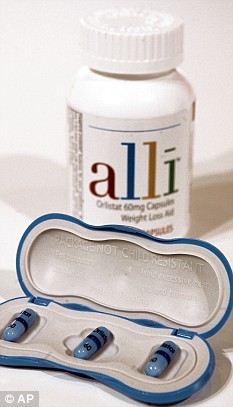
GSK's Alli Linked to Liver Failure!


Source: Sunday Mail
Hat-Tip - Ruth

A slimming pill that triggered massive sales when it was launched earlier this year is being investigated amid fears it is linked to liver damage.

Alli, which blocks the absorption of fat in the gut, is the first diet pill of its kind to be available without prescription.

Its main ingredient is the drug orlistat. But now the US medicine watchdog, the Food and Drug Administration (FDA), is investigating a series of alerts from patients who developed problems while taking orlistat.

The UK drugs regulator, the Medicines and Healthcare products Regulatory Agency (MHRA), has also received 31 reports of side effects linked to orlistat since Alli was launched in April.

But it was not able to say if those were from patients taking Alli or the stronger pill Xenical – which also contains orlistat but is available only on prescription.

Since Xenical became available in 2001, 24 patients taking it have died, one of liver failure and the others from heart attacks, gall bladder inflammation, multi-organ failure and lung clots. There were also five cases of sudden death where the cause was unclear. In total, the MHRA has received 1,252 reports from patients of potential side effects from Xenical, including heart problems, gastrointestinal issues and skin complaints. Nearly 100 were connected with liver problems.

On the day Alli was launched in the UK, £1million worth of pills were sold. But it has already provoked controversy. Manufacturer GlaxoSmithKline (GSK) claims it can boost weight loss by up to 50 per cent, helping dieters lose an extra 1lb for every 2lb shed.

Read More

Related Links:

This size-8 girl was able to buy diet pills [Alli] at her local chemists

Alli pimping - GSK's new Ally

Diet drug Xenical renamed Alli, still a cancer worry

Angry Aussie slams Alli

GlaxoSmithKline Complaints Dept

Alli - The Poem

Experts wary of new diet pill

GSK - The Alli Spin

GSK 'Crossing the line with Alli

GSK's Alli and The Obesity Society

GSK's Alli

GlaxoSmithKline's 'Belly' laugh

Lose Weight with GSK's Alli...

Fid


ORDER THE PAPERBACK
'THE EVIDENCE, HOWEVER, IS CLEAR...THE SEROXAT SCANDAL' By Bob Fiddaman
SIGNED COPIES HERE OR UNSIGNED FROM CHIPMUNKA PUBLISHING

Friday, July 03, 2009

"Off-Label" Prescribing

Phil Dawdy over at Furious Seasons has an interesting post this morning. Antipsychotic Use Up 1,000 Percent In Canadian Kids, highlights the number of children taking medications known as atypical antipsychotics in Canada has increased tenfold over the past decade.

This interested me as I've recently been in correspondence with the MHRA with regard to "off-label" prescribing. A practise, I believe, is the crux of the non-acceptance by doctors that SSRi withdrawal is an issue.

If a doctor deems it fit to prescribe an SSRi to a child, despite that particular drug being banned for use in that age group, then what hope do adults have when complaining to their doctor about a whole host of problems they have when tapering?

Conversations with the MHRA has proved baffling as it seems they are powerless to stop this practise of "off-label" prescribing.

I don't actually know who has the authority to stop it? Surely this is hugely problematic.

The MHRA have recently uploaded a 'Drug Safety Update' (April 2009 edition) where "off-label" prescribing is highlighted. It still does not throw any light on this subject other than basically telling the doctor that they are responsible for the drugs they prescribe... at least that's the way I see it?

What we have here is:

1. Pharmaceutical Product
2. MHRA Rules [ie; Not recommended for persons under the age of -------- Fill blank]
3. GP's

ORDER THE PAPERBACK
'THE EVIDENCE, HOWEVER, IS CLEAR...THE SEROXAT SCANDAL' By Bob Fiddaman
SIGNED COPIES HERE OR UNSIGNED FROM CHIPMUNKA PUBLISHING

Thursday, July 02, 2009

Emory University - "Double Standards"

It seems the top brass at Emory University don't like to be associated with blogs these days... unless of course the author/s cover them in garlands that is.

Doug Bremner, who writes the insightful, 'Before You Take That Pill' blog has been told by Emory to remove their name. Bremner, who is ironically a professor of psychiatry and radiology at Emory, recently added the post, 'I Am Removing the Name of My University From This Blog.'

What strikes me here is that Emory officials seem to be ashamed of their tainted past. Remember it was Emory who remained quiet over Charles Nemeroff and his money making ties to the pharmaceutical industry, in particular, GlaxoSmithKline. Nemeroff failed to tell Emory about $500,000 he received from drug maker GlaxoSmithKline PLC while heading a government-funded research project studying Glaxo drugs.

Here we have two men in Bremner and Nemeroff. One who fails to tell Emory what he is doing, whilst the other proudly tells his readers of his connections with Emory.

Emory University, it appears, is nothing more than a pharmaceutical rep breeding ground. One would imagine that it is okay for Emory students to peddle in illegal drugs... as long as Emory officials don't know about it!

It's laughable.

Although I'm not all too happy with Bremner's company he keeps, he doesn't deserve this - which in essence, is nothing more than bullying.

Emory have shot themselves in the foot and gained further bad publicity with this latest attempt to stifle voices.

I hereby award them the Seroxat Sufferers Dumbass Award.

EMORY, YOU ARE DUMB ASSES!


Fid
ORDER THE PAPERBACK
'THE EVIDENCE, HOWEVER, IS CLEAR...THE SEROXAT SCANDAL' By Bob Fiddaman
SIGNED COPIES HERE OR UNSIGNED FROM CHIPMUNKA PUBLISHING

Please contact me if you would like a guest post considered for publication on my blog.