Zantac Lawsuit


Researching drug company and regulatory malfeasance for over 16 years
Humanist, humorist

Friday, February 19, 2010

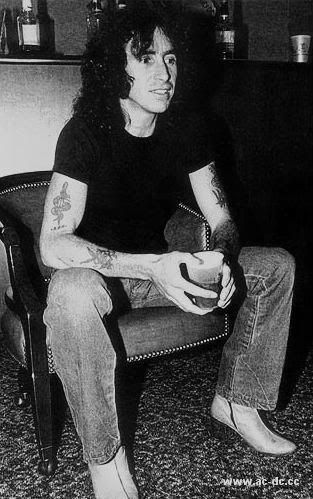
BON SCOTT - AC/DC 30 YEARS

30 years ago we lost a great rocker, lyricist, man.

Bon Scott - Legend.


THE ROCKER

A man of precocious wisdom
Was Ronald Belford Scott.
Mr Double Entendre,
Mr Double Bourbon Shot.
A man so warm and friendly
A lyrical prodigy
Oozing stage presence
And sweating energy.
He started with The Spektors
For whom he played the drums.
Then The Valentines & Fraternity
'Till uniting with the Young's.
A partnership was born
AC/DC was their name
Australia's biggest export
Is what these lads became.
In February 1980
My world came tumbling down.
Bon had been out boozin'
In London's Camden Town.
He died all alone that night
In the back seat of a car,
The greatest Rock 'N' Roll singer
A special Rock 'N' Roll star.
Bon will always be with me
In my memory he will stay.
Rest In Peace, Dear Bon,
Until we meet some day.

© BOB FIDDAMAN


Fid

ORDER THE PAPERBACK
'THE EVIDENCE, HOWEVER, IS CLEAR...THE SEROXAT SCANDAL' By Bob Fiddaman
SIGNED COPIES HERE OR UNSIGNED FROM CHIPMUNKA PUBLISHING

Thursday, February 18, 2010

HAPPY BIRTHDAY MUM

I miss you dearly and you are always in my thoughts and heart.


Off to see my dad today with my two lovely sisters. Go see my mother's resting place.

I miss her very much.

Fid


ORDER THE PAPERBACK
'THE EVIDENCE, HOWEVER, IS CLEAR...THE SEROXAT SCANDAL' By Bob Fiddaman
SIGNED COPIES HERE OR UNSIGNED FROM CHIPMUNKA PUBLISHING

Wednesday, February 17, 2010

THE EVIDENCE, HOWEVER, IS CLEAR...THE SEROXAT SCANDAL - EBOOK

THE EVIDENCE, HOWEVER, IS CLEAR...THE SEROXAT SCANDAL - THE EBOOK


By Bob Fiddaman

ORDER THE PAPERBACK
'THE EVIDENCE, HOWEVER, IS CLEAR...THE SEROXAT SCANDAL' By Bob Fiddaman
SIGNED COPIES HERE OR UNSIGNED FROM CHIPMUNKA PUBLISHING

Tuesday, February 16, 2010

Glaxo: Secrets & Lies


Following on from Evie Pringle's powerful first installment, Paxil Birth Defect Litigation - First Trial A Bust For Glaxo, here's a video I first published back in December 2009. It relevant to Evie's article and in particular the Kilker v GlaxoSmithKline case.

Court transcripts from the Kilker case can be read here

PRESS PLAY BUTTON ON VIDEO BAR [First 30 secs are audio only]


Special thanks to the production team at Law Journal TV for passing this on to me and granting me permission to use on the Seroxat Sufferers blog.

Fid

ORDER THE PAPERBACK
'THE EVIDENCE, HOWEVER, IS CLEAR...THE SEROXAT SCANDAL' By Bob Fiddaman
SIGNED COPIES HERE OR UNSIGNED FROM CHIPMUNKA PUBLISHING

Monday, February 15, 2010

EVIE PRINGLE IS BACK: Paxil Birth Defect Litigation - First Trial A Bust For Glaxo


Image: theepochtimes.com


Welcome back to the arena Evie.

As some of you may know, Evie was hospitalised earlier this year but is well on the road to recovery. The following article, which I believe is Part I of 6 installments, is the result of some pretty hard graft. I've been privileged to see how Evie draws up her articles - I'm sure she won't mind me saying, she works like TV's Columbo, scraps of information in no particular order scrawled onto paper, draft after draft eventually taking shape into fine investigative articles.

Evie has given me permission to publish her latest article in its entirety on this blog.

It's a pleasure for me to publish.

I salute you Evelyn.

Paxil Birth Defect Litigation - First Trial A Bust For Glaxo

GlaxoSmithKline has paid out close to $1 billion to resolve lawsuits involving Paxil since the drug came on the market in1992, according to a December 14, 2009 Bloomberg report. But the billion dollars does not cover the more than 600 Paxil birth defect cases currently pending in multi-litigation in Pennsylvania.

Glaxo has settled about 10 birth defect cases, according to Sean Tracey, a Houston attorney who represented the family of a child victim in the first jury trial that decided in favor of the plaintiff on October 13, 2009, Bloomberg reports. The settlements in those lawsuits averaged about $4 million, people familiar with the cases told the new service.

First Trial A Bust for Glaxo

The first trial, in the case of Kilker v Glaxo, ended with a jury in Philadelphia finding that Glaxo “negligently failed to warn” the doctor treating Lyam Kilker's mother about Paxil’s risks and the drug was a “factual cause” of Lyam's heart defects. The jury awarded the family $2.5 million in compensatory damages.

After the trial, juror Joe Mellon told Bloomberg that Glaxo did not conduct adequate studies on Paxil. “There were a couple of what I thought were safety signals and what the plaintiffs presented as safety signals that they should have maybe looked into further,” he said.

On October 14, 2009, the American Lawyer reported that the plaintiff's lead attorney, Sean Tracey, had quizzed the jurors about what swayed their decision. “They said the fact that GSK never adequately studied their own drug was a big deal,” Tracey said. “The animal testing they did showed that they had a potential problem, and they didn't follow up with adequate studies on animals or humans.”

Glaxo's lead attorney in the Kilker trial was King & Spalding partner, Chilton Varner.

Over 600 Trials To Go

A number of birth defect cases are set for trial in 2010. Andy Vickery, who practices at the Houston firm of Vickery, Waldner and Mallia, is handling several cases, with the Novak trial set to start first.

The case is unique in that it involves an infant born with heart birth defects to Derek and Laura Novak on April 4, 2002, after Laura was prescribed Paxil during pregnancy for the off-label treatment of migraine headaches.

“Although one might worry that this would cause a jury to blame the prescribing doctor,” says Vickery, “in this case, we can show that GSK encouraged this use, by sending out over 1500 “medical information” letters touting the benefits of Paxil for migraine headaches, and by leaving “approved WLF reprint” articles with the prescribing doctors.”

Delaney Novak underwent open heart surgery on April 29, 2002, and again on February 21, 2003. Cardiac catheterization procedures were performed on December 4, 2002 and May 25, 2006. She will likely need repeated heart surgeries as she continues to grow.

In December 2005, the FDA reclassified Paxil from a pregnancy Category C drug to a Category D. Category D means studies in pregnant women have demonstrated a risk to the fetus. An advisory to healthcare professionals specifically stated that the “FDA has determined that exposure to paroxetine in the first trimester of pregnancy may increase the risk for congenital malformations, particularly cardiac malformations,” and advised:

“Despite this categorization,” says Vickery, “in numerous lawsuits across the country, Glaxo has continued to deny that Paxil causes birth defects.”

“Hopefully that issue has now been laid to rest by the jury verdict in Philadelphia,” he notes.

Case of the Dead Rats

During opening statements in the first trial on September 15, 2009, Sean Tracey told the jury they were “going to see documents in this case that have never seen the light of day before.”

“You will see internal GlaxoSmith documents that the FDA hasn't seen, that the United States Congress hasn't seen, and that no jury has ever laid their eyes on before,” he said. “They have been under seal for over three years.”

Many of the sealed documents related to the Paxil studies conducted on rats and rabbits. The world renowned expert from the UK, Dr David Healy, testified on behalf of the plaintiffs.

Paxil was originally owned by a Danish company called Ferrosan, and that company did the preliminary animal studies on rats and rabbits to look at teratogenicity around 1979 and 1980.

Healy explained that a teratogen is an agent that will cause birth defects and “it could be a drug or maybe a virus or maybe an illness.”

In addition to birth defects, he said, a teratogen can cause a fetus to be born dead or cause a miscarriage, which is death before birth.

The jury heard about studies 295, 296 and 297, with the most damning being study 295, in which three groups of pregnant rats were given Paxil at doses of 5, 15, and 50 milligrams. The pregnancy outcomes at birth, and 4 days beyond, were then compared to rats born to mothers who received no Paxil.

The rat pups born to mothers who did not receive Paxil were all born alive. Of the 415 pups born to mothers who were given Paxil, 47 were born dead.

In the group of rats exposed to 5 milligrams of Paxil, 65 percent were dead by day four. In the 15 milligram group, 92 percent had died by the fourth day. Of the pups exposed to 50 milligrams, 100 percent were dead by day 4.

Eighty-eight percent of the pups born to mothers who received no Paxil were still alive at day four.

Autopsies were not performed on all the rats to figure out why they died or whether they had birth defects, and specifically heart defects.

After Tracey described the study in his opening statement, in regard to the product information that Glaxo was providing in April 2005, during her opening statement, Glaxo attorney, Varner, told the jury, “GSK in its label reported on the animal studies, including the death of the rat pups that you have heard so much about this morning.”

“I would like you to note three things about the discussion in the product information about the animal studies,” she said.

“First, there were no birth defects in the study,” she told he jury. “That is, there were no malformations or difficulties, structural difficulties, with the animals.”

“Second,” she said, “the rat pups who died shortly after birth were dosed at something like ten times the normal dose.”

“And, third, the dosing occurred not in the first trimester, the dosing occurred in the third trimester and continued throughout lactation,” Varner told the jury.

“You will hear expert testimony that the death of the rat pups is believed to have been due to a lactation problem,” she said, “it was during the lactation period that these pups died.”

While Healy was testifying, Tracey read part of a summary on the study that directly contradicted Varner's claims in stating: “Females were dosed for 14 days prior to pairing, throughout the pairing period, during gestation and for those females allowed to litter during lactation.”

He then asked Healy whether the female rats were exposed to Paxil for more than just the third trimester. “Yes, they were,” Healy said. “They were actually exposed throughout the pregnancy and for a period of time before the pregnancy and after.”

He also told the jury that there were three major malformations in the Paxil exposed group, and “there may well have been more.”

“The figures from the studies do give grounds for concern that there were, in fact more,” he said, “far more.”

The fact that the more Paxil they got the more they died, “indicates that the drug has played a part ... in whatever the cause of death is,” Healy told the jury.

“It's clearly the drug that has caused the death,” he said. “What we aren't clear from here is just what actually happened. Why they died.”

In 1980, Glaxo had a doctor by the name of John Baldwin review the Ferrosan rat and rabbit studies. In a March 20, 1980 memo to the company, Baldwin discussed the studies and further dispelled Varner's claim that the rats received 10 times the normal dose.

“At first the examination of individual litter data, et cetera, supports the possibility of embryo lethality then this observation at nonmaternally toxic dose levels which are only three to six times the proposed human dose could contraindicate the use of Paroxetine in pregnancy,” Baldwin wrote.

“That means that this appears to be grounds for concern from the work that Dr. Baldwin has reviewed,” Healy told the jury.

“That Paxil is a drug that if it comes on the market, may cause birth defects,” he said. “So that it would be classified with the drug like Accutane where the drug would have to come on the market contraindicated.”

Which “would mean in this case,” Healy said, “do not use the drug in women of childbearing years unless, for instance, they're using some form of birth control.”

Another portion of Baldwin's memo stated: “On the other hand, if the embryonic death is unrelated to treatment, we would have to repeat the study at higher dose levels to produce some maternal or embryonic/fetal effect. There remains the possibility of this compound could be teratogenic at higher dose levels.”

“This means that Dr. Baldwin is saying there is a real risk here from the data that we have that this drug may cause birth defects,” Healy told the jury. “We need to do more work to actually before it's out, does the drug come with this risk or not.”

“He says we need to check and see if the company that has made this drug has conducted this extra research or are in the process of doing the extra research or not,” Healy said. “The implication being that if they haven't done it, we should.”

In reviewing the documents for the case, Healy found nothing to show that Glaxo ever did the studies that Baldwin was talking about. “I know they did further studies, but I don't think they did anything to address the issues that were raised by 295, 296, 297,” he said. “Or if they did, they kept it well hidden it would seem.”

Yet nine years after he wrote the memo, Baldwin published a 1989 paper on the reproductive toxicology of Paxil in a journal called, “Active Psychiatric Scandinavia,” and stated: “There appeared to be no selective effect on the embryo or any signs of teratogenicity.”

Baldwin “appears to be saying here that there is no evidence that the drug causes birth defects,” Healy told the jury. “That appears to me to be incompatible with the data that we reviewed earlier.”

Baldwin's paper was published the same year the new drug application for Paxil was submitted to the FDA on November 10, 1989.

Incriminating Data Destroyed

During the trial, the jury saw an exhibit showing minutes from a teleconference for a Paxil project team meeting, at which Anne Bell and others were present, on March 26, 1998. Page eight of the minutes stated: “It has already been discovered that raw data from four of the original Ferrosan sponsored toxicology studies conducted at Huntingdon Life Sciences were destroyed by HLS in 1993.”

Healy told the jury that he had done studies for Glaxo and other major pharmaceutical companies and he still had the raw data 15 or 20 years later. “From my work on the serotonin system back in the early '80s, almost 30 years ago,” he said, “I still have the raw data.”

“The idea that I would destroy the data is almost inconceivable,” Healy stated.

People may be concerned about a particular study and want to go back and look at the books, he said.

“It's a bit like auditing a major company like Enron.” But it's “even more important actually in science,” Healy told the jury. “People with a different point of
view need to be able to say, look, show me the data.”

They may “even suspect that I didn't do the study,” he said, “so a defense for me is to be able to say here are the notebooks, here are the clinical records.”

So you have to “be prepared to have all sorts of challenges,” he told the jury. “But for that to happen, the notebooks, the clinical records, the lab notebooks must be there.”

Healy testified that he did not believe the raw data from the original four Ferrosan studies had ever been located. “I believe there were efforts to try and find the microfilms, but they have not been found,” he said.

Healy explained that when studies are done, there are a set of procedures called “good laboratory practice,” or GLP.

“And it is hoped these days when a company brings a drug to the market,” he said, “that the animal work that they do and the human work they do will conform to good laboratory practice and good clinical practice.”

“And part of the requirements here of good laboratory practice is that the raw data is maintained,” he told the jury.

Later in Healy's testimony, Tracey showed the jury that Study 295 itself, in regard to raw data, under “maintenance of records,” stated “this material will be stored,” and the “material will not be discarded or released from these laboratories without the sponsor's prior consent.”

Initially, Paxil was FDA approved in 1992, with a Category B rating for pregnant women, meaning animal studies failed to demonstrate a risk to the fetus.

During the trial, it came out that the FDA employee who signed off on a Category B rating, a Dr Evoniuk, went on to work for Glaxo in the marketing department that sells Paxil.

A former FDA scientist, Doctor Suzanne Parisian, also testified as an expert for the plaintiffs. Adam Peavy, of the Houston firm of Bailey, Perrin and Bailey, handled her testimony.

Parisian testified that Doctor Sparenborg, a toxicologist at the FDA, raised a concern that there might be a problem with Paxil being a teratogen in 1995, when the pregnancy rating was changed from Category B to Category C.

When the company applied for approval of Paxil to treat Panic Disorder, Sparenborg suggested that the company “do a cross-fostering study to see if the adverse effect is occurring before the baby is born or after the baby is born,” she said.

“Cross-fostering is ... taking rats from treated mothers and putting them with a control rat that didn't receive the drug,” she explained to the jury. “So you are looking at whether the effect in the rat that could be produced in the pup was due to the mother herself or if it was something that was due to the rat before it was born.”

The FDA asked Glaxo to submit a protocol for the study, “for our concurrence,” before initiating it. But to her knowledge, Parisian said, Glaxo never submitted a protocol and never conducted a cross fostering study.

She testified that such a study “would have helped to address where the negative effects were coming from.”

While Parisian was testifying, the jury was shown the label for Paxil as it appeared in early January 2005, when Lyam's mother was prescribed Paxil as a Category C drug, with a discussion about the death of rat pups that implied the pups only died if the mothers received Paxil during the last trimester.

The label stated: “in rats there was an increase of pup deaths during the first four day lactation when dosing occurred during the last trimester.”

Parisian told the jury that there were deaths in pups born to mothers exposed to Paxil in the first and second trimesters as well. This Paxil label “implies to a physician that the animal studies support that it is safe to give the drug to the woman in the first and second trimester; that you need to be concerned about it in the last trimester,” she testified.

The label is saying “there is no evidence of teratogenic effects,” she said, “that means that it's safe for the first trimester.“

“If a physician were to read this, they would be more likely to prescribe it early in pregnancy,” she told the jury.

Evelyn Pringle
epringle05@yahoo.com
(The Paxil Birth Defect Litigation Update Series is sponsored by the Houston law firm of Vickery, Waldner and Mallia at www.justiceseekers.com )

----

Fid

ORDER THE PAPERBACK
'THE EVIDENCE, HOWEVER, IS CLEAR...THE SEROXAT SCANDAL' By Bob Fiddaman
SIGNED COPIES HERE OR UNSIGNED FROM CHIPMUNKA PUBLISHING
Rxing incentive schemes are illegal under EU law, says judge


Image: medindia.net


Source: Pharma Times

An Opinion from the European Court of Justice (ECJ) has supported the Association of the British Pharmaceutical Industry (ABPI) in its claims that prescribing incentive schemes operated by Primary Care Trusts (PCTs) in the UK are in fact banned under European law.

The Opinion, given late last week by Advocate General Nilo Jaaskinen, relates to the action brought in the High Court by the ABPI against the Medicines and Healthcare products Regulatory Agency (MHRA). The industry group’s case challenges PCTs’ establishment of such schemes - which reward doctors financially for prescribing specific named medicines - and suggests that they are in fact prohibited under Article 94(1) of European Directive 2001/83, which covers the provision of human-use medicines, including their advertising and promotion.

On July 3 2006, after the ABPI wrote to the MHRA expressing concern about the incentive schemes being implemented by PCTs, the MHRA had replied that, in its opinion, Article 94 covered incentive schemes “of a commercial nature” only. The ABPI disputed this interpretation and sought a review of the legality of the MHRA’s position in the High Court, which in turn asked the ECJ for an interpretation of Article 94 before it could give judgement.

In his Opinion on the matter, AG Jaaskinen last week concluded that prescribing incentive schemes do “have the deliberate and direct intention of promoting within the National Health Service (NHS) certain medicinal products at the expense of others,” and that they therefore amount to promotion, which is prohibited under Article 94(1) of Directive 2001/83.

FULL ARTICLE

Makes one wonder if offering money/gift tokens to girls if they have the cervical cancer vaccine is illegal then? After all, it's kind of promoting the vaccine, isn't it?

Fid

ORDER THE PAPERBACK
'THE EVIDENCE, HOWEVER, IS CLEAR...THE SEROXAT SCANDAL' By Bob Fiddaman
SIGNED COPIES HERE OR UNSIGNED FROM CHIPMUNKA PUBLISHING

Friday, February 12, 2010

ABOLISH INCOME TAX FOR BRITISH SOLDIERS PETITION


Image: wikimedia.org


Dear all,

The following petition is for UK residents only. Each and every UK visitor to this blog should take a look at what I am about to write.

I think it is appalling that British soldiers are being charged income tax on their earnings, particularly when they are putting their lives at risk and fighting for freedom and democracy.

Our soldiers are currently paying income tax, the same income tax that was used by Members of Parliament for their 'expenses'. [See scrolling list below]

These brave souls are putting their lives on the line in Afghanistan and they SHOULD NOT have to pay income tax on their earnings.

It's a mockery and a total lack of respect for all those risking life and limb in war zones around the world.

I urge ALL readers of this blog to sign the petition and to get the government to act with immediate effect. Our government owe them, not the other way round!

The current online petition is a worthy cause.

Here's the blurb.

We the undersigned petition the Prime Minister to recognise the contribution made by serving and retired military personnel by making the following tangible improvements:

1. All military personnel serving overseas in front line positions shall be paid free of income tax, with their NI contributions met by the MOD.

2. All other military personnel serving overseas in non front line positions shall be paid free of income tax, with their NI contributions met by the MOD, following 4 months duration in the zone of operations.

3. Retired / Injured service personnel who are no longer able to serve in the army are to be be considered on a preference basis for all civil service / local government positions (MOD or other departments).

4. Retired / injured service personnel to be automatically provided with all the benefits of old aged pensioners.

5. Retired / injured service personnel to be automatically placed at the top of all council housing lists.

----

If you see the name of your MP in the scrolling list below then please lobby them. The list is taken from The full list of MPs' expenses repayments.

Each and everyone on this list have used tax-payers money to claim expenses. In essence, soldiers under fire from the Taliban or those maimed by IED's or worse still, those that have died for the cause, have given the following list money to buy expenses.

If this sickens you, as it does me, then please sign the petition.

http://petitions.number10.gov.uk/ArmyBill/

Please remember to sign then go to your email inbox and wait for the activation link.

Utrinque Paratus

LIST OF MP'S WHO HAVE CLAIMED FOR EXPENSES


Bernard Jenkin Con £63,250.00
Barbara Follett Lab £42,458.21
Peter Lilley Con £41,057.36
Julie Kirkbride Con £31,827.26
Andrew Mackay Con £31,193.00
David H-Amory Con £29,691.93
John Gummer Con £29,398.46
Liam Fox Con £24,878.27
Douglas Hogg Con £20,639.42
Alun Michael Lab £19,169.56
Ann Cryer Lab £18,241.70
Jeremy Browne Lib £17,894.24
Jon Djanogly Con £17,364.76
William Cash Con £15,269.33
Michael Spicer Con £15,109.37
James Arbuthnot Con £13,470.33
Peter Viggers Con £13,464.30
David Clelland Lab £13,401.36
Wayne David Lab £12,959.69
Gordon Brown Lab £12,888.03
Mike Hall Lab £12,639.28
Tony Baldry Con £12,197.36
Paul Clark Lab £11,915.30
Alan Meale Lab £11,859.47
Sr A Haselhurst Con £11,679.81
Alan Milburn Lab £11,600.50
Anthony Steen Con £11,211.75
Austin Mitchell Lab £10,627.07
Rosie Winterton Lab £9,972.35
Fabian Hamilton Lab £9,734.74
Colin Challen Lab £9,158.00
John Baron Con £8,821.10
Eric Joyce Lab £8,602.56
Michael Howard Con £7,039.00
Mark Hendrick Lab £6,885.70
Neil Turner Lab £6,786.08
Edward Leigh Con £6,725.94
Gillian Merron Lab £6,305.17
Michael Ancram Con £6,282.43
Andrew Murrison Con £5,525.64
Charlotte Atkins Lab £5,434.06
James Hood Lab £5,413.49
Philip Willis Lib £5,363.74
Edward O'Hara Lab £5,244.23
Owen Paterson Con £5,229.15
Michael Connarty Lab £5,181.56
Andrew Lansley Con £5,162.68
David Willetts Con £5,133.32
Joan Ryan Lab £5,121.74
Michael Lord Con £5,074.48
Marsha Singh Lab £5,026.84
Frank Field Lab £4,587.99
Bob Russell Lib £4,539.45
Gerald Kaufman Lab £4,533.69
Alan Simpson Lab £4,515.89
Ann Clwyd Lab £4,472.42
William McCrea DUP £4,450.95
Chris Bryant Lab £4,439.28
Des Turner Lab £4,407.66
Phil Hope Lab £4,365.65
Andrew George Lib £4,348.25
Don Foster Lib £4,275.74
Stephen Hesford Lab £4,256.91
Christine Russell Lab £4,127.53
Mark Prisk Con £4,125.08
Nia Griffith Lab £4,099.77
Margaret Moran Lab £4,059.86
Patrick McLoughlin Con £4,058.54
Nigel Griffiths Lab £4,005.84
Robert Wareing Ind £3,892.00
Paul Goodman Con £3,881.07
Robert Blizzard Lab £3,872.79
Edward McGrady SDLP £3,854.00
Gregory Campbell DUP £3,673.38
Colin Breed Lib £3,639.49
Derek Wyatt Lab £3,611.50
Phil Woolas Lab £3,530.86
Jim Knight Lab £3,451.67
Ben Chapman Lab £3,387.91
Patrick Mercer Con £3,372.57
Graham Allen Lab £3,341.74
Andrew Gwynne Lab £3,327.56
Simon Burns Con £3,305.76
Richard Shepherd Con £3,191.88
Clare Short Ind £3,187.94
George Galloway Res £3,187.28
Richard Y-Ross Lib £3,181.09
Crispin Blunt Con £3,077.42
Gary Streeter Con £3,074.38
Rosemary McKenna Lab £3,008.93
Martin McGuinness SF £3,000.00
Linda Gilroy Lab £2,979.33
John W Robertson Lab £2,975.00
James Plaskitt Lab £2,958.09
Anne Moffat Lab £2,873.53
Andy Burnham Lab £2,841.19
Mark Oaten Lib £2,826.94
Gerry Sutcliffe Lab £2,786.14
David Cairns Lab £2,782.30
Bill Rammell Lab £2,782.24
John Reid Lab £2,731.88
Tony Cunningham Lab £2,718.02
Mike Hancock Lib £2,674.26
Andrew Mitchell Con £2,673.33
Bill Olner Lab £2,660.43
Paul Flynn Lab £2,625.61
David Jones Con £2,624.00
Gordon Prentice Lab £2,620.95
Sandra Osborne Lab £2,612.12
David Hamilton Lab £2,595.51
William Rennie Lib £2,573.10
Jane Kennedy Lab £2,569.83
Mark Tami Lab £2,557.69
Margaret Beckett Lab £2,539.75
Ian L-Grainger Con £2,496.23
Richard Ottaway Con £2,484.47
Paul Murphy Lab £2,480.72
Roger Gale Con £2,452.47
Ivan Lewis Lab £2,449.15
Alison Seabeck Lab £2,406.65
Caroline Spelman Con £2,401.51
John Butterfill Con £2,364.13
John Healey Lab £2,354.35
Stephen Hepburn Lab £2,321.44
Greg Knight Con £2,259.99
Roger Godsiff Lab £2,224.30
Tony Lloyd Lab £2,210.00
Parmjit Dhanda Lab £2,208.28
Linda Riordan Lab £2,171.81
Peter Luff Con £2,170.34
Douglas Carswell Con £2,159.00
Damian Green Con £2,102.14
Bob Spink Ind £2,051.38
Patrick Cormack Con £2,022.00
David Davies Con £2,021.39
Huw Irranca-Davies Lab £2,008.19
Michael Fallon Con £2,000.00
Iris Robinson DUP £1,974.89
Joan Walley Lab £1,967.11
Kali Mountford Lab £1,965.79
Natascha Engel Lab £1,934.25
Ronnie Campbell Lab £1,892.79
Cheryl Gillan Con £1,884.23
Jeffrey Donaldson DUP £1,858.73
Denis Murphy Lab £1,841.84
Alan Beith Lib £1,841.23
James Gray Con £1,742.91
Dan Norris Lab £1,730.19
Alan Whitehead Lab £1,723.28
Ruth Kelly Lab £1,707.34
David Curry Con £1,676.48
Frank Cook Lab £1,652.71
Stephen Crabb Con £1,639.30
Andrew Tyrie Con £1,638.99
Peter Wishart SNP £1,632.50
Annette Brooke Lib £1,538.78
Stephen Dorrell Con £1,530.16
Chris McCafferty Lab £1,529.81
Robert Ainsworth Lab £1,526.50
Keith Vaz Lab £1,514.00
Denis MacShane Lab £1,507.73
Menzies Campbell Lib £1,490.66
David Simpson DUP £1,482.98
Shaun Woodward Lab £1,470.15
Jacqui Smith Lab £1,469.87
Angela E Smith Lab £1,428.81
Michael Jack Con £1,427.74
Louise Ellman Lab £1,410.15
Michael Wood Lab £1,399.83
Anne Main Con £1,388.59
Ann Coffey Lab £1,381.08
Yvette Cooper Lab £1,363.21
Ed Balls Lab £1,363.17
Alan Duncan Con £1,356.67
Paul Beresford Con £1,352.02
Nicholas Soames Con £1,345.55
Kenneth Clarke Con £1,345.00
Shahid Malik Lab £1,340.56
Humfrey Malins Con £1,329.22
Nadine V Dorries Con £1,314.37
David Mundell Con £1,300.00
Christopher Mullin Lab £1,298.99
Adam Holloway Con £1,283.73
Vera Baird Lab £1,279.23
Kitty Ussher Lab £1,271.65
John Denham Lab £1,265.51
Ian Davidson Lab £1,241.39
Roger Berry Lab £1,237.77
Edward Garnier Con £1,221.68
Angus Robertson SNP £1,217.00
Robert Flello Lab £1,200.00
Elfyn Llwyd PC £1,194.60
Tom Levitt Lab £1,189.95
Ian Paisley DUP £1,181.94
Timothy P Loughton Con £1,178.88
Gerald Howarth Con £1,178.00
Gareth R Thomas Lab £1,158.52
Rob Marris Lab £1,153.98
Christopher Huhne Lib £1,152.05
Geoffrey Hoon Lab £1,151.42
Russell Brown Lab £1,146.63
Gordon Marsden Lab £1,135.40
Stephen Byers Lab £1,125.00
Philip Hollobone Con £1,115.83
Sian James Lab £1,105.64
David Amess Con £1,100.06
Lorely Burt Lib £1,087.50
Ben Wallace Con £1,079.99
Paul Goggins Lab £1,075.93
Julian Lewis Con £1,068.85
Lembit Opik Lib £1,064.42
Jacqui Lait Con £1,041.59
Michael Wills Lab £1,015.80
Mary Creagh Lab £1,001.22
Kenneth Purchase Lab £1,000.12
Nick Herbert Con £988.95
Albert Owen Lab £983.57
John Bercow Con £978.51
Kim Howells Lab £953.11
Anne McIntosh Con £948.00
Ian Pearson Lab £941.46
Tobias Ellwood Con £940.98
Harry Cohen Lab £933.38
Mark Pritchard Con £923.62
Nick Clegg Lib £910.00
Andy Reed Lab £891.48
David Davis Con £883.71
Nigel Evans Con £858.33
Nicholas Winterton Con £850.81
Claire Ward Lab £850.00
Helen Jones Lab £840.05
Julie Morgan Lab £838.94
Robert Walter Con £829.32
Lynne Jones Lab £815.00
David Miliband Lab £808.34
Iain Wright Lab £805.97
Andrew MacKinlay Lab £792.34
Hugo Swire Con £788.00
Katy Clark Lab £782.89
Nicolas Gibb Con £780.83
Nick Ainger Lab £777.70
Jeremy Wright Con £769.50
Betty Williams Lab £750.25
Charles Clarke Lab £743.64
Andrew Love Lab £736.70
Dari Taylor Lab £719.06
Graham Brady Con £715.00
Nicholas Brown Lab £697.65
Adrian Sanders Lib £691.00
John Smith Lab £683.78
Andrew Turner Con £681.60
Quentin Davies Lab £658.00
Gwyn Prosser Lab £650.00
Celia Barlow Lab £635.00
Malcolm Bruce Lib £622.00
Hywel Francis Lab £618.05
Oliver Letwin Con £613.70
William Hague Con £601.14
Jack Straw Lab £600.00
Madeleine Moon Lab £599.25
Jim Murphy Lab £577.46
Caroline Flint Lab £572.00
John Hutton Lab £568.09
Barry Sheerman Lab £557.21
Alistair Darling Lab £554.00
Dennis Skinner Lab £550.76
Dai Davies Ind £549.80
John Thurso Lib £548.21
Frank Roy Lab £545.79
Ann Winterton Con £544.42
Khalid Mahmood Lab £544.21
John Greenway Con £537.47
Jon Cruddas Lab £535.36
Robert Key Con £530.00
Michael J Foster Lab £515.76
Richard Spring Con £510.00
Brian Jenkins Lab £484.85
James P Duddridge Con £480.98
Alistair Carmichael Lib £480.78
Ed Vaizey Con £463.42
Richard Burden Lab £458.01
Sally Keeble Lab £451.45
Ashok Kumar Lab £450.00
Gisela Stuart Lab £447.86
Michael Meacher Lab £447.62
Michael John Foster Lab £438.71
William Etherington Lab £434.71
Mark Hoban Con £408.94
James Sheridan Lab £400.00
Eric Pickles Con £388.00
Jessica Morden Lab £380.55
Stewart Hosie SNP £379.45
Christopher Chope Con £357.86
Alan Keen Lab £345.00
Ann Keen Lab £345.00
Keith Simpson Con £330.61
Peter Kilfoyle Lab £324.16
Andrew Miller Lab £316.00
Martyn Jones Lab £310.36
David Crausby Lab £307.10
Stewart Jackson Con £304.10
John Whittingdale Con £301.58
Terence Rooney Lab £297.02
Danny Alexander Lib £290.82
George Osborne Con £284.26
Bob Neill Con £283.50
James McGovern Lab £266.54
Patrick Hall Lab £266.10
Julian Brazier Con £248.49
Mohammad Sarwar Lab £245.95
Jim Cunningham Lab £240.59
David Cameron Con £237.07
Tim Farron Lib £235.00
Phillip Davies Con £232.64
Robert M-Andrews Lab £231.00
Ann Widdecombe Con £230.00
Hazel Blears Lab £225.00
Philip Wilson Lab £224.92
Charles Hendry Con £223.26
Christopher Fraser Con £193.55
Claire C-Thomas Lab £191.12
Mike Gapes Lab £186.89
George Mudie Lab £182.51
John Cummings Lab £180.00
Ian Taylor Con £178.00
Barry Gardiner Lab £174.17
Shailesh Vara Con £174.00
Kevin Brennan Lab £171.40
Julia Goldsworthy Lib £171.32
Clive Betts Lab £169.14
Gregory Pope Lab £166.79
Paul Holmes Lib £150.00
Graham Stringer Lab £146.67
Chris Grayling Con £136.59
Lynda Waltho Lab £134.01
Sarah McCarthy-Fry Lab £134.01
Lyn Carol Brown Lab £134.01
Angus MacNeil SNP £133.00
Graham Stuart Con £128.02
Paul Farrelly Lab £123.93
Stephen O'Brien Con £115.00
John Redwood Con £112.00
Liam Byrne Lab £111.84
George Young Con £104.48


Fid

ORDER THE PAPERBACK
'THE EVIDENCE, HOWEVER, IS CLEAR...THE SEROXAT SCANDAL' By Bob Fiddaman
SIGNED COPIES HERE OR UNSIGNED FROM CHIPMUNKA PUBLISHING

For the times they are a-changin' - Dollars For Docs


Image: revenuexl.com


Fox News has an interesting post and video regarding the cash doctor's and psychiatrists receive from pharmaceutical companies.

Fox News writes:

Some of Georgia's highest paid physicians on the list are Emory urologist Dr. Muta Issa, who earned $91,000 from GlaxoSmithKline. Atlanta endocrinologist Dr. David Robertson cashed in over $78,000 from Eli Lilly and Roswell psychiatrist Dr. Michael Banov banked over $68,000 from Eli Lilly.


The accompanying video sees Roswell psychiatrist, Dr. Michael Banov, defend this practice whilst others, including Emory's psychiatrist, Dr. Doug Bremner, speak out against it.

They write:

Emory's Dr. Bremner said he thought paying doctors to speak for drug makers was a bad idea. Bremner said he used to do it, until he got a wakeup call about six years ago.

"I was going out to give a talk and the sales, the marketing guy like, slapped me on the back and said, 'Go on out there and sell some,' I'm not going to say the name of the drug. 'Sell some of that drug,'" said Dr. Bremner
.

I've got a lot of time for Doug, I have a lot of time for any professional that speaks out against this unethical practice. Doctor's and psychiatrists will argue that it's ethical and that they are abiding by the law. Same thing was said by the UK Members of Parliament when they were caught with their hands in the coffers.

They just don't get it do they?

It's basically a case of 'I'm alright Jack'

Doug is the author of the book, 'Before You Take That Pill: Why The Drug Industry May Be Bad For Your Health' [Penguin 2008] - An inside critique of the darker elements of the pharmaceutical industry surveys the risks associated with popularly prescribed medicines, exposing practices of industry corruption while advising readers on how to make informed choices about drugs that may be more harmful than beneficial.

You can purchase the book on Amazon

You can also visit Doug's website here

As for Roswell psychiatrist Dr. Michael Banov, his defence of receiving cash from pharma for consulting or giving speeches is as about as believable as the UFO's that fly over his home-town of Roswell!

Fid

ORDER THE PAPERBACK
'THE EVIDENCE, HOWEVER, IS CLEAR...THE SEROXAT SCANDAL' By Bob Fiddaman
SIGNED COPIES HERE OR UNSIGNED FROM CHIPMUNKA PUBLISHING

150,000 HITS - THANK YOU


Seroxat Sufferers went over the 150,000 hits mark yesterday. I'd like to take this opportunity in thanking you all for coming back here everyday to read my work - it's very much appreciated.

This blog has been going since 2006 and I didn't really expect it to be so widely read.

Here's to the next 50,000.

Fid

ORDER THE PAPERBACK
'THE EVIDENCE, HOWEVER, IS CLEAR...THE SEROXAT SCANDAL' By Bob Fiddaman
SIGNED COPIES HERE OR UNSIGNED FROM CHIPMUNKA PUBLISHING
Thursday, February 11, 2010

Paxil/Seroxat "...the only SSRi that exhibits mechanism based (“suicide”) inhibition", says study.


Image: pharmj.com


The recent press coverage regarding Seroxat and breast cancer link has showed that women taking Seroxat at the same time as tamoxifen, a drug used to stop cancer recurring, are more likely to die from the disease.

The paper, Kelly, Juurlink et al, Selective serotonin reuptake inhibitors and breast cancer mortality in women receiving tamoxifen: a population based cohort study; BMJ 2010;340:c693, has recently been sent to me and one very interesting paragraph jumped out at me, a paragraph that none of the mainstream press seemed to have picked up on.

The paragraph at the end of the first page of the paper says:

“For example, paroxetine is an exceptionally potent CYP2D6 inhibitor, and is the only SSRI that exhibits mechanism based (“suicide”) inhibition, resulting in irreversible loss of enzyme function until new CYP2D6 is synthesized.”


The use of the word “suicide” is interesting to say the least – to describe Seroxat as the only SSRi that is self inhibiting. This is a problem with this drug being a substrate of 2D6 as well as a potent inhibitor of 2D6. At higher doses it shuts down the very enzyme it itself needs for proper phase I metabolism. When you factor in the fact that about 10% of the Caucasian population are genetically poor metabolizers at 2D6 to begin with it becomes abundantly clear that the problems with Seroxat are huge.

Is Paxil/Seroxat the only SSRi that has been alleged to cause suicide of the 2D6 enzyme? [irreversible loss of enzyme function]. No other SSRi was linked with regard to this in the study. *Update

The study/paper can be downloaded from the BMJ website

Fid

ORDER THE PAPERBACK
'THE EVIDENCE, HOWEVER, IS CLEAR...THE SEROXAT SCANDAL' By Bob Fiddaman
SIGNED COPIES HERE OR UNSIGNED FROM CHIPMUNKA PUBLISHING

Wednesday, February 10, 2010

High Court approves disability settlement


Image: npx.autismspot.com


Thanks to the Truthman for passing this on.

The High Court has approved a settlement of €500,000 to an eight-year-old girl who was born with disabilities allegedly caused by prescription drugs taken by her mother while she was pregnant.

Rebecca McGillin took the action against consultant psychiatrist Patricia Casey and obstetrician and gynaecologist, Dr Mary Holohan, through her father Barry.

It was alleged that Rebecca suffered injuries as a result of the negligent treatment of her mother, Lisa Glynn-McGillin by the doctors.

Ms Glynn-McGillin claims she would have come off the two drugs she was on if she had been advised there were risks to the foetus.

She was taking Epilim, an anti-epileptic drug used as a mood stabiliser, and Lithium.

Rebecca was born in 2001 with a deformed hand and other disabilities consistent with sodium valproate syndrome.

Both doctors denied all the claims and the settlement was made without admission of liability.

FULL STORY RTE News

Fid

ORDER THE PAPERBACK
'THE EVIDENCE, HOWEVER, IS CLEAR...THE SEROXAT SCANDAL' By Bob Fiddaman
SIGNED COPIES HERE OR UNSIGNED FROM CHIPMUNKA PUBLISHING

Seroxat Interferes With Life-Saving Properties Video

Following on from the press releases regarding Seroxat and tamofixen, here's a short video recently uploaded to YouTube.


Fid

ORDER THE PAPERBACK
'THE EVIDENCE, HOWEVER, IS CLEAR...THE SEROXAT SCANDAL' By Bob Fiddaman
SIGNED COPIES HERE OR UNSIGNED FROM CHIPMUNKA PUBLISHING

Please contact me if you would like a guest post considered for publication on my blog.