Zantac Lawsuit


Researching drug company and regulatory malfeasance for over 16 years
Humanist, humorist
Showing posts with label THE EVIDENCE HOWEVER IS CLEAR. Show all posts

Thursday, September 29, 2011

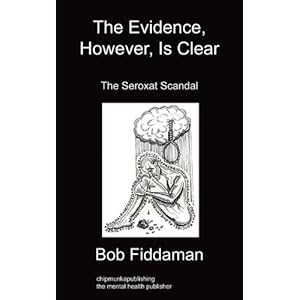
The Evidence, However, Is Clear...The Seroxat Scandal


CHAPTER ONE
“Highway to Hell” 

No stop signs, Speed limit. 
Nobody's gonna slow me down 
Like a wheel, gonna spin it 
Nobody's gonna mess me around.
Young, Young & Scott – Highway To Hell


I was prescribed Seroxat by my GP due to 'depression' - it was work-related and kind of spiralled when my former employers put me on to a 'Long Term Absence Register' because I had developed an illness, Osteoarthritis of the hips, that didn't allow me to perform the job I was employed for. The 'Long Term Absence Register' was basically set up to leave employees without pay and without being able to claim for benefits. It had a strain on family life and Seroxat was deemed to 'fix' that problem.

Seroxat took away the pain of not being able to provide for my family, in fact I didn't really care much about anything. I became devoid of any human emotion other than sadness, it was an unexplainable sadness though, you know bouts of crying when I really didn't know what I was crying about.

I first noticed withdrawal symptoms when my family and I went on holiday - an annual trip to the mother-in-laws caravan. At the time I thought I had sunstroke - strange shooting sensations across my head and a feeling of nausea. However, victims of sunstroke suffer because they get too much sun I had been on holiday for two days, two days in June where it had rained constantly. I actually [wrongly] thought that there would be no need to take my dose as I was away on holiday and away from everything that reminded me of the employment thing.

Once I realised that the zaps were caused by me missing a dose, I immediately started again. The zaps then stopped.

The two week holiday was a respite from the problems on the work front, however I didn't feel I was myself on the holiday. I didn't drink alcohol and couldn't get into the spirit of things. Eventually the sun did come out but sitting in it seemed to increase my agitation. Sudden loud noises were beginning to irritate me - unavoidable when you are sitting around a pool and kids are screaming and splashing around, basically enjoying themselves much to the increasing annoyance of myself.

I'd go for walks alone instead of sitting at the beach or around a pool - I didn't like the feelings I was getting at these loud noises - I would clench my fist and hold in the feeling of anger. I became very tired way too easily - one minute I was wide awake, then next I was 'comatose'. I was waking but not feeling that refreshed feeling one does after 8, 9 sometimes 10 hours sleep! Sure, when we are depressed our bodies tend to shut down and sleep is a common trait in the depressed... so I've been told. But this was more than sleep, this was literally like hibernation!

The early days of taking Seroxat have become a blur, there isn't much I can remember.

I started to become violent in my sleep. I remember my then wife telling me that I had woken next to her in the middle of the night.

On another occasion I lashed out at her during sleep. Again, I had no recollection of this incident. Things were strained between us and it was decided that I sleep elsewhere, the couch downstairs was the obvious choice as I didn't want to get into the same bed as my children through fear of attacking them whilst I slept.

Sudden loud noises became a real problem for me, with three children in the house I found it intolerable and would have to leave the room, sometimes house, just to get away from the noise. I started to feel alienated (distanced) from my own family. The children tried their best but how can children play without making noise? They are grown up now and my eldest recently told me 'Dad, it was like literally walking on egg shells'. That saddened me because it was something that was out of my control and something that had only started when I took Seroxat.

As the nightmare continued, my employers agreed to retire me on medical grounds and an agreement was reached for a ill health retirement package. One would think that a sudden windfall of cash would have brought me back into reality. It didn't. I was numb and at times I thought I was on a different planet with back-to-front time zones. Night sweats, confusion, lack of empathy and blurred or delayed vision became common. I felt like a prisoner in my own home. People complain about Seroxat withdrawal... all of the above happened when I was not withdrawing.

Things came to a head and I tried to take my own life by swallowing 20 or so Seroxat tablets. My then wife was on holiday with a friend. I just wanted out, I didn't care for anything, I had put weight on, my marriage was a sham, my children would take a wide berth when walking past me and would rarely talk with me for fear of me 'snapping'. I just did not care about anything, a complete lack of empathy for everyone and everything. I wanted the old me back, wanted my children to have a dad again. I couldn't see how that could happen. Here I was with a lump sum of money yet I was considerably withdrawn from reality. My world seemed my own and nobody else's. I didn't want anyone else to come into my world because I knew they wouldn't like it.

After I swallowed the tablets I phoned a friend who lived nearby - it was one of the rare occasions where reality had dawned and I realised that I had made a huge mistake. My friend phoned an ambulance and I was admitted to hospital and kept in for observation overnight. No stomach pump, just a series of wires with sticky tape attached to my chest.

A few months went by and my GP had prescribed me the liquid form of Seroxat, a sickly orange liquid administered with an oral syringe. As I recall, I think I had told him that I wanted [needed] to come off Seroxat as it was making my life a complete misery. I think I had tried tapering [1] by halving the tablets or taking one instead of two. It's all quite blurry. Basically, I had no guidance, nobody could tell me how to slowly taper and what programme to follow. The manufacturer [GSK] offered no guidance on the patient information leaflet, I think the only guidance they offer today is that 'you must taper slowly' or words to that effect.

I moved out of the marital home, leaving my 3 sons behind me. Again, I felt no emotion. I moved across the city to live with my sister, Janet. She educated herself on withdrawal problems and made things really comfortable for me. I owe her a great debt. I lived with her and her two children, Ashley and Lucy, for about 5 months before being given keys to a one bedroom council flat just around the corner from her. In fact, part of the reason I was able to live so close to her was because the Housing Department had agreed that I needed someone close by to help me through withdrawal. I guess I have GSK to thank for my one bedroom council flat.

I was elated when I got my own place, it meant I could see my children again, more importantly show them how their dad was getting better because I was tapering - and had been during my time spent living with my sister.

The zaps were still with me as was the irregular sleep patterns but I was happy in myself that I was 'getting there'.

18 months from 40mg to 22mg and I was reading comments on the internet from GSK employee, Mary Anne Rhyne, claiming that “discontinuation reactions” last for about 2 weeks. It was the longest two weeks I have ever known!' The term, “discontinuation reactions” was coined by the pharmaceutical industry – it basically means withdrawal reactions.

Enough was enough. I decided, against my GP's wishes, to go cold turkey. He told me to keep in touch on a regular basis and we did via email. My GP had sometime previously stopped prescribing Seroxat to new patients because he had witnessed what I had gone through and had read documents that I had read on the internet and printed off for him.

I still allowed my children to come see me for the first few days but then things got really bad. I became violent in my thoughts - I yearned confrontation.

Days and nights passed and I would control the zaps jolting through my body by wrapping a soaking wet ice cold towel around my head. I'd also wrap ice cubes in a smaller towel and place this on the back of my neck.

This helped somewhat with the zaps. I'd go for walks in the middle of the night - As I recall this was during the months of Feb/March and it was a particularly cold year. I would walk with just a t-shirt on - the cold biting at my naked arms - I didn't care - anything to take away the zaps – Anything!

I was living in a nightmare, although I had no fear, no fear at all, quite the contrary. I would walk through a country park that backs on to where I live, walk through during the early hours of the morning. I didn't care if I was stopped by gangs of youths, I would 'let them have it' - this was my mindset - I wanted violence.

It was a rough journey and one that I would never recommend to anyone. I've lost friends because of Seroxat, I've lost the woman I married, more importantly [to me] I lost a very precious moment in any father's life - I had missed my children growing up.

I locked myself in my flat and after a period of about 3 months [cold turkey] the demon had finally been banished. The clouds had parted and for the first time in six years. I felt like Bob Fiddaman again.

The withdrawal hell of Seroxat doesn't look like much when reading about it. One has to experience it at first hand to fully understand just how debilitating it can be.

So there you have it. GSK messed my life up and are continuing to mess with other people’s lives. I don't want them to do that.

In all I was on the liquid Seroxat for a total of 18 months, this period saw me taper down from 40mg per day to 22mg per day - it was a long process but it was something I needed to do. This drug had control of me, my thoughts, my emotions, dare I say it, my whole life.

Read more: Purchase the book

UK - HERE
US/CANADA - HERE
AUSTRALIA - HERE


Friday, April 22, 2011

Update on Seroxat/Paxil/Aropax Book Orders


Those of you that have ordered signed copies of my book will be pleased to know that I should have them all at the end of the week. I'll sign them and get them off to you all the day they are delivered.

Thank you all for your continued support and your help in creating awareness.

Book can be ordered online at the following book stores:

UK

Amazon

Abebooks

Better World Books

Bookstore

Chipmunka

Waterstones

WHSmith


CANADA

Amazon

Chapters/Indigo


FRANCE

Amazon


GERMANY

Amazon


JAPAN

Amazon


USA


Alibris

Amazon

Abebooks

Barnes & Noble

Better World Books

Biblio

Super Book Deals

Fid

Wednesday, April 06, 2011

SEROXAT/PAXIL BOOK LAUNCHED


My new book, 'The Evidence, However, Is Clear...The Seroxat Scandal' is now available as a paperback directly from the Chipmunka Publishing website. Copies can be ordered HERE

Price of the book is £10 - Postage from Chipmunka will be £2

The book will be available on Amazon in due course, unsure what the postage will be on Amazon.

Those who have expressed wishes to have the book signed can purchase directly from this blog. Please email me for details at fiddaman64@blueyonder.co.uk

If ordering direct from this blog, the postage to UK will be approx £2. For those overseas, I'll update on postage prices soon.

The Foreword is by Dr Jon Jureidini, child psychiatrist and clinical Professor, Discipline of Psychiatry, University of Adelaide, South Australia.

I owe Jon a great debt as it was he who set up the whole editing process [from Kindle version to paperback]

Here's his foreword.

Bob Fiddaman’s account of his interaction with the Medicines and Health Care Products Regulatory Agency (MHRA) over the antidepressant Seroxat (and of his blogging of that interaction) is comic and tragic in equal measures.

Charles Medawar, whose Antidepressant Web was godparent to Fiddaman’s blog, spoke of a ‘conspiracy of goodwill’ arising out of the wish of all parties (doctors, funders, manufacturers and users) that antidepressants be safe and effective. Fiddaman shows us that there is also ‘bad will’ in this case, identifying cynical and exploitative behaviour by those who we should be able to trust.

Around half of serious adverse affects of drugs are not identified until the medication has been used for a considerable time. This delay is understandable because research to bring a drug onto the market only involves hundreds or thousands of patients, whereas a successfully marketed drug will be taken by millions. Therefore rarer adverse effects sometimes do not become apparent for several years after a medication becomes widely available. By this time many may have been adversely affected by the drug without they or their doctors recognising that it is harmful. And when a drug is very widely prescribed (millions were taking Seroxat), every delay of a day in discovering harms means that thousands more people will suffer. Therefore pharmacovigilance (the detection and analysis of adverse effects of medications once they come into widespread use) has to be central to drug development and research if we are to reduce harm from medication.

But in spite of the fact that pharmaceutical companies have an obligation to monitor adverse effects of their drugs, they invest only a trivial sum in pharmacovigilance. Their priority is the much more profitable enterprise of developing and especially marketing new drugs, where they make huge investment. This imbalance is understandable (though not acceptable) in the light of their need to turn a profit, and reflects the lack of any significant disciplining of their activities by regulatory bodies.

One person’s reported experience with a drug proves little but Fiddaman shows us what we can learn when we collect together the experience of many users. Patients’ collective experiences with their drugs constitute a gold mine of information for the health system and pharmaceutical industry, but we doctors and scientist make barely any effort to collect the data and make sense of it. It is left to small heroes like Bob Fiddaman to irritate the system. A more rigorous and informative examination of patients’ experiences with drugs could prevent countless crippling adverse events. If we do ever achieve a truly effective system of pharmacovigilance, then Bob Fiddaman’s blog will have played an important part in this outcome.

Friday, March 05, 2010

Over Six Hundred and Counting - Paxil Birth Defect Cases


Image: topnews.in


"GlaxoSmithKline did not want to study the drug," Tracey told the jury. "The FDA made them study Paxil."


Part 6 [Final installment] of Evie Pringle's exposé on GlaxoSmithKline, Paxil and birth defects.

Take a bow Evie - these series of articles have been jaw-dropping and I would like to thank you personally for raising awareness on an issue that GSK would, no doubt, like to bury.

Other parts in this series:

Paxil Birth Defect Litigation - First Trial A Bust For Glaxo

Paxil Birth Defect Trial - Battle of the Experts

Glaxo Birth Defect Litigation Reveals Paxil Promoters on Speed Dial

Cold Case Files - Paxil Birth Defects

Ghostbusting in Paxil Birth Defect Litigation


Over Six Hundred and Counting - Paxil Birth Defect Cases

Since Paxil came on the market in 1992, there have been three separate types of failure to warn lawsuits filed against GlaxoSmithKline over Paxil; birth defects, suicide, and addiction.


Roughly 150 suicide cases were settled for an average of about $2 million, and about 300 cases involving suicide attempts were settled for an average of $300,000, according to a December 14, 2009 report by Bloomberg News. Glaxo paid an average of about $50,000 each to resolve about 3,200 cases linking Paxil to addiction problems. The drug giant has also paid about $400 million to end antitrust, fraud and design claims, Bloomberg reports.


All total, Glaxo has paid out close to $1 billion to resolve Paxil lawsuits since the drug came on the market in 1992. The company's provision for all legal matters and other non-tax disputes as of the end of 2008 was listed as $3.09 billion in its annual report.


The first birth defect trial, in over 600 cases filed, resulted in a verdict for the plaintiffs on October 13, 2009, and an award of $2.5 million in compensatory damages for the the family of Lyam Kilker, who was born with three cardiac birth defects after his mother took Paxil while pregnant.


In the Kilker trial, Glaxo's lead attorney was King & Spalding partner, Chilton Varner, and Sean Tracey, from Houston, led the family's legal team.


Andy Vickery, of the Houston firm of Vickery, Waldner and Mallia, is the lead attorney in several Paxil birth defect cases. The first case set for trial is unique in that it involves, Delaney Novak, an infant born with heart defects on April 4, 2002, to Laura and Derek Novak, after Laura was prescribed Paxil off label for migraine headaches.


The Novak case is also unique among the Paxil birth defect cases because Delaney's parents had their insurance with United Healthcare, and Laura was part of the study that Glaxo contracted for, which resulted in the initial warning letter about birth defects in September 2005.

According to Vickery, Glaxo conducted a study on Wellbutrin (bupropion), another antidepressant, after discovering a possible link to birth defects. "The review found no problems with Wellbutrin, but discovered that a significant number of mothers who had been prescribed Paxil (nearly twice as many as those who had not taken the drug) had children born with heart defects," he says.

Doctors Ra-id Abdulla, David Healy, Shira Kramer and Suzanne Parisian testified as the experts for the plaintiffs in the first trial. All told the jury they believed Paxil caused Lyam's heart defects. Doctors Abdulla, Healy and Kramer are also expert witnesses in the Novak case.

Ingenix Study in First Trial

The Ingenix study, with lead researcher, J Alexander Cole, was conducted using data from the Ingenix Research Data Mart, containing insurance information from United Healthcare. The study was not supposed to look at Paxil.

During the testimony of several witnesses in the first trial, the jury was shown a February 7, 2003 email in which Glaxo employee, Graham Cottam, stated that he had informed Anne Bell, the project leader for Paxil, about plans to do the Ingenix pregnancy study on Wellbutrin, and "Anne wanted to be sure that we will not be looking specifically SSRIs or Paxil."

Doctor Suzanne Parisian, a former FDA scientist, testified that the initial 2002 proposal was "to do a large database study for Bupropion in pregnancy."

There was "nothing that addresses Paxil," she told the jury. The "procedure had never been designed to specifically look at Paxil."

But when the data was broken out for Paxil in the original study, it "showed the increased risk and the pregnancy was changed to Category D," she explained.

The FDA later requested that Paxil be studied, according to the testimony of Glaxo employees and documentation, she said.

The famous neuropyschopharmacologist and professor of psychiatry from Cardiff University in Wales, Dr David Healy, explained that Glaxo had hopes that the study would show Wellbutrin as an antidepressant that did not cause birth defects and the company could apply to the FDA to have it classified as a pregnancy category B drug instead of a C.

"It would give the message," he said, "that this of the drugs we have available to use for women of childbearing years, this would be one of the safer ones."

Healy told the jury that there was "no reason from the scientific point of view why they would not want to also look at Paxil."

"And this appeared to be the FDA's view," he said, "because FDA said, well, you looked at Bupropion, why don't you look at Paxil, also," a couple years later.

When asked whether by the year 2003, he could think of any scientific reason not to do a pregnancy study with Paxil, Healy replied, "No, I can't."

In fact, Tracey showed the jury an internal company email written by a Glaxo employee two years later in August 2005, around the time that the results on Paxil from the Ingenix study came out, who asked the question: "Why hasn't the company gathered data on this until now, 13, I think, years after the product was approved?"

In the case of the study on Wellbutrin, there were only 16 reports of birth defects that indicated there was a signal to do the study, Parisian told the jury. While an internal analysis conducted by Glaxo on Paxil in 2000, showed 79 cases of birth defects.

In September 2005, the conclusions of the Ingenix study were: "The use of paroxetine in the first trimester of pregnancy was associated with an increased risk of congenital malformations compared with other drugs."

"To your knowledge, prior to 2005 did GSK ever do a single epidemiological study to determine whether or not Paxil caused birth defects?" attorney, Adam Peavey, asked Parisian.

"Not that I have seen," she said.

Ingenix Downside

During the testimony of Dr Shira Kramer, an epidemiologist, Tracey put up a slide on the Cole paper that was published in 2007.

The paper was on a study conducted by epidemiologists who were employed by Glaxo to do the research, Kramer explained. It was a continuation of the Ingenix study that looked at Wellbutrin and then Paxil. One of the co- authors was Sara Ephross, an employee of Glaxo.

Kramer was asked to explain the importance of the Cole study. "First of all," she said, "it was a cohort study comparing ... people exposed to Paxil ... to people who were exposed to other SSRIs."

"So one very key thing for you to remember is that here the ... unexposed group is not people who were not exposed to SSRIs, they were exposed to SSRIs," she told the jury.

"That's a very important point," she said, "because if SSRIs are a risk factor for cardiac defects, birth defects, then the relative risk that will be generated in this study is going to be lower than it normally would if truly people were unexposed to SSRIs."

"The other thing that is important to keep in mind," she told the jury, "is that the information was obtained from an administrative claims database called the Ingenix Research Data Mart."

"There was no individual, either examination or interviewing of anyone," she explained. "The information was extracted from administrative claims data that was available."

"The other thing that's important," she said, "is that initially the population that was studied covered the years 1995 to 2002, and then after the fact an additional two years were added to the study."

"The published results, based on all of the years that were eventually included in this study, were an odds ratio for all cardiovascular malformations related to Paxil exposure of 1.46, which means that individuals who took Paxil were at 46 percent increased risk of their child having a cardiovascular malformation diagnosed at birth compared to individuals who took other, other SSRIs," Kramer explained.

"In the second odds ratio of 1.68," she said, "showing a 68 percent increased risk, now we are comparing women who took Paxil either alone or in combination with another SSRI, compared to the other SSRI group, either alone or in combination with other SSRIs, mono- or polytherapy."

The published study contained an asterisk that said: "An interim analysis performed by Cole, et al, using births occurring between '95 and 2002 found an odds ratio of 2.0 for the association between first trimester Paxil use and cardiac birth defects."

Kramer was asked to explain what that statement was referring to. "Initially, the study was designed to include the years 1995 through 2002 with a sampling ratio of controls to cases of 7 to 1," she said. "That was the protocol."

"And when that analysis was done, the odds ratio, instead of being 1.46, which ultimately is what was published, was actually higher, it was 2," she told the jury.

"That means that the exposed group had a risk of a child with a cardiac malformation two times that of the group not exposed to Paxil," she added.

The odds ration got smaller when the Glaxo researchers, the authors of the study, "added in two additional years of data with a different sampling ratio," Kramer explained.

It is not appropriate for an epidemiologist to do that, she said, because "you are changing the rules after you look at the data."

It "really raises the questions as to, are you trying to influence the data," she noted.

"I can say very clearly," she told the jury, "that that is not considered to be appropriate conduct, scientific conduct. "

"What you are supposed to do is set up a study protocol in advance and follow it, and not change it after you have looked at the results," Kramer explained.

It is not appropriate to find out the results and change it in the middle, she said, "for obvious reasons, it looks like you are manipulating the data to make it come out looking a certain way."

"And if you want to do an unbiased, fair study," she told the jury, "the only appropriate plan of action is to develop a study protocol ahead of time, to follow it, and to analyze the results and not to fool with it, not to fiddle with it and not to change it."

While testifying, Kramer explained the meaning of "underpowering" a study. You need to have "a sufficient number of people in a study in order to test a certain research question," she said.

"And if you are going to apply statistical tests to the data that you generate," she told the jury, "you need to have enough people in that study to have generated enough cases of the outcome and you need to have enough people who are exposed."

"Now, this case," she said, "we have got a relatively rare exposure to Paxil, we have a relatively rare outcome, which is congenital cardiac birth defects, so you need to study very, very large populations in order to achieve statistical significance at these levels that we have been discussing."

She said the "investigators, the research team," dictates the size of the study.

Kramer went over the reasons why the odds ratio in the Cole study might be attenuated, or lower. It's "very clear that there are certain characteristics of this study that are making this odds ratio probably lower than it really would be given certain characteristics of the study design," she told the jury.

"One of the them is that the controls are really not unexposed to the SSRIs," she said. "They are exposed to drugs in the same class."

We have "observed in epidemiological literature that other SSRIs are associated with an increased risk of cardiac malformations," she told the jury. "Therefore, it is likely that since that's the comparison group, we have got an odds ratio in this study that's lower than it probably would be."

The second reason was that the analysis only included live births. "So you are missing fetuses who were miscarried," she said. "And then there are many miscarriages that are due to birth defects."

"You are missing fetuses that are aborted, electively aborted, because of known cardiac or other congenital malformations," she told the jury. "You are missing stillbirths."

And with a follow up for only nine months, she said, "you are missing congenital cardiac defects that aren't detected until later."

"So you have got a fairly substantial population that is not really being captured in this study of exposed fetuses," she pointed out.

Closing Recap

During closing arguments, Tracey reminded the jury about the email with Anne Bell's statement to make sure Paxil was not included in the Ingenix study, and said: "This document ... two years before this child is born, they are affirmatively saying: We do not want to look at Paxil in pregnancy."

In her closing argument, Varner told the jury: "Now, Mr. Tracey has talked to you about Anne Bell this morning."

"He has said that GSK would have done anything to avoid looking at the risk for Paxil," she pointed out.

"Well, ladies and gentlemen," Varner said, "GSK funded the study that did look at Paxil for the risk and published preliminary findings in August of 2005."

As soon "as even a possible link emerged in all of 2005, GSK reacted promptly and proactively to notify both FDA and doctors," she told the jury.

"It went immediately to FDA. It immediately changed its label," she said. "And it immediately sent out letters to doctors telling them about the changes."

In his final summation, Tracey told the jury, "I want to talk to you about the Ingenix study because Ms. Varner said something that is very, very important."

"She said when they found out what she says is August of 2005, within 21 days, they changed the label. Within 21 days, the doctors got the news," he recounted.

What "she forgets to tell you is that two years prior to this, Anne Bell said, Don't study the drug," Tracey told the jury.

"Had they not listened to Anne Bell," he said, "had they studied the drug in 2003, Michelle David wouldn't be sitting here because the warning would have gone out like that."

"We would have been two years ahead of the game," he pointed out.

"GlaxoSmithKline did not want to study the drug," Tracey told the jury. "The FDA made them study Paxil."

"It was not some sort of voluntary we're just a good drug company trying to get along," he said. "It was we don't want to study it and they're forcing us to study it."

Paxil Off-Label Promotion

Paxil is not FDA approved for use by pregnant women, so all mothers who gave birth to infants with heart defects received the drug off label. In Andy Vickery's first case set for trial, Delaney Novak was born with heart defects after his mother, Laura, was prescribed Paxil for migraine headaches, another unapproved use.

Dr Dee Mangin is an expert witness in the Novak case. Her research and published work has focused on rational prescribing, and the influence of drug company promotion both to physicians and direct to consumers. She submitted a report on October 13, 2009, which outlines Glaxo's off label promotion of Paxil around the time of Laura's pregnancy.

In her report, Mangin defines off-label use as the "practice of prescribing drugs for a purpose outside the scope of a drug's approved label - often an unproven use or one that has not been widely tested."

"While it is legal to prescribe off label in the United States, it is illegal for companies to promote off label use," she notes.

"The risks of off label promotion," she says, "are that it could lead to exposure of patients to the risks of a medicine for no benefit, and furthermore they maybe denied other more effective treatment."

"GlaxoSmithKline from 2000," Mangin says, "mounted a multifaceted and targeted national promotional campaign that employed explicit strategies designed to promote sales of Paxil in pregnant women and women of reproductive age."

An exhibit cited in the report from a "Paxil Tactical Marketing Plan in 2000," states: "New Paxil data with high media interest, hot flash, postpartum, depression, pregnancy, and lactation will position Paxil as the drug of choice for women."

"One of the known reasons that physicians change their prescribing behavior is as a response to the volume of evidence containing the same message that the physician is exposed to," she wrote. "The so-called "Carpet Bombing" technique used in the Paxil campaign feeds directly into this."

"There are a number of strategies companies can use to highlight use for off label conditions including distribution of individual scientific articles discussing the off label indication and use of the drug as well as mentions of off label use by key opinion leaders in continuing medical education," the report explains.

"In relation to the off label prescribing for migraine," Mangin says, "there is no evidence of any effectiveness over placebo for SSRIs in migraine prevention."

Yet a paper titled, "Paroxetine in the Treatment of Chronic Daily Headache," by Carol Foster, MD, and Jacklyn Bafaloukos, RN, that was distributed to doctors, specifically states: "The dramatic improvement in the patients in our study suggests that paroxetine appears to be a safe and effective drug for the treatment of chronic daily headache."

"The strategies outlined where reprints about treatment of migraine with paroxetine, large numbers of form letters containing summaries of studies of use in headache were sent to physicians and detailing and providing free samples to physicians likely to treat women with migraine were therefore encouraging use of Paxil and exposure to its risks when in reality it is no more effective in this situation than a sugar pill," Mangin reports.

Encouragement "of unapproved use for migraine further attempted to expand the market beyond that which was medically justified and likely to lead to unnecessary exposure to the risks of Paxil," she advises.

In an August 11, 2009 deposition, Laura's doctor testified that Glaxo sales representatives would commonly leave reprints of articles on off label uses and salespeople did discuss the literature on the off label use of Paxil for migraines with him. One of the sales representatives visiting the doctor at the time stated in a deposition that it was his habit to distribute all such articles.

But most importantly, the doctor said he would not have prescribed Paxil to Laura had Glaxo told him back in 2000, or early 2001, that there was an association between Paxil and birth defects. He further noted that there was no benefit from Paxil that would outweigh the risks of birth defects and that he had not used Paxil in his practice since the Dear Doctor letter warned about birth defects.

Delaney suffers from a septal heart defect. "None of the information from the medical records of the family or their statements on potential genetic, environmental and pharmaceutical causes of heart defects indicates any other factor more likely to have caused her condition than the Paxil exposure," Mangin points out.

"It is clear that if the prescribing doctor had been informed of the risk of heart defects, Laura Novak would not have been exposed to Paxil," she notes.

In the report's conclusion, Mangin states: "It is my opinion that this promotional campaign for Paxil was inappropriate given the scientific knowledge and what was known by the company at the time."

"The degree of comfort with the use of this medication in the reproductive years and pregnancy is likely to be influenced by GSK's misleading promotional campaign where concerns were minimized, efficacy was overstated, the idea of off label prescribing was seeded for migraine, and lastly the marketing specifically targeted a group at higher risk in terms of safety concerns - pregnant women and women in the reproductive age group," she reports.

"This Paxil promotional campaign was irresponsible, and potentially disastrous from a public health perspective as it was likely to expose a much greater proportion of the population to these potential harms," she concludes.

Glaxo's Phone Book

During closing arguments on October 8, 2009, Tracey told the jury regarding Glaxo: "They have a telephone book full of doctors."

Referring to an exhibit introduced during the trial, he said: "This is all the doctors that they pay to give speeches on their behalf to push their drug, to sell it, to convince other doctors to prescribe their drug."

While Healy was testifying, Tracey had him go over some of names of doctors in the book that included Lori Altshuler, Vivian Burt, Lee Cohen, Charles Nemeroff, Jeffrey Newport, Zachary Stowe, Katherine Wisner and Kimberly Yonkers. None of these doctors appeared to testify on Glaxo's behalf in the trial.

What "they did was aggressively market this drug to women," Tracey told the jury.

All "these names of people that they ghost-wrote articles for to get the doctors ... to sell the drug," he noted.

Doctor Healy told you that "they altered the prescribing practices in this country," he recounted. "What they set out to do, they succeeded in doing. They got doctors to prescribe the drug to women."

"And they did it," Tracey said, "by having seminars where they would put these doctors, experts in the field, on their payroll, that the doctors would go and listen to, unwittingly knowing what they are really hearing is a marketing campaign."

In reference to another exhibit viewed during the trial, Tracy said: "This document describes that it worked. When the doctors came out, these are the comments they made after attending these seminars: Will prescribe Paxil to pregnant women. My comfort in treating depression in pregnancy has increased. Treating pregnant patients with confidence. Will feel more comfortable giving Paxil to pregnant women."

In citing $765 million in the US alone, between 1997 and 2005, Tracey told the jury: "This is the number for over a nine-year period this company spent to convince doctors to sell their drug, to prescribe their drug to women of childbearing years."

"And they got a heck of a return on it," he said. "Net. After expenses. Almost 14 billion dollars for a nine-year period."

"Out of the 700 million dollars they spent trying to sell this drug to people," Tracey stated, "there is not one shred of evidence in the record about how much money they spent to try to figure out whether it was going to induce birth defects."

"And as far as I can tell in the record," he said, "after they bought it, they did one animal study and they didn't spend another penny."

Evelyn Pringle

(The Paxil Birth Defect Litigation Update Series is sponsored by the
Houston law firm of Vickery, Waldner and Mallia at www.justiceseekers.com )

(Evelyn Pringle is an investigative Journalist and Researcher focused on
exposing corruption in government and corporate America)


Fid

ORDER THE PAPERBACK
'THE EVIDENCE, HOWEVER, IS CLEAR...THE SEROXAT SCANDAL' By Bob Fiddaman
SIGNED COPIES HERE OR UNSIGNED FROM CHIPMUNKA PUBLISHING

Crackdown on British fish and chips


Image: telegraph.co.uk


Whatever next?

I'm going to sound like Uncle Albert now but 'during the war' and thereafter, wasn't bread and dripping part of the British diet?

I think the government are in such a mess that they like to deflect their own failings to other people [You and I]

If there is an 'obesity crisis' in the UK, as this article claims, then they [the government] may need to look at technology as the culprit.

Many folk who visit this blog were born in and around the same era - for entertainment, we chose parks... or at least playing outside and getting fresh air and exercise.

For the past 20 years or so, it seems, children have been encouraged to stay indoors to get their jollies with a joystick or PlayStation pad. Crisps, chocolate and other confectionery, close at hand.

If it's not computer games, it's the Internet - talk to a friend online who lives two doors away or write 'It's snowing' as a Facebook status. One doesn't even need to walk the short distance to a post box because electronic mail does that for you... and it's free!

Gone are the days where mom would take the kids to C&A to get them fitted out for their new school uniform - buy it online and let them deliver it.

Fish and chips to blame for obesity? Think again.

You can read the article in the Telegraph... don't worry, you won't have to venture out of your door - just click on the link:

FISH AND CHIPS

Fid

ORDER THE PAPERBACK
'THE EVIDENCE, HOWEVER, IS CLEAR...THE SEROXAT SCANDAL' By Bob Fiddaman
SIGNED COPIES HERE OR UNSIGNED FROM CHIPMUNKA PUBLISHING

NO GUTS, NO GLORY - AIRBOURNE


Image: roadrunnerrecords.co.uk

Totally unrelated post today folks. Sometimes writing about GlaxoSmithKline, the MHRA and Seroxat, leaves a bitter taste in the mouth. Thankfully, there is music in my life to take away such bile. Today I want to promote a band that not many of my readers will have heard of, not many will like them, particularly if loud rock isn't your 'thang'.


I remember when I first heard this band, kinda blew my socks off as AC/DC hadn't released an album or even toured in years.

Back then, as a myspace user, I joined the 'Airbourne' group page, it had about 24 members, today it has over 48,000.

I've been to see them twice in my home town and even reviewed their debut studio album, 'Runnin Wild'

It was ballbustin' pub rock at its best and time to clear off the cobwebs of the air guitar.

Airbourne will be releasing their second studio effort later this month. No Guts, No Glory is available to stream online at Road Runner Records. My first impressions? It rocks. It will take a few plays before I can review it.

If you are a fan of straight laced rock n' roll with guitars turned to eleven and vocals turned to twelve then you may just enjoy Airbourne's new offering.

You can listen to the whole album HERE

Fid

ORDER THE PAPERBACK
'THE EVIDENCE, HOWEVER, IS CLEAR...THE SEROXAT SCANDAL' By Bob Fiddaman
SIGNED COPIES HERE OR UNSIGNED FROM CHIPMUNKA PUBLISHING

Wednesday, March 03, 2010

Ghostbusting in Paxil Birth Defect Litigation

Part 5 of Evie Pringle's exposé on GlaxoSmithKline

Other parts in this series:

Paxil Birth Defect Litigation - First Trial A Bust For Glaxo

Paxil Birth Defect Trial - Battle of the Experts

Glaxo Birth Defect Litigation Reveals Paxil Promoters on Speed Dial

Cold Case Files - Paxil Birth Defects

Evelyn has kindly given me permission to reproduce all of this series in its entirety.


Image: pics.blameitonthevoices.com


Ghostbusting in Paxil Birth Defect Litigation

A month before the first Paxil birth defect trial against GlaxoSmithKline was set to begin, the Associated Press ran the headline, "Glaxo Used Ghostwriting Program to Promote Paxil," in reporting on a program called "CASPPER," which allowed doctors to "take credit for medical journal articles mainly written by company consultants."


"Drug companies frequently hire outside firms to draft a manuscript touting a company's drug, retain a physician to sign off as the author and then find a publisher to unwittingly publish the work," the Associated Press said on August 19, 2009. "Drug company salespeople often present medical journal articles to physicians as independent proof that their drugs are safe and effective."

Between 2000 and 2002, articles from the CASPPER program appeared in five medical journals. On August 21, 2009, Jim Edwards on BNET, described the CASSPER ghostwriting brochure. The document shows that the intent of CASSPER was to flood the market with ghostwritten information, he said. It stated: "Paxil Product Management has budgeted for 50 articles for 2000."


The trial in Kilker v Glaxo ended on October 13, 2009, with a jury in Philadelphia finding that Glaxo "negligently failed to warn" the doctor treating Lyam Kilker's mother about Paxil's risks and the drug was a "factual cause" of Lyam's heart defects. The family was award $2.5 million.

Ghostwriting 101

The world-renowned neuropsychopharmacologist from the UK, Dr David Healy, testified as an expert witness for the plaintiffs in the Kilker trial.

While testifying, Healy explained the process of ghostwriting to the jury. He said ghostwriting probably began seriously in the 1980s. "It's where an article appears under the name of usually a fairly distinguished person in the field," he testified.

But it involves more than just the true author being concealed, he told the jury. "It's a process where the ghostwriters work for companies who are very good at getting articles into the best journals in the field, like the New England Journal of Medicine, and recruiting some of the best known names in the field to be the apparent authors of the articles."

"They may come from one of the big named universities like Princeton or whoever, but the actual fact the person who appears to be the author isn't the true author," he said. "If you were to read the article, you often don't get any hints of who the true author of the article actually was."

Ghostwriting impacts doctors in the real world trying to make decisions on whether to prescribe a drug in several ways, Healy told the jury. For instance, he said, if he was doing his own writing, he "would write an article on the drug, warts and all."

"But if the article has been written by a ghostwriter working for one of the pharmaceutical companies," he said, "the chances are the warts are somehow going to vanish."

"The article will talk about the good aspects of the drug and will leave out the risky issues which are probably the most important things for the practicing doctor to know," he explained.

If the ghost author comes from an extremely distinguished university, doctors reading the article will think it has to be right, he said. "The simple fact that the article is going to be apparently written by this big named person and appears in an extremely good journal means that most average doctors will think this has to be true," he told the jury.

It's not just the case of the doctor who reads the article being deceived, he said. "It's the fact that the credibility of the institution is and the name is being used to sell the drug, as well."

Healy came face-to-face with ghostwriting when one of the drug companies offered to ghostwrite his articles, he said. Since then, he has researched the ghostwriting process to assess how common it is.

The assessment found that "at least half, maybe more, of the articles that appear in major journals under the names of the best known people in the field, are ghostwritten when they have to do with pharmaceutical drugs," he told the jury.

"If they have to do with the drugs that are being sold at the moment, the ones that are fashionable at the moment, then these articles are highly likely to be ghostwritten even when they appear in the very best journals," Healy said.

Ghostwriting Up Close

While testifying, Healy told the jury that he was familiar with companies that Glaxo hired to ghostwrite literature and put other doctors' names on it. "I think the leading firm in the field was one called STI," he said. "This stands for Scientific Therapeutics Information."

The jury was shown a July 28, 2003, document sent to the Glaxo product manager for Paxil, by Sally Laden, working for STI, which stated: "Thank you for offering me the chance to work with you to write two review articles."


"This letter summarizes my fees for this project," Laden wrote. "The safety paper is priced higher because of a greater number of named authors and the anticipated additional work involved in assessing the CR data in progress."


For the development of the manuscript, and up to five drafts, the price quoted was $12,000. One of the topics for a manuscript was on the safety of antidepressants in breast-feeding.


"The first draft will be the first run through the material," Healy told the jury. "She will have put the article together laying out the issues, laying out the references, structuring the paper up in the way that the journal she actually expects that this paper is going to go to will want the article structured."


Draft 2 goes back to Glaxo again and the author, whoever is actually going to put their name on the paper. Then draft 3 goes back to Glaxo and the author for sign-off, and then there will be a final version that goes to the journal, Healy explained. Then draft 5 is revisions from journal reviewers, he said.

He noted that Laden said the safety paper is more expensive because there was going to be more authors. "I should emphasize that more authors here does not mean more authors writing the paper," Healy told the jury. "It means more names appearing on the authorship line."


"She has to recruit people and the people whose names are on the authorship line get paid for being authors," he explained.


Sally Laden's "name has appeared on a range of different articles that have been produced for GlaxoSmithKline, not just on the issue of giving drugs to women of childbearing years but across the board," Healy said.


During Healy's testimony, the family's lead attorney from Houston, Sean Tracey, introduced the actual manuscript by STI. "This is an article that is going to go to a journal," Healy said. "It has been authored by Ms. Laden, contrary to what appears there."

The names Zachary Stowe and Jeffrey Newport appeared on the authorship line. Healy noted that Draft 4 stated: "Final article cover page to be removed."

"The cover page will be removed," he explained, "because the journal will treat the article quite differently if they think that the true author is not on the authorship line."

Healy said the paper was an example of ghostwriting. "It is going to go to a journal called Psychopharmacology Bulletin," he testified. "And in this particular issue of the journal where this paper later comes out, every paper in that issue of the journal has to do with Paxil."

The jury was then shown the actual article that was published and it was the exact same article but without Laden's name on it.

Healy testified that Stowe runs the women's mental health program at Emory University and publishes on SSRIs and women's health issues, with publications favorable to Paxil, and also gives seminars and talks for other doctors which outline "how it can be a good thing to treat women of childbearing years with Paxil."

He was not allowed to tell the jury how much Glaxo had paid Stowe over the last year or two, which was revealed by an investigation led by Iowa Senator, Charles Grassley, as the ranking Republican on the US Senate Finance Committee. The amount Stowe got paid "is not public knowledge where you can show me a document that says it," the judge said.

However, Stowe's Glaxo earnings are most certainly public knowledge. A google search in December 2009, with the following three key words in quotes, "Stowe" "GSK" "paid," brought up 15,800 hits.

On June 10, 2009, in reference to Stowe, the Wall Street Journal reported, "Emory University has disciplined a prominent psychiatrist who was being paid by an antidepressant maker at the same time he was conducting federal research about the use of such drugs in pregnant women."

The National Institute of Mental Health said "it is reviewing Stowe's activities, prompted by a letter from a U.S. Senate committee that said Stowe received $253,700 in 2007 and 2008 for "essentially promotional talks" for the drug maker GlaxoSmithKline," the June 11, 2009 Atlanta Journal- Constitution reported.


The charts with dates for Stowe's promotional talks reveal that many times he gave two talks for Glaxo on the same date and made five grand per day, in addition to payment for all traveling expenses. On one date, he billed $96 for meals alone.


For ready reference, the list of academics in the field of psychiatry identified by Grassley's investigation thus far, as not fully disclosing money from drug companies, includes Joseph Biederman, Thomas Spencer and Timothy Wilens at Harvard, Charles Nemeroff and Zackery Stowe from Emory; Melissa DelBello at the University of Cincinnati; Alan Schatzberg, president of the American Psychiatric Association, from Stanford; Martin Keller at Brown University; Karen Wagner and A John Rush from the University of Texas; and Fred Goodwin, the former host of the radio show, "Infinite Minds," broadcast for years by National Pubic Radio, before it was thrown off the air.


The supplement to the Spring 2003, "Psychopharmacology Bulletin," found online, sure enough shows the ghostwritten paper, "Clinical Management of Perinatal Depression: Focus on Paroxetine," with the names Stowe and Newport, along with papers by Martin Kelly, Charles Nemeroff, Alan Schatzberg, Karen Wagner, and Kim Yonkers, for a total of fourteen Paxil papers altogether.

Under "Disclosure," the article ghostwritten by Laden stated: "This work was supported by an unrestricted educational grant from GlaxoSmithKline. Doctor Stowe serves as scientific advisor for and receives research grants from Pfizer and GlaxoSmithKline. He also receives grant support from Wyeth."

The disclosure that the work was supported with a grant from Glaxo would not tell a doctor reading the paper that it was actually written by somebody else, Healy said.

While testifying, Healy explained that an "unrestricted educational grant, if I were to receive one, it would assume that I am saying things that are relatively favorable to the pharmaceutical company who has given me the educational grant."


"If I am saying things hostile to the drug," he said, "I will not get an unrestricted educational grant, although the word "unrestricted" suggests that I should."


Stowe's undisclosed income above was from Glaxo alone. In August 2007, he was listed as an author on a study titled, "Atypical Antipsychotic Administration During Late Pregnancy," in the American Journal of Psychiatry.

According to the disclosure section, Stowe has received research support from Glaxo, Pfizer, and Wyeth, has served on advisory boards for Glaxo, Wyeth, and Bristol-Myers Squibb, and has served on speaker's bureaus and/or received honoraria from Glaxo, Lilly, Pfizer, and Wyeth.

The second author on the ghostwritten paper, Jeffrey Newport, is the associate director of Emory's Women's Program. Newport was also an author on the "Atypical Antipsychotic" study. He has received research support from Glaxo, Lilly, Janssen, the National Alliance for Research on Schizophrenia and Depression, NIH, and Wyeth, and, he has served on speaker's bureaus for Glaxo, AstraZeneca, Lilly, Pfizer, and Wyeth, according to the disclosures.


The next person the jury heard about was Charles Nemeroff. He was also an author on the atypical study. Nemeroff was the Chief of Psychiatry at Emory, until he lost the position last year, Healy told the jury. "He's possibly best known or was the best known psychiatrist in the United States."


"He influenced an awful lot of heads of departments, professors of psychiatry, general people within the field of academic mental health, and through them and an awful lot of prescribing doctors here in the U.S. And, indeed, perhaps worldwide," Healy testified.

A link to "Articles" on the Emory website in mid-2009, brought up roughly 90 studies and papers that include the co-author Nemeroff.

Healy said he believed Nemeroff was one of the founding members of the Paxil advisory board and he participated in continuing medical education seminars with talks on Paxil.

Nemeroff would have been "the key person in producing the kinds of talks with slides that would have been held for large audiences of doctors, and then those slides and talks would have been distributed out to different doctors in the field who hadn't been at the major meetings as he gave his talk," Healy told the jury.

During his testimony, Tracey showed Healy a document from a continuing medical education seminar titled, "Fertility, Mood and Motherhood," and Healy said the material for the seminar was prepared by Glaxo for Nemeroff. It was again supported by unrestricted educational grant from Glaxo and Nemeroff "was reimbursed for his role in this," Healy pointed out.

Healy was also not allowed to testify about Nemeroff's fall from grace at Emory, how much he was paid by Glaxo, or his failure to disclose over a million dollars from drug companies.

Dr Bernard Carroll, a past chairman of the department of psychiatry at Duke University Medical Center, summarized the Nemeroff saga well on the Healthcare Renewal website on November 3, 2008, in writing: "The fallout to date includes his severance from several NIH-funded projects at Emory University School of Medicine, a freeze of NIH funding for a major center grant, and his stepping down from Emory's chair of psychiatry while an internal investigation proceeds."

During her cross examination of Healy, Glaxo's lead attorney, Chilton Varner, presented an exhibit showing a continuing medical education presentation given by Nemeroff.

"Can you see that in this continuing medical education program Doctor Nemeroff says that paroxetine, sertraline, fluvoxamine, (are) not associated with increased risk of teratogenicity or other complications?" she asked Healy.

"Yes, I do," he replied.

In small print, the disclosure for the presentation showed Nemeroff had received research grants and participated in the speakers bureau and consulted for Glaxo, Eli Lilly, Solvay and Pfizer.

During re-direct, Tracey asked Healy to tell the jury what the actual results of the study that Nemeroff was discussing in the presentation showed, and specifically when Paxil was looked at alone. The results "showed that there was a 1.8-fold increase in the odds ratio of a birth defects to the women who have been taking Paxil during pregnancy," Healy testified.

"Overall, for this group of drugs there was an increase in risk," he said, "but specifically for Paxil the risk was greatly increased."

"And beyond that," Healy stated, "what isn't included here in the conclusions, overall there was a -- on this group of drugs, there was a doubling of the rate of miscarriages on the drug compared with the rate of miscarriage for the women who are being compared who weren't on the drug."

"There was also an increased rate of women going on to voluntarily abortions on the drug," he added.

One of the lead authors on the study was Gideon Koren. "Doctor, without giving any details," Tracey asked Healy, "do you know whether Doctor Koren has ties to the pharmaceutical industry?"

"I know he has," Healy said.

During his opening statement, Tracey told the jury that 1998 was a big year for Paxil because a study came out by a doctor named Gideon Koren, and a researcher named Kulin, that looked at Paxil and two other SSRIs.

The study compared women who took SSRIs, to women who didn't take any SSRIs, and the number of birth defects in the two groups was the same. "So Doctor Koren concluded that SSRIs appear to be safe," Tracey said.

"Within, literally within 24 hours," he told the jury, "GSK's marketing machine cranked up and they faxed this information to their entire sales force."

And the sales force took this information and began to use it to sell to women, he noted. "What they didn't tell anybody was this," Tracey said. "That when you separated Paxil out from the other SSRIs, you saw that Paxil was causing birth defects, that there was an increased risk of birth defects in this study in these women when you looked at Paxil by itself."

"That was not in the paper," he said. "That information was not found out until two years ago."

While testifying, Healy was barred from telling the jury about Koren's involvement in one the biggest academic research scandals in history a few years back when he sent vicious anonymous letters to discredit fellow researchers and denied doing so until DNA evidence from postage stamps proved he was lying years later. In September 2003, the Canadian Association of University Teachers reported on the disciplining of Koren in the CAUT Bulletin as follows:

"The Ontario College of Physicians and Surgeons has formally reprimanded University of Toronto professor of medicine Dr. Gideon Koren. He had written anonymous harassing letters about Dr. Nancy

Olivieri and three colleagues during Olivieri's dispute with the Hospital for Sick Children, the University of Toronto and Apotex Inc. He then had lied repeatedly to conceal his responsibility. The college also cited him for additional misconduct, in research."

The Teachers Association further explained in the Bulletin: "The college's finding of research misconduct was in relation to a study on a drug to treat a blood disorder in children that Koren and Olivieri had once collaborated on. Olivieri identified risks that the drug was ineffective and caused liver damage, and voiced her concerns despite legal warnings from its maker, Apotex. Koren differed and, contrary to accepted norms, published an article on the drug using data from other researchers, including Olivieri, without their knowledge or consent."

"Koren had received hundreds of thousands of dollars in funding from Apotex after the company had terminated the drug trials in its efforts to prevent Olivieri from disclosing risks to patients, as well as the hundreds of thousands of dollars in funding he had received during the trials," the newsletter reported, citing an journal article by the authors of "The Olivieri Report."

Apotex marketed a generic version of Paxil, or paroxetine.


The penalty had been jointly proposed to the discipline committee through prior agreement between Koren's attorney and counsel for the college, the Bulletin noted. In its decision, the committee said it was "deeply troubled by this case" and "seriously considered administering a more severe penalty" than that proposed, as it wished "to express unequivocally its condemnation of Dr. Koren's misconduct."

Glaxo Money Still Flowing


In a December 14, 2009 report on Pharmalot, Ed Silverman noted that Glaxo had published a list of fees paid out to US healthcare professionals for speaking and consulting services for the three month period of April 1, 2009 to June 30, 2009. "By its own tally, Glaxo paid $14.6 million to approximately 3,700 US docs and other healthcare professionals," he reported.


Although Glaxo paid out millions of dollars over the years to the doctors discussed in this article, not one of them was called to testify as an expert in the first birth defect trial.


Evelyn Pringle

(The Paxil Birth Defect Litigation Update Series is sponsored by the Houston law firm of Vickery, Waldner and Mallia at www.justiceseekers.com )

(Evelyn Pringle is an investigative Journalist and Researcher focused on exposing corruption in government and corporate America)


Fid

ORDER THE PAPERBACK
'THE EVIDENCE, HOWEVER, IS CLEAR...THE SEROXAT SCANDAL' By Bob Fiddaman
SIGNED COPIES HERE OR UNSIGNED FROM CHIPMUNKA PUBLISHING

GOUT


Image: beliefnet.com


Bloody gout has reared its ugly head again. Same place, my big toe on my right foot.

I think we take our feet for granted. This morning I struggled to put a sock on so I could take my cross Rhodesian Ridgeback/Boxer out for his morning walk.

I've tried retracing my steps [pardon the pun] to try and ascertain what has caused this painful ailment to return. I know it's excess acid but I can't fathom out what I have ate or drank that's been any different to my normal way of living.

Cheaper coffee perhaps? My Nescafe granules went out the window a while ago and I now budget for the cheap ['Supermarket's own] brand.

Eating too much gravy [granules] - Yes, believe it or not, gravy granules can bring on an attack of gout!

Too much alcohol? Hardly - I can barely afford a bottle of cheap [Supermarket's own] orange squash, let alone booze - although my dad does come to see me once a fortnight and always brings me some Red Stripe lager.

Just as well I haven't got gout in my fingers as typing this post would be a struggle.

For those of you that have experienced gout in the toe/s you will know that it's basically crystals that form in the joint/s - close-up these crystals look like shards of glass - trust me, they bloody well feel like it too!

So, plenty of water and my leg in the 12 O'Clock position seems the order of the day and my poor old dog, Benn, will have to wait an hour or so before I'm able to put on my sock [ouch] then shoe [double ouch]

All I need now is the likes of Shania Twain knocking on my door asking me if I want to mattress dance!

Tips and avoidances would be appreciated folks.

Fid

ORDER THE PAPERBACK
'THE EVIDENCE, HOWEVER, IS CLEAR...THE SEROXAT SCANDAL' By Bob Fiddaman
SIGNED COPIES HERE OR UNSIGNED FROM CHIPMUNKA PUBLISHING
Tuesday, March 02, 2010

CHARLIE NEMEROFF WRITES...TO HIMSELF!

How bizarre.

This publicly available document sees Charles Nemeroff draft a letter to himself, it appears he is inviting himself to submit an article for the special supplement edition of Depression and Anxiety.

You will note that he is telling himself that the 'article' be no more than twelve printed pages in length including references, figures and tables.

Even more bizarre, Nemeroff writes:

"We shall provide you with an honorarium of $3,000 for this effort."

Either Nemeroff was suffering a form of dementia or he was merely writing a ghost-written letter for someone to add their name to and to send to him?

How bizarre Charlie!

Here's the letter.

CLICK ON IMAGE


Full letter can be downloaded HERE

For a brief history on Charles Nemeroff, read Evie Pringle's excellent article, 'SSRI Pushers Under Fire'

Fid

ORDER THE PAPERBACK
'THE EVIDENCE, HOWEVER, IS CLEAR...THE SEROXAT SCANDAL' By Bob Fiddaman
SIGNED COPIES HERE OR UNSIGNED FROM CHIPMUNKA PUBLISHING

Monday, March 01, 2010

MY FIRST BOOK REVIEW


Image: uiwp.uiuc.edu

Many thanks to Susan at 'If Your'e Going Through Hell Keep Going' blog for, firstly, purchasing a copy of my e-book, and secondly for writing such a great review.

The paperback will be out before the year ends.

Fid

ORDER THE PAPERBACK
'THE EVIDENCE, HOWEVER, IS CLEAR...THE SEROXAT SCANDAL' By Bob Fiddaman
SIGNED COPIES HERE OR UNSIGNED FROM CHIPMUNKA PUBLISHING

Cold Case Files - Paxil Birth Defects


Image: topnews.in


Part Four of Evelyn Pringle's Paxil Birth Defect Articles

Other parts

PART 1, 2, 3

REPRODUCED WITH THE EXPRESS PERMISSION OF EVELYN PRINGLE


Cold Case Files - Paxil Birth Defects

Almost like an episode of the TV show, Cold Case Files, the first Paxil birth defect trial was dominated by a story about what happened to the rat pups that died around 1979 and1980, involved in a study in which Paxil was being tested on pregnant female rats.

The animal studies giving Paxil to rats and rabbits were conducted by a Danish company called Ferrosan before the drug maker, that later became part of GlaxoSmithKline, purchased the drug.

The family's lead attorney in the case of Kilker v Glaxo, Sean Tracey from Houston, brought in the world-famous neuropsychopharmocology expert from Wales, Dr David Healy, to testify extensively about rat pup study 295.

In summary, Healy told the jury that all the rat pups born to mothers who received Paxil were dead four days after they were born, while eighty-eight percent of the pups not exposed to Paxil were still alive on day four.

In fact, of the 415 rat pups born to mothers who received Paxil, Healy testified that, "One in every ten or actually maybe more like possibly one in every eight or so were born dead."

As far as he could make make out, all the rats were not autopsied, Healy said, so the question was why the pups died.

"It's clearly the drug that has caused the death," he told the jury.

"One of the possible reasons for their death is they're born with birth defects that lead to them actually dying early in infant life," he testified. "A responsible approach to data like this is to investigate it further and find out just what the cause is."

Doctor Suzanne Parisian, a former FDA scientist, also served as an expert for the plaintiffs. She testified that the first safety signals that indicated Paxil could cause birth defects were seen in the animal studies conducted in 1979-1981 period, as well.

Parisian said the studies showed birth defects, embryos that died, and rat pups that did not survive.

Adam Peavy, of the Houston firm of Bailey, Perrin and Bailey, handled her testimony. While testifying, Peavy had Parisian review comments in a memo by a Doctor John Baldwin to Glaxo in 1980, discussing the Ferrosan studies, which stated: "There remains the possibility that this compound could be teratogenic at high-dose levels."

"We need to ascertain whether Ferrosan have conducted or are conducting or intend to conduct a peri- and postnatal study and a neonatal acute toxicity study," Baldwin wrote.

Based on her review the documents, Parisian told the jury, Glaxo never ascertained whether Ferrosan did the studies and Glaxo never conducted the studies.

As far as she knew, the company never told the FDA about Baldwin's statements either, she said, but "they should have."

On October 13, 2009, the jury in Philadelphia rendered a verdict against Glaxo and awarded the family $2.5 million. More than 600 Paxil birth defect cases are pending in the multi-litigation in Pennsylvania.

Paxil Worse Than Cocaine

In May 2009, a paper was published by a Doctor Sloot and the complete version of the study came out in September 2009. During closing arguments, Tracey told the jury, the "Sloot study is probably the single most problematic document in this case for them because it could have easily been done."

"They would have known that the drug was a clear teratogen. It was more powerful than cocaine," he said. "And it was more powerful a teratogen than even the control or as powerful as the control retinol that everybody in this courtroom, everybody that has testified, has said that drug is a teratogen."

"And had GSK done the studies that Baldwin told them they should do, or a study like Sloot, any time before they started marketing," he told the jury, "we wouldn't be here."

Retinol is an active ingredient in Accutane, a pregnancy Category X drug, meaning it is known to cause birth defects and is not to be used by pregnant women.

During his testimony, Healy was asked to tell the jury what the Sloot study was seeking to do.

"Schering-Plough had acquired a different European company called Organon who had a number of drugs which were serotonin reuptake inhibiting drugs,"he explained.

"One of the things that Schering-Plough wished to find out was could they bring any of these drugs to the market," he said.

"What they then did was to do reproductive toxicology studies on these drugs that were new to them, plus on, I believe, all of the SSRI drugs that were on the market, plus a number of drugs which also inhibit serotonin reuptake, like cocaine, and they threw into the mix one or two more drugs, one that was known not to cause birth defects and one that was known to cause birth defects closely related to Accutane," he told the jury.

They had a "particular system to look at the impact of all these drugs on the developing fetus to see were there any indicators of risk," he said, using rat fetuses.

The study "found that Paxil, of all the SSRIs on the market now, was the most likely to cause birth defects and caused birth defects at the same rate as Accutane did," Healy said.

He was asked how Paxil did in the study compared to cocaine in terms of potency.

"It was much more likely to cause birth defects than cocaine," he said. "Cocaine in this particular system was much safer than Paxil."

On September 21, 2009, the jury also heard testimony on the Sloot study from Doctor Shira Kramer, an epidemiologist. "Doctor Sloot's paper demonstrated that Paxil was a clear teratogen," she said, "that it was not just an effect of developmental or birth-weight related effect, that it was a direct teratogen, and that there was a spectrum of defects observed in rat embryos at low doses, establishing that it was a very potent teratogen, more teratogenic than cocaine and retinol, clear teratogens in their own right."

Parisian told the jury that the Sloot study, conducted in 2009, could have been conducted in 1981 and it would have answered the question that Dr Baldwin was asking about embryotoxicity in 1980.

"If you use that type of a study, it specifically addresses embryotoxicity," she told the jury.

Paxil Journey to Japan

Although Paxil was not approved in Japan until 2000, a couple years after it was approved in the US in 1992, Glaxo began looking into marketing the drug in Japan and meeting the requirements for approval by the Minister of Health and Welfare (MHW), the Japanese equivalent to the FDA.

"And the Japanese, they suspected, were not going to accept their dead rat pup studies," Tracey told the jury in his opening statement on September 15, 2009.

"And so GSK began discussions internally," he said. "Internally among themselves they said: What are we ... going to do if Japan makes us do the studies to find out why the rat pups died?"

While Healy was testifying, Tracey introduced a February 9, 1994 memo to Glaxo employee Charlie Fake, and copied to others, from Jenny Greenhorn titled, "Paroxetine Japanese reprotox requirements," and asked Healy to explain the meaning of "reprotox."

Any "agency in the world has a requirement from the pharmaceutical companies to look at the reproductive toxicities of a drug," Healy said. "This includes the impact of the drug on fertility, as well as the potential for the drug to cause birth defects."

The first sentence of the memo stated, "we have reviewed the three plans for meeting the Japanese reprotox requirements for their regulatory implications elsewhere, should a valid, significant positive i.e., adverse, result be obtained."

The next two sentences in the memo stated: "The conclusions reached within regulatory are summarized below."

"It should be noted that there is little or no regulatory information in this area, and we know of no precedents, neither have we consulted with experts outside of the company due to sensitivity of the issue," they wrote.

"These are, therefore, only our opinions of the likely consequences of positive findings in such studies," they pointed out.

"What you want from this kind of study is that there is no harm to the fetus," Healy explained to the jury.

"A positive outcome means there has been a harm," he said. "So they're here trying to plan if things go wrong, how do we handle it."

Healy testified that, "regulatory implications elsewhere," refers to the fact that the market in Japan is extremely small and the market in the US is huge. "They really have to work out if it is a worthwhile risk being asked to do particular studies which might cause a problem which we would then have to report back to the FDA," he said.

"And the implications for the market here in the U.S. may mean that it's just not worth our while trying to go to Japan at all," Healy testified.

Indeed, throughout page one they discussed the "consequences" of positive findings in the plans for "such studies" if done for Japan. For instance, they stated at one point: "A change in the pregnancy category from B to C is a possibility."

"This may have commercial implications as the other SSRIs have a B categorization," they pointed out.

After reviewing the first page and explaining several statements to the jury, Healy was asked whether it appeared that anybody had considered the safety of Paxil. "It appears to me actually as a scientist that this is the opposite to what one would do," he said, "if the point of view from the scientific end of things is we want to find out what happens."

What "seems to be happening here is there is a much more business approach which is, well, we don't really want to know what happens," he said. "Because if we know, then there are commercial implications."

For Plan II, they also discussed the "problem" and stated: "A positive finding in the Japanese style Segment II study would be more of a problem since in this case it is undoubtedly exposure during early pregnancy that is of concern for women."

"A strengthening of the labeling might be likely, EG, women of childbearing potential should not take the drug unless they know they are not pregnant and are taking adequate contraceptive precautions," they warned. "Worst case, but just possible, contraindication of women of childbearing potential."

"What they're saying here is that an awful lot of women clearly don't know they're actually pregnant until a few weeks into the pregnancy," Healy had explained earlier, regarding what was meant by "contraindication" for women in childbearing years.

"Those early few weeks are the period when the harms may happen," he said. "And in the case of a drug like this where ... there may be a risk of being hooked to the drugs so you cannot get off it if you think you may have become pregnant, then clearly this all becomes extremely risky as it goes on."

And in this paragraph, they reiterated: "Again, a change in U.S. Pregnancy category from B to C is likely."

"A positive in the Japanese Segment III would be less of a problem," they wrote, "since it defines the critical period as the third trimester which authorities would feel more comfortable with."

"However," they warned, "they may insist on animal findings being added to the labeling with additional comments and this is certainly the case with the United States, Canada and Australia who have extensive product information."

In the last paragraph for Plan III, they stated: "This is the same as Plan I, but the lower doses make findings much less likely."

Again, "this looks like risk management," Healy told the jury.

"What seems to be happening here," he said, "is an effort to design a particular kind of experiment that would look like we have been doing things but we're trying to control the risks, things that could go wrong."

"So that people will say, well, yes, they have done the experiments, but it didn't show a particular problem," he told the jury.

Later in the memo, they stated: "Obviously, conducting no more studies and arguing the case with the MHW would have no regulatory implications elsewhere unless our arguments fail and the MHW requests us to do the type of study we wish to avoid."

And then it went on to warn: "If they do request a study, there's a potential problem in that they may direct/insist on our performing a study to their preferred design."

"At least we are now in the position of being able to do the study we chose and then defending it," they wrote, with an exclamation point.

After having Healy discuss what was meant by comments throughout the memo, Tracey asked: "Is there anything in this entire document you see, Dr. Healy, that appears as if there is a study being designed by this company to find out the truth about their drug in pregnancy?"

"No, there isn't," Healy replied.

While Parisian was testifying, the jury was shown an email dated March 30, 1994, with a discussion about the Japanese government asking for specific information about behavioral changes in babies exposed to Paxil and the protocols for a study that was being designed to respond.

The last sentence read to the jury stated: "Gwyn Morgan will be responsible for the review and the analysis of the protocols to ensure that a likelihood of any potential negative outcome is minimized."

The goal of pharmacovigilance is not to minimize risk, "particularly when the Japanese government is concerned about the risk," Parisian told the jury.

The purpose of doing pharmacovigilance and safety surveillance, in terms of
toxicology, she said, "is to identify risks so that it can be addressed."

"And in terms of pharmacovigilance, animal study feeds into the information you have about outcomes of infants," she told the jury.

In 1997, Glaxo teratologist, Patrick Wier, conducted the rat study, with Segment one comparable to women in the first trimester of pregnancy, and Segments Two and Three comparable to women in the second and third trimesters.

Each "type of study in a rat is trying to simulate what would occur in a woman at those different stages," Parisian explained to the jury.

Rats are only pregnant for about 22 days, or 7 to 8 days per trimester, she said.

Wier's study was not designed to find out whether Paxil was a teratogen. It was a behavioral study, "which the ultimate goal was to keep pups alive so that you could look at changes in their behavior," she pointed out.

"They designed the study to fail," Tracey told the jury in his opening statement.

A 1997 document stated the doses "have been adjusted accordingly and the risk is now considered as minimal and acceptable," he said in closing arguments.

But the study did have rats that died with birth defects. Specifically, a ventricular septal defect (VSD), was found in an edematous (swollen) rat; one of the same defects that Lyam Kilker was born with.

The conclusions in the report did not disclose whether the rat with VSD was born to a mother exposed to Paxil. "It was in the text and it was also in appendix 9," Parisian said.

She testified that the 1980 Ferrosan study also had two edematous rats but they were not autopsied. There is "no information as to why those two rats were edematous," she stated, "but the company listed them as major malformations."

"They also had malformations in their rabbit studies," Parisian reported.

Testimony Debunked

In closing arguments, Tracey pointed out that Patrick Wier had testified that he knew why the rats died because he did a study in 1997.

"Let's see whether or not that's true," he told the jury.

He then reread a memo, gone over during the trial, from July 10, 1998, a year after Wier did his study, which stated in reference to Wier: "Have you worked with Patrick on the concern about the REPROTOX work having been conducted in the seventies? If no, please initiate discussions and set up plans for the MHW discussion. If yes, I would like to know how we intend to justify the validity of these studies and the arguments for rebutting why we should not repeat them."

"I don't know how I can take that out of context," Tracey told the jury.

"If they knew the reason," he asked, "why do they need to defend or justify the validity of the studies?"

"Why do they have to have an argument for not repeating them if they are fine and ... everybody knows why the rats died?," he pointed out.

He noted that Wier's memo said, "all we really need is a plausible explanation in case the regulators ask us why the rats died."

One thing is undisputed in this case, Tracey said. "They never did the test at the higher level with the rabbit to figure out whether or not this drug was a teratogen."

"If what a drug company really wants to know is whether or not their drug is dangerous, they test it. They don't avoid tests," he told the jury in closing arguments.

"Because the negative result will cost us money is not a defense to not finding out the truth about your drug," he pointed out.

Secret Reports

During her testimony, Parisian explained that once a drug is approved it is the manufacturer's job to do pharmacovigilance.

The clinical trials done to get a new drug approved typically do not have women that are pregnant, she testified. Once a drug is marketed, the company will start getting data about mothers who are pregnant and their babies and it's "the duty of the manufacturer to monitor that," she said.

In the case of Paxil, the trials excluded both women who were pregnant and women who could become pregnant because the animal date suggested that there was a risk, she noted, citing a 1984 FDA letter.

While testifying, Peavy had Parisian review a 1997 internal Glaxo document titled, "Paroxetine: Pregnancy with Abnormal Outcomes," discussing the reporting of birth defects in Japan.

The document stated in part: "There have been 17 reports of congenital abnormality reports to the MHW."

It also stated: "The company should consider it important that this many cases have appeared."

The document contained a table with a list of adverse event reports collected on birth defects and birth outcomes, based on an internal review of information received about pregnancies, that showed 32 reports of abnormal outcomes with congenital anomalies.

The company had information on a total of 635 pregnancies in general but only knew the outcomes for 315 infants. "So about half they don't know what happened," Parisian explained.

You don't "know what has happened to those babies at all," she stated.

Parisian testified that Glaxo internally had reports that looked at all birth defects known to the company, which she had reviewed prior to the trial.

One of the reports was titled, "Paroxetine in Pregnancy," on adverse events and pregnancy outcomes.

This analysis had a cutoff date of May 1996, and would include the knowledge of the company on pregnancies from the date Paxil was approved in 1992, through May of 1996, Parisian said. The table in this report showed 36 cases of abnormal or congenital outcomes.

This report was never submitted to the FDA according to the testimony of Glaxo employees, Parisian said, but it should have been because it "is safety information."

In 1998, Glaxo prepared another internal report titled, "Paroxetine and Reports of Congential Abnormalities," with a cutoff date of November 1997, that showed 42 cases of congenital anomalies.

Parisian said this analysis was also never submitted to the FDA, as far as she knew, but under the rules it should have been.

Peavy then had Parisian review the draft version of the report, showing the same cutoff date and 42 congenital anomalies. On page 5, it stated: "The incidence rate of congenital abnormalities as observed in the data reported in this document is 13.3 percent."

But the draft version contained the following statements that did not appear in the final report: "A figure much higher than that reported by birth-defect monitoring bodies. Taken at face value, this represents an alarming finding."

Under FDA rules, drug companies are required to report alarming findings to the FDA, Parisian said. "They are also required to report any kind of safety analysis that they have done internally like this to address an issue about safety."

In fact, Peavy produced a 1984 letter to the company from the FDA, which specifically stated that the agency wanted to be informed about any "alarming findings" in either human or animal studies.

The 13.3 percent incident rate of congenital abnormalities was between six and seven times the 2.5 percent overall birth defect rate you would expect to see for births in the US, Parisian told the jury. The CDC uses a 2.5 percent background rate.

A 13.3 percent rate "would be a type of signal that a manufacturer should address," she testified.

Another exhibit reviewed for the jury showed the Japanese had received 27 reports of congenital abnormalities since December 1998 and they were requesting more information about safety, and included emails written by Glaxo employees, Ann Bell and Narita San.

An email written by Narita San stated in part: "This is unexpected number of reports, because only 50 cases were reported in the previous position paper. I think we have to take this abrupt increase of reports into consideration to the reply."

Parisian explained that "the Japanese are saying that they have received 27 reports of congenital anomalies and they want an update on the prior information."

In 2000, another internal report of the adverse events for pregnancy outcomes was completed by Doctor Stephen Hughes, Ms Easterbrook and Ms Caley, the worldwide clinical safety group, updating the report made in 1998, Parisian said.

The analysis, with a cutoff date of March 2000, showed Glaxo knew the outcome of 656 pregnancies, out of a total of 1,189 known Paxil pregnancy exposures. By then, there were 79 reports of congenital abnormalities, meaning 12 percent of pregnancies with known outcomes resulted in birth defects.

It was possible that some of the babies in the pregnancies with unknown outcomes also had birth defects, Parisian said. "They are unknown what they had."

While testifying, Parisian was asked to explain the general rule of
"underreporting."

It is general "knowledge that adverse events that the FDA receives are underreported," she said. "The FDA's numbers range from 1 to 10 percent."

So the FDA looks at the adverse event reports they receive as the tip of the iceberg, "maybe 10% of the reports that are actually out there," she pointed out.

If talking about underreporting figures for 79 cases of congenital defects, she said, "that would be 1 percent maybe to 10 percent, which would be 7,900."

"That would be babies that actually lived to getting born," she told the jury. "That's nothing to do with the miscarriages and what is not known."

The reports discussed during her testimony, "were not your classic safety analysis," Parisian explained. They were a "reporting or a tabulation of what information the company had."

They were being prepared for the Japanese because the Japanese government wanted safety information on pregnancy outcomes and they were also concerned about "late pregnancy, what the behavior would be of the baby when the baby was born if the mother was taking Paxil," she told the jury.

But under the rules, Glaxo was required to turn over any internal safety reviews, reports, and analysis to the FDA, Parisian told the jury, "particularly with pregnancy, which the FDA has been asking for information since the product was approved."

None of the analyses were turned over to the FDA, according to the testimony of Glaxo employees, Parisian said.

Under cross-examination, Glaxo attorney, Joe O'Neil, asked Parisian to identify the FDA regulation she was referring to in stating the reports should have been submitted to the FDA. "I would specifically use (21 CFR) 314.81," she said, "FDA talks about issues with children, information about children that they are to receive that information."

"Also, as a postmarket study asked (for) by the Japanese which is the 2000 report," she stated. "That would be under (21 CFR) 314.80."

While cross-examining Parisian, O'Neil put up a power point slide listing the FDA approvals of Paxil and Paxil CR, the controlled release version, for additional indications between the initial approval for major depression disorder in 1992 through 2004, including panic disorder, obsessive compulsive disorder, general anxiety disorder, and PSTD.

Several times, Parisian noted that Paxil was not approved for use by pregnant women. O'Neil pointed out that for each new indication, FDA approved the label and Paxil was never contraindicated for use by pregnant women on the label.

Under redirect examination, Parisian testified that when Glaxo applied for approval of the new indications, the FDA was not given the internal analysis of birth defects available at the time or told about Dr Baldwin's comments on the early animal studies.

Although the 2000 report with 79 cases of birth defects was supposedly done for the Japanese government, it was never given to the Japanese, Tracey told the jury in closing arguments. "It wasn't given to the people it was prepared for," he said.

And after the report in 2000, Glaxo stopped doing the pregnancy analysis, he said. "For the next five years we have nothing," he told the jury. "We don't have any reports. We don't know how many birth defects are reported to them."

FDA Stamped Paxil Label

Glaxo's lead attorney in the Kilker trial was King & Spalding partner, Chilton Varner.

In her closing argument, Varner stated: "FDA repeatedly reviewed and approved the safety of Paxil, including the scientific data and the animal tests, 13 different times between 1992 and 2004."

In his final summation, Tracy told the jury: "Ms. Varner has said time and time and time again the FDA rubber-stamped" the label.

"What we know is the FDA didn't have all their information," he said.

"The FDA didn't know what they thought about the animal studies," he stated. "The FDA didn't know the analysis they had done."

"And one thing you need to understand is to this day, the FDA still hasn't seen these documents," Tracey told the jury.

"To this day, only my experts have seen the internal GSK documents," he said. "To this day, you are the only people outside of this courthouse that have laid eyes on these documents."

"These documents were under seal until this trial began," he pointed out.

Evelyn Pringle

(The Paxil Birth Defect Litigation Update Series is sponsored by the
Houston law firm of Vickery, Waldner and Mallia at www.justiceseekers.com )

(Evelyn Pringle is an investigative Journalist and Researcher focused on
exposing corruption in government and corporate America)

----

Fid

ORDER THE PAPERBACK
'THE EVIDENCE, HOWEVER, IS CLEAR...THE SEROXAT SCANDAL' By Bob Fiddaman
SIGNED COPIES HERE OR UNSIGNED FROM CHIPMUNKA PUBLISHING

Please contact me if you would like a guest post considered for publication on my blog.