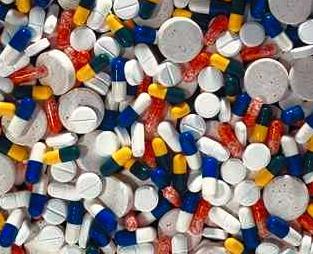
Following on from my last post, The Murderous Pills and The Keystone Cops (FDA), which highlighted 6 cases of Paxil related homicide, I now turn my attention to Celexa, known in Europe by its brand name of Cipramil and better known as its generic name of citalopram. Also included is the sister drug to Celexa, namely, Lexapro, known in Europe by its brand name of Cipralex and better known as its generic name of escitalopram.
Once again I will highlight just 6 cases of prescripticide* ~ there are many more in the Murder Meds database.
AERS Case Number 6301497 Homicide by male (age unknown. The patient was taking Celexa (40mg per day) between October 2003 to an unspecified date. This was sent to Medwatch from a court clerk who had heard the evidence of the accused at trial. Pay particular attention to the side effects leading up to the murder. (Click on images to enlarge)
Homicide by male (37). The patient was taking Lexapro, 10mg, over a short period of time before he shot and killed his girlfriend and critically wounded a young man. He then failed in his own suicide attempt.
Homicide by male, 55, (Initially the report said he was 40 but this was later rectified) The patient was taking Lexapro, unknown dosage, over an unspecified time before he shot and killed his wife.
Remarkably, his treating physician did not consider that Lexapro played any part in the, seemingly, induced psychosis. Something that truly baffles me given that this is based on an assumption of the doctor and not scientific evidence.
Finally, the last case is familiar as it concerns 22 year old Shane Clancy from Ireland. His name is omitted from this report. After reading it may be worth listening to the podcast (Link after images) 3 pages of the 6 page report have been redacted (for reasons unknown)
A federal judge has ruled that parents, whose children were prescribed the antidepressants Celexa [citalopram] and/or Lexapro [escitalopram] are entitled to refunds.
Forest Laboratories and its subsidiary Forest Pharmaceuticals, have agreed to shell out up to $10.4 million in refunds.
Back in 2010 Forest pleaded guilty to federal charges that its sales force team illegally marketed Celexa and Lexapro for use in children and teenagers when they knew that both drugs were only approved by the FDA to treat depression in adults. According to the charges, Forest bribed doctors with cash, meals and travel in efforts to persuade doctors to prescribe the drugs to children.
Why aren't we surprised by this anymore?
Once again we are seeing a pharmaceutical company quietly settle matters, once again there is no jail time for any of the executives, once again money is thrown at the problem.
The 2010 charges also allege that Forest covered up the negative results of their pediatric trials.
So they knew their drugs were no better than placebo yet still targeted doctors to prescribe them to kids.
Anyone familiar with the story Hansel and Gretel?
Dr. Greg Mattingly with his wife Judi
Dr. Greg Mattingly, a psychiatrist in St. Charles, was also named in court documents as one of the country’s top prescribers of Celexa. Evidence shows notes made from a phone call with Mattingly and a Forest sales representative where he agreed to include information about Celexa for children into his talks. Mattingly is alleged to have received more than $107,000 from Forest Pharmaceuticals in meals, travel and speaking fees in 2012 and close to $38,000 in 2013, according to trial documents.
Dr. Brian D. Barash
Dr. Brian Barash, a Kansas City psychiatrist and chief medical officer of the Marillac Children’s Psychiatric Treatment Center, was paid “thousands of dollars to give dozens of speeches to Missouri doctors about Celexa,” according to trial docuuments.
Take a good look at the photos above. Both have, it seems, been promoting drugs that not only don't work in children but drugs that are dangerous for children.
Forest has already agreed to pay out $313 million to settle allegations with the government and millions more in dozens of personal injury lawsuits.
13-year-old Andrew Tradd of Massachusetts, who died of a brain injury days after he tried to hang himself in 2004, two years after being prescribed Celexa.
The family of Danielle Henrikson, 15, sued the company after she hanged herself in her Idaho home the same year, weeks after starting the drug.
Alex Kim of Georgia, hanged himself in 2004 after his dosage of Lexapro was doubled.
Full article, 'Parents can get refunds for some anti-depressant drugs given to kids', here.
Celexa is known in the UK as Cipramil. Lexapro uses the brand name Cipralex in the UK.
Both drugs are also under scrutiny for causing birth defects.
You are young, you have relationship problems with your partner, you talk things through with your doctor, you are prescribed a drug, that drug is not recommended for people of your age group.
You kill yourself.
An all too familiar story has recently been aired on Canadian TV.
Brennan McCartney was just 18 years old when in November 2010, he was prescribed Lexapro [known as Cipralex in Canada]. 4 days later Brennan hanged himself.
Lexapro is the sister drug to Lundbeck's earlier antidepressant Celexa [also known as Cipramil]
Now, this is where pharmaceutical marketing comes into play.
Celexa's patent was running out, in other words, other companies could make generic versions of it, thus making heaps of money... money that Lundbeck wished to keep for themselves.
So, what do they do?
They play around with a molecule or two of Celexa then re-badge it as Lexapro. Voila! A new antidepressant hits the market.
The company hail it as a much better drug than their previous best-seller. Doctor's, convinced by pharmaceutical spin and ghostwritten articles start switching patients from one drug to another which is, in essence, the same drug.
Canadian Brennan McCartney was prescribed a sample pack of Lexapro, a pack that would have been left behind by a visiting Lundbeck rep who more than likely would have failed to mention the suicide link in Brennan's age group. The rep would not have cared who the doctor was prescribing it to, nor would he have intervened if the doctor was prescribing off-label to patients that the drug was not recommended for.
Brennan's doctor may or may not have told the 18 year old about the dangers of taking Lexapro, particularly during the first two weeks. Even if he did, Brennan really wouldn't have believed that a pill manufactured to help lift his apparent depression could actually make him worse.
SSRi's such as Lexapro make you do things that you wouldn't normally do. You lose your inhibitions, you lose your fear, two traits that are embedded in us for a reason. They tell us what is right and what is wrong, they are pre-cursors... warnings, insights into consequences.
Brennan was contemplating a split with his partner. He, like millions of others, was trying to deal with the heart-ache. His doctor, for reasons that I am unaware of, deemed Lexapro as a pill to help heal his heart, a heart, that remember, was broken...only metaphorically speaking.
Instead of healing the gut-wrenching feeling of a relationship split, Lexapro managed to do the complete opposite. It fixed nothing. The chemicals released into Brennan's system would have more than likely been the cause of his chemical imbalance - they would have changed because Lexapro gives you a re-uptake of serotonin - the substance, claim doctor's, psychiatrists and pharmaceutical companies, that needs boosting when one becomes depressed.
This, as many of you know, is pseudo-science, it's claptrap, it's pharmaceutical spin designed only to sell more and more drugs to an unsuspecting public.
Man in white coat treats poorly patient - man in white coat is deemed as God.
There is no better retailer for a product.
So, what happens when a patient commits suicide when taking one of these types of drugs?
We've all seen the warnings that they 'may' cause suicide...yet when they actually do cause a person to take their own life we get no admittance of liability from the companies that make them. The victim...or rather the victim's original illness is blamed, in Brennan's case, heartache.
Brennan's parents have called for toxicology reports to be carried out on their dead son. Those wonderful folk at the Coroner's Office in Brampton, Ontario have denied their request citing, "the results would be inconclusive"
Genetic testing could determine if Brennan was in a susceptible population, there are certain folk who metabolize these drugs better than others. By not allowing Brennan's parents this one simple test the Coroner's Office of Brampton, Ontario are failing to protect the public, they are sweeping a young death under the carpet because any result from a toxicology report that raised a red-flag to this particular patient population would have to be tackled and Coroner's just don't want to get involved in something so irrelevant.
The Coroner's Office in Brampton should be utterly ashamed of themselves. Quite how they arrived at such a decision is baffling...to say the least
Brennan became agitated, so much so that he told his parents that he 'had to get out'. Brennan left the family home - he never returned again.
It's plainly obvious, to me at least, that Brennan's agitation was a result of ingesting Lexapro...as was his suicidal act.
Brennan McCartney was not depressed, he was saddened because that's how people with a heart get when they split with partners.
Lundbeck, the manufacturers of Lexapro, will no doubt use that in a defence - they will use the fact that Lexapro was not indicated for someone with sadness, particularly someone who fell into the age-group of Brennan. They don't mind doctor's prescribing it though!
So, another kid dies because he was prescribed a drug 'off-label', a doctor who was given carte blanche by medicine regulators who stubbornly refuse to ban SSRi use in children and adolescents. Not recommending use of a drug is not the same as banning it. It's a limp-wristed gesture to show the public that the regulator, in this instance Health Canada, are doing their job correctly.
The segment [below] was aired on 16x9. In it, Lundbeck are quoted as saying that 'there is no evidence that the drug increases the risk of suicide'
According to the FDA, the American drugs regulator, Lexapro was given a black box warning because it indicated that it can cause serious side effects, including disabling reactions, life-threatening conditions or fatal results.
So, suicide isn't a fatal result then?
And what of an inquest for Brennan McCartney?
Well, we've seen just how utterly useless Coroner's courts can be in the past. Two in Canada spring to mind:
In both cases recommendations were made. None of the recommendations made have ever been implemented.
It's ironic that the word 'recommendations' is used twice here. Not recommended for children and adolescents and recommended that A,B or C be carried out to protect future patients.
The word 'recommendations' means nothing, it's yet another smokescreen to make it look like something will eventually be done about a problem...when in actual fact there is no intention to do anything about a particular problem.
The segment about Brennan's suicide can be seen from 7.14 onwards.
Brennan's mom, Nancy, can be followed on Twitter - @NancyMcCartney2
There's been much talk lately as to whether or not there is evidence that SSRi's can actually cause a patient to take their own life. For me, at least, the answer to the question is a no-brainer.
RxISK now has a searchable database where one can research just how many suicides are associated with prescription medication. The information was gathered from the FDA.
The field of psychiatry and medicine regulators, including the FDA, will tell you that the benefits of taking SSRi-type medication outweighs the risks, some psychiatrists actually still deny there are suicidal risks associated with antidepressants. The 'risks' aren't just suicide, suicidal thoughts or attempts. There's a whole host of risks...but they all are apparently outweighed by the benefits.
What exactly are the benefits and how can anything that carries a risk of death be deemed 'beneficial'?
The above figures are just those that have been reported, many go unreported because loved ones left behind don't make the connection partly because the key opinion leaders in the field of psychiatry claim there is no link to antidepressant use and suicide.
Key opinion leaders are just that. They lead the field with their opinions and many doctor's look to their published papers as a useful resource tool before prescribing these drugs.
Reading the statistics above one would feel that it's hard evidence and that it should serve as a stark warning to prescribers. One would think...
A recent article on the CNN Health web page asked the question, Is it OK to be on antidepressants for years?
The answer, given by a psychiatrist, should embarrass those that manufacture these drugs, it should embarrass those that regulate these drugs. It should embarrass those that continue to prescribe these drugs.
Dr. Charles Raison, an associate professor of psychiatry and behavioral sciences at Emory University, and an expert in the mind-body connection for health.
Ten years ago my answer to this question would have been, "Certainly not."
A year ago my answer would have been, "Almost certainly not."
Now, unfortunately, the most honest answer I can give you is, "I'm not sure."
Coming from a guy who has treated thousands of people over the years with antidepressants, I have to admit that my uncertainty both shocks and distresses me.
I should probably get over my sense of shock. One of the glories of science is that it keeps moving forward, and as it does so, it usually sweeps old certainties into the dustbin.
Psychiatry's commitment to the unqualified goodness of antidepressants is one of those old certainties. That I'm distressed is understandable.
An Italian researcher is collecting case reports of prolonged antidepressant withdrawal syndrome for important research papers now in progress. Something that should have been done by the pharmaceutical companies and medicine regulators years ago!
Please send your case report immediately -- instructions and an e-mail address are given below. Reports may be in English, French, Spanish, or Italian.
The research effort is led by Dr. Carlotta Belaise, a colleague of Dr. Giovanni A. Fava and frequent co-author with him of scientific papers challenging the long-term use of antidepressants.
Dr. Belaise is a research fellow in the Affective Disorders Program of the department of psychology at the University of Bologna in Italy. Her research team is collecting data on antidepressant withdrawal syndrome, "which we strongly believe is a very important, common and delicate clinical problem."
"A couple of manuscripts on this important issue are in progress."
Please send your case report immediately in this format:
Your pseudonym (to use if your report is published)
The date of this report
Your current age
Gender (if female, menopausal?)
Psychiatric drug history
When and how did you taper off each medication?
Your symptoms in the earlier phase of withdrawal
Your current symptoms
Which symptoms have gotten better? Which have gotten worse? What treatments have been helpful?
Is there anything else you would like to say about withdrawal and withdrawal syndrome?
Your identity will remain confidential. Researchers may contact you through your e-mail address for clarification, if necessary, and possibly for longitudinal follow-up periodically to track your recovery. Your e-mail address will not be used for any other purpose.