Zantac Lawsuit


Researching drug company and regulatory malfeasance for over 16 years
Humanist, humorist

Saturday, April 08, 2017

Paxil Label: Doublespeak


In textbooks, manuals, and some types of web writing, boldface is often used to highlight the first instance of an important keyword that is central to the subject of a chapter or article. (1)

I guess we can now say, with confidence, that this also applies to warning labels for SSRIs.

Let's just take a look at the current Patient Information Leaflet (PIL) for Seroxat, which was last revised on  11 January 2017.

**Seroxat is the European brand name for paroxetine. In the US and Canada the brand name used is Paxil.

Click to enlarge

Why use a boldface font across the words "young adult"?

Well, according to the description quoted at the head of this blog post, "boldface is often used to highlight the first instance of an important keyword that is central to the subject of a chapter or article."

So, the 2017 warning label clearly shows that it's important for patients and healthcare professionals to know that the current paroxetine label emphasizes that being a young adult puts you at an increased risk of suicidal behaviour whilst taking antidepressants. Remember, this is taken from the current Seroxat (Paxil) PIL.

Why do we not see the same for all adults?

Also, whose idea was it to use boldface on the words "young adult"?

This is something I put to the MHRA Pharmacovigilance team:

Could you please explain why "young adult" is in boldface type font and who made the decision to include "young adult" in a boldface type font?

It's important to note, before I publish their response, that MAH stands for Market Authorisation Holder which, in essence, means the manufacturer of the product.

Below is the answer MHRA sent.  Please note: MHRA's punctuation and spelling errors are as received. Ironically, my post today is about the importance of words used in drug labeling--words the MHRA accepted. Given that the MHRA doesn't take the time to check its own correspondence, they likely apply the same carelessness when approving drug company's labels.

MHRA's haphazardness is unprofessional; But the former (MHRA's letters) simply make their communications department look bad, while the latter (MHRA's labeling) is extremely hazardous to consumers...

Wednesday, April 5, 2017

Dear Mr Fiddaman

The SPC for Seroxat includes the following:

A meta‑analysis of placebo‑controlled clinical trials of antidepressant drugs in adult patients with psychiatric disorders showed an increased risk of suicidal behaviour with antidepressants compared to placebo in patients less than 25 years old (see also section 5.1).

As the above suggests that this particular age group are most at risk, the MAH will have suggested the emboldening of the text within the PIL. There are fors and againsts the use of emboldening, but in this particular case it has been considered appropriate.

--

I asked for further confirmation of this and was told...

Thursday, April 6, 2017

Dear Mr Fiddaman,

The emboldening would have been proposed by the MAH, who is this case are Smithkleine Beecham limited (part of the GSK group).


Kind regards,
--

So, there you have it folks. GlaxoSmithKline suggested that words "young adults" be highlighted in boldface font. As you will see from the current Seroxat Patient Information Leaflet there is no such boldface font for adults over the age of 24.

Surely, the FDA (the American drug regulator) would have also been in the same position as the MHRA, right? Did GlaxoSmithKline also suggest to the FDA that they should boldface the words "young adults"? If so, why didn't GlaxoSmithKline suggest the same for adults over the age of 24 given that the rate of suicidal behavior for adults over 24 taking Paxil showed a nearly 9-fold increase?

Don't GlaxoSmithKline have a responsibility to protect this patient population from potentially fatal or disabling risks like this?

I'm at a loss here. Who is actually protecting the adult consumers with regard to potential suicide risks with GSK's Paxil?

It appears through all the bickering between GSK and the regulators about which entity is responsible, they've both forgotten that, in the meantime, consumers are still taking a drug that is potentially life-threatening. You cannot stress a warning in boldface to one individual age group and, seemingly, ignore another age group. This is inadequate and misleading to both prescriber and patient, regardless of how GlaxoSmithKline wish to paint it.

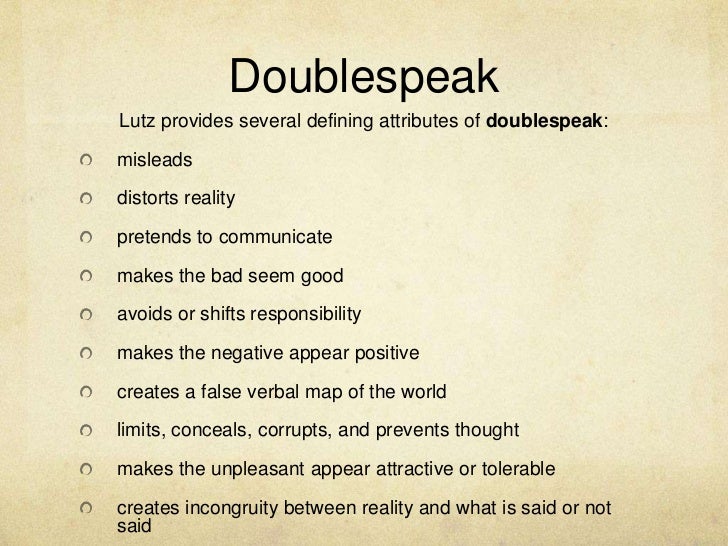
The current Paxil warning label shows a distraction from the whole truth, it's procrastination, it's misdirection and it's doublespeak, with the sole aim of hiding the whole truth whilst offering a morsel of truth. It's lying by omission. Magicians and illusionists do the same thing because they don't want to show you how they are conning you, they will draw your attention to one thing whilst hiding another thing (the secret) - This is exactly what GlaxoSmithKline are doing, although they have been clever, they are showing a glimpse of the truth but carefully distracting you away from it by using boldface font.

Now, where have I seen American lawyers representing GSK arguing that warnings for suicide, over the age of 24, have been placed on their labeling, and that those warnings are adequate and not vague? Not vague? I'd suggest this was a boldface lie, or, at the very least, lying by omission.

Bob Fiddaman


(1) Boldface text - grammarist.com

Court transcripts from the Dolin Paxil trial

Friday, April 07, 2017

Dolin Vs GSK - Robert "Bling Bling" Gibbons


As noted in my last blog, Robert Gibbons is considered an "expert" only by GSK and other pharmaceutical companies who pay handsomely for his inventive numbers crunching. The phrase "figures lie, and liars figure" perfectly sums up Gibbons' "scholarly" junk science.

In the Netherlands, for example, Dr. Dick Bijl, who is the current Cheif Editor of Geneesmiddelenbulletin, a monthly bulletin for prescribing physicians, was less than complimentary toward Gibbons. Gibbons authored a research paper in which he claims higher rates of suicide are caused by the FDA Black Box warning. Gibbons states children are dying by suicide because they aren't taking SSRIs! But Bijl notes Gibbon's conclusions were “astonishing” and cannot be made from the data available. In an issue as important as childhood suicide, Bijl further states the authors were “reckless.” The Dutch investigative radio program, Argos, highlighted Bijl’s concerns, quoting experts in statistics, epidemiology, and child psychiatry, who warn of the “danger” in such “misleading” research.

With the above just being one example of Gibbons junk science, it came as no surprise that King & Spalding focused their day and a half examination on Gibbons' data. Of course, none of the well-documented criticisms of Gibbons by reputable scholars and scientists were mentioned by King & Spalding's Todd Davis. To back up his claims that Paxil and other SSRIs reduce the rate of suicides, Gibbons referred to other 'academic papers.' On cross-examination by Brent Wisner of Baum Hedlund, Gibbons motives became crystal clear. Wisner pointed out that every single research paper Gibbons quoted had authors who, collectively, had lucrative financial ties to the pharmaceutical industry. Gibbons admitted GSK is paying him $1,000 per hour to regurgitate his answers. On being asked if the two research papers Gibbons criticized had authors with direct conflict of interest ties to the pharmaceutical industry, Gibbons was, I imagine, left red-faced. It turns out his criticisms of papers that note there is a link between antidepressant use and suicide were authored by academics with no Big Pharma ties.

Nevertheless, Gibbons still maintains that antidepressants reduce suicides. He even told the jury that GlaxoSmithKline's own figure of a 6.7% increase for adults taking Paxil was incorrect. Gibbons seems to be in a bubble of delusion. Who wouldn't be when being paid $1,000 an hour by many pharmaceutical companies including Glaxo, Wyeth, and Pfizer?

It's difficult to accept the word of a millionaire who lacks morals and ethics. I say millionaire because between 2002 and 2013 Robert Gibbons pulled in a staggering $4,958,346 in National Institutes of Health (NIH) grants. This amount doesn't include the handsome sum he collects from pharmaceutical industries during litigation. Gibbons has been called a pharma whore and pharma shill, amongst other names. I'd say he's far worse than that:  His junk science is putting both adults and children at harm, and likely responsible for many avoidable SSRI-induced deaths.

It is nauseating to see the pharmaceutical attorneys and their witnesses continue to lie and deceive the unsuspecting public, jurors and consumers alike.

Gibbons finished his evidence yesterday and is now in line to give evidence for GSK in another lawsuit filed against them in the UK. That lawsuit alleges that patients taking Paxil struggled with horrific withdrawals whilst trying to taper off it. Buisness as usual then for Robert Gibbons.

Being present in the courtroom during the early stages of this trial was, for me at least, a dream come true. I'm a bit of a geek when it comes to law, particularly pharmaceutical litigation. Though I was harmed by Paxil for years, my own adverse Paxil experiences pale into insignificance when I think about the trauma Wendy Dolin and her family have endured. Considering most families whose loved ones have died from Paxil never even have their day in court, the number of people adversely impacted by GSK's product is likely staggering. Another staggering number is GlaxoSmithKline's rules and regulations violations. GSK has settled out of court so many times with so many victims, I've lost count.

Some of the people who have been harmed by SSRIs have names and faces known to the general public because they have channeled their grief into advocacy so that others might live. I feel tremendous compassion and respect for these advocates, people like Neil and Rhonda Carlin, Kristina Gehrki, Leonie and Tony Donnelly, Stephanie and John Lynch, Stephanie Gatchell, Kim Witczak, and Elaine Billings. Behind them are thousands of nameless victims whose avoidable tragedies are not known by the general public.

Perhaps one day GSK and other pharmaceutical companies might publish all the data from their secret, sealed cases that were settled out of court? My, wouldn't that be a large document? GSK would need a dump truck to deliver all their binders.

King & Spalding could then advertise their data collection and legal services on national TV. I can almost see Todd and Andy now, standing next to sky-high boxes of binders.

"Hi I'm Todd, and this is Andrew. We here at King & Spalding like to polish a turd."

The trial continues next week with the continuation of evidence being given by John Kraus, who is a vice president with GSK. Kraus is a former psychiatrist. Seriously, a former psychiatrist who is now vice president of GSK?

This shit just writes itself!

Bob Fiddaman


Dolin Vs GSK - "Babes"

Dolin Vs GSK - Wendy's Cross and GSK's Petition


Wednesday, April 05, 2017

Dolin Vs GSK - Wendy's Cross and GSK's Petition


Continued from Dolin Vs GSK - "Babes"

Cross-examination of Wendy Dolin

Ursula Henninger continued her cross-examination in an attempt to dismiss the role Paxil played in Stewart Dolin's death. Henninger tried to shift focus from Paxil's adverse side effects to Stewart's work history and previous prescriptions. (Stewart was prescribed another SSRI, Zoloft, years earlier and it was discontinued because he experienced several adverse side effects.)

Henninger reviewed Stewart Dolin's employment history and raised questions about work-related tension and anxiety. She even asked questions about Stewart's experiences in law school and first professional job decades earlier.

I mean, C'mon! Doesn't everyone feel a little anxious when taking an important exam or starting a new job? Certainly, GSK and all pharmaceutical companies fully understand such situational anxiety considering all their sales pitches promote SSRIs as some sort of miracle pill to wash away anxiety and sadness. GSK and other SSRI makers use these scenarios to their advantage when advertising SSRIs. But in court, situational anxiety is touted by GSK attorneys as a cause of violent death!

To add insult to injury, Henninger then changed direction and asked Ms. Dolin about the time when her aging parents temporarily moved in with them. Henniger asked whether or not Stewart felt anxious about it. What loving son-in-law wouldn't feel concern about his aging in-laws?

Throughout the cross, Wendy Dolin explained that Stewart was dedicated to finding the right balance and that he viewed therapy as a personal investment to help maintain such balance. Henninger's repetitive questioning continued, and she even inquired about the dreadful night Wendy learned Stewart had died. Henninger reminded Wendy that in her original deposition Wendy had not reported any unusual behavior to the police officers the evening Stewart passed away. Wendy replied that she was "in a total state of shock."

Going down this line of questioning was unsavory and appeared unnecessary, but hey-ho, it is what we've come to expect from King & Spalding during this trial.

Re-direct

After Wendy's cross-examination, she was redirected by David Rappaport, and a video of Stewart's life was played for the jury. The jury saw Stewart high on life, active, fun, goofy, traveling, hiking, skiing but, most importantly, they saw the sheer joy and happiness on the face of a man who was devoted to the family and friends he dearly loved. When the video finished, David Rappaport turned to the jury and rested the case.

After the jury had recessed, King & Spalding petitioned the court to dismiss the case. The GSK lawyers claimed there was not sufficient evidence to support Wendy’s claim that Paxil’s adverse side effects and misleading, inadequate warning caused Stewart's death. I believe this is standard procedure for defence attorneys when faced with what seems to be impending defeat. It's also quite possible that the Bayman, Davis & Co. circus is suffering delusions.

GSK attorneys cited points of law and case points, but the Honorable Judge Hart wasn't buying their bull. Judge Hart ruled that the evidence Dolin has presented is to be viewed in a light most favorable to Dolin. The trial will proceed.


Counter Evidence

GSK is now starting to present its counter-evidence and yesterday called its first "expert" witness, Robert Gibbons. To call Gibbons an "expert" is laughable considering Gibbons has been labeled a "Shill"* by members of his own profession.

Gibbons, a biostatistician, has infamously lobbied for the removal of the black box warnings for children. He appears to believe children are not harmed by SSRIs and that some kids are actually dying because they are not prescribed SSRIs. Further, Gibbons has also made outlandish claims stating SSRI drugs, such as Paxil, actually reduce suicide.

More on Gibbons tomorrow, although not too much. I feel it improper to give Gibbons a platform to spout his ignorance and junk science on my blog.


Bob Fiddaman

*A shill, also called a plant or a stooge, is a person who publicly helps or gives credibility to a person or organization without disclosing that they have a close relationship with the person or organization.


Dolin Vs GSK - "Babes"


Tuesday, April 04, 2017

Dolin Vs GSK - "Babes"


Yesterday several witnesses gave evidence in the Dolin Vs. GSK trial. Stewart Dolin's co-worker, Mike LoVallo was first examined by plaintiff's attorney, David Rappaport. Rappaport asked LoVallo a few questions about Stewart's day-to-day role at their firm. The same can't be said for King & Spalding's resident jack-in-the-box, Andrew Bayman, whose cross-examination gave a whole new meaning to the word "boring."

Bayman seemed to gain nothing with his tiresome line of questioning. Rather, he unwittingly highlighted for the jury the lame ways GSK tries to defend its drug and product labels. Thus far, GSK has blamed the FDA, the prescribing physician, and the now deceased Paxil victim, Stewart Dolin. GSK's repetitious cross-examination never focuses on the company's duty to inform doctors and patients of the real risks posed by its product.  Had GSK done everything it could have and should have done decades ago when Paxil hit the market, there would be no Dolin Vs. GSK trial.

As we've seen before, Bayman's cross-examination of LoVallo lasted longer than plaintiffs' direct examination. King & Spalding plays the 'you-didn't-say-that-two-years-ago' game. They frequently ask the witness or expert questions that were already answered years ago in depositions.  Perhaps King & Spalding believe it is ground-breaking to discover that a witness might use slightly different words when explaining the same sentiment and thoughts the witness shared years before? Their tactics are akin to a team of schoolyard bullies goading their victim, trying to put words into their mouths. More often than not, witnesses and experts called thus far have had to tell King & Spalding to read the whole of the depositions. But King & Spalding want to take lines out of context and read, what they deem, might be damning evidence against the witness or expert. GSK's attorneys know full well there is no "caught you" there, but they hope some of their misleading questions will be heard by the jury to cast doubt on Paxil's starring role in Stewart Dolin's death.

Apparently, pharmaceutical company attorneys like to "cherry pick" data and stretch the truth in court just as pharmaceutical companies do in clinical trials. But today GSK's legal tactics didn't amount to much when questioning the Dolin family.


King & Spalding's Cross-Examination


King & Spalding chose a new player for their circus performance. No jack-in-the-box Bayman, no clown antics from Todd Davis. Instead, King & Spalding opted to cross-examine the Dolin family by using a female attorney from their firm. Ursula Henninger (pictured above) has, according to her online profile, more than 20 years of experience trying personal injury claims in courts throughout the United States. She has defended a variety of product liability claims, including those against tobacco manufacturers and pharmaceutical companies. Seems a bit odd that she was relegated as a mere courtroom sidekick, sitting quiet as a mouse with seemingly no active role in the trial until today when the Dolin family took the witness stand.

You can draw your own conclusions as to why King & Spalding decided to use Henninger to cross-examine the Dolin family. Is it a stereotypical, sexist tactic? You know, choose a female attorney to question the widow and her children? Is GSK hoping the jury will see a female lawyer as a "softer, kinder" interrogator? Perhaps. But if playing the gender card was part of GSK's strategy, it didn't seem effective. Henninger offered no condolences to any member of the Dolin family and instead jumped straight into her questions. She lacked sympathy and empathy, and I suspect this deficit will be noticed by the jury.

Stewart's children, Bari and Zach, gave evidence first and spoke of the love they had for their father and how empty they have felt since his passing. It was then the turn of their mom, and Stewart's widow, Wendy.


Enter Wendy Dolin.

I am going to be brief here as the court was recessed part-way through Wendy's evidence at the time of this writing. I'll update when Wendy Dolin finishes her testimony. With that said, it's important to report on Wendy's evidence thus far.

Wendy told the jury how she met Stewart at the age of 16 in Miami, Florida. She noted that they were married on June 15th, 1974. She recalled Stewart had a strong work ethic from a very young age. "He was delivering prescriptions for the Belmont Pharmacy.  And or those of you I know are from Chicago, the pink hotel on Bryn Mawr used to have a soda shop.  And he was a short-order cook there.  And this was at 15 years old.  So he was an extraordinarily hard worker and really smart."

Regarding Stewart's work-related anxiety problems, she told the jury, "Stewart was someone who was really proactive. I think that's the best way to put it. He took care of it. I mean, he thought about it, you know. You know, I just thought he was a normal human being who periodically had stress and anxiety like probably most of us."

Being asked about her typical weekends with Stewart, Wendy told the jury how much she and Stewart enjoyed each other's company. "Our weekends consisted of something that's really special.  On Fridays and Saturday nights, he'd say, "Well, what time do you want to get up, Babes?"  He used to call me Babes. And I'd tell him the time. And he'd usually bring up a cup of coffee, and then the dog would follow. And he would wake me up, and we'd come downstairs, and we'd sit on the couch in the living room, talk for a long time.

"Our friends used to say to me, "What the heck do you talk about?" And I'd say, "Well, we manage to talk." And that became known as couch time. And what's really special about couch time is my friends know how special that is, so when my friends sleep over, everybody has to have couch time. But that was really, you know, it's really funny, not funny ha ha.  It's that, you know, we worked so hard to get to a place where we had no debt, and our house was paid off.  You know, you saw these two beautifully high-functioning connected kids settled in their jobs, and you're able to do things like go to dinner or go on a trip.  But when it's all taken away, that's what I just ache for, that special time, which is just brings you back to what it was really like to just be Wendy and Stewart."

Explaining her grief, Wendy told the jury, "I love writing to him.  It's like cathartic. It's like couch time, you know, through a letter.  And then the cemetery is still something that -- I don't know.  Grief, it's, you know, everyone in this room, I'm sure, has had a loss of someone dear; and it's just really hard, you know. And I try to be whole as much as I can.  I try to put on a happy face, but it's hard. There's always something there to remind me of him."

Cross-examination

Tomorrow I will report on Wendy Dolin's cross-examination.

Bob Fiddaman


MISSD
Since Stewart's drug induced death, Wendy has set up a non-profit organization dedicated to honoring the memory of Stewart and other victims of akathisia by raising awareness and educating the public about the dangers of akathisia.

Akathisia is a disorder, induced by SSRI medications, which can cause a person to experience such intense inner restlessness that the sufferer is driven to violence and/or suicide. It has been said, "Death can be a welcome result." 


Monday, April 03, 2017

Guest Post From Kim Witczak - Who is Dan Troy?


Dan Troy ~ GlaxoSmithKline's Senior Vice President & General Counsel and a member of the Corporate Executive Team

--


The following is a guest post from patient advocate Kim Witczak. I say patient advocate but Kim is much more than that.

Today's guest post is by Kim Witcack. Our paths first crossed back in 2011. Kim was familiar with my advocacy work as I was of hers. Recently we chewed the cud in Chicago at the Dolin Vs GSK Paxil-induced death trial. Though justice doesn't bring back the dead, we are both keen to see justice. We also are intrigued to see how GSK attempts to defend its product and Paxil labeling.

Kim's husband, Woody, died a Zoloft-induced death in 2004. Woody had no history of depression and was prescribed Zoloft, Pfizer's poison pill, for insomnia (rather ironic considering insomnia is one of many listed side effects of Zoloft!). Five weeks later, Woody was hanging from the rafters of their garage. He left no suicide note. Internal Pfizer documents showed its scientists knew akathisia and suicidality was an adverse drug reaction of Zoloft. Apparently, Pfizer forgot to tell Woody and other trusting consumers.

Kim filed a wrongful death suit against Pfizer and has been advocating for drug safety and transparency ever since.

She is a co-organizer at Selling Sickness, an advocacy group dedicated to creating a new partnership model of professionals and advocates to challenge the selling of sickness.

Kim has also been appointed to the voting position of Consumer Representative on FDA Psychopharmacologic Drugs Advisory Committee. The role of the committee is to review and evaluate data concerning the safety and effectiveness of marketed and investigational human drug products for use in the practice of psychiatry and related fields. The committee also makes recommendations to the Commissioner of Food and Drugs.

Kim has been featured in major news media such as Fortune, Readers Digest, Consumer Reports, Wall Street Journal, New York Times as well as the subject of many local and national television news stories and documentaries. She has testified before the US Senate and FDA regarding  FDA-related consumer safety issues. Her website, WoodyMatters, shares her families adverse drug reaction tragedy so that others might live.

Kim has a vast knowledge of SSRIs and insipid industry/government ties. Her knowledge about Dan Troy exceeds mine, and I invited her to write a guest post. Troy seems to have mastered the art of collusion and uses the revolving door between government regulators and the pharmaceutical industry to turn a personal profit.

As ever, it's left to those who mourn the death of their loved ones to carry the light that will, eventually, lead people to the truth. I salute you, Kim.

--


Kim Witczak


DEJA VU…The Fox Is Still In The Hen House
Kim Witczak

As I watch the federal trial regarding the Paxil-induced death of Stewart Dolin, I can’t help but ponder the role Dan Troy is playing behind the scenes. Troy, Glaxo’s General Counsel, has long protected the pharmaceutical industry concerning FDA issues and government regulations. Now he's the top dog in GlaxoSmithKline's global legal department. Having personally witnessed Troy's negative impact on consumers' rights and civil lawsuits, I see his fingerprints all over Dolin v GSK.

Long before President Bush appointed Troy as Chief Counsel for the FDA, Troy assisted drug companies and drug-company supported trade groups such as the Washington Legal Foundation. Under his unofficial FDA leadership, he helped modify the generic-drug application process, oversaw reform to the Hatch-Waxman Act, and was chief architect and author of the original preemption argument used against private citizens in litigation. Troy's efforts served to protect pharmaceutical companies and erode consumers' rights and protections.

Preemption and Congressman Hinchey

In the early 2000s, the FDA started filing amicus curiae “friend of the court” briefs  intervening on behalf of the pharmaceutical industry. It seemed whenever drug companies faced civil suits regarding their products' harmful side effects--side effects concealed from prescribing physicians and consumers--Troy worked hard to protect drug makers. These FDA briefs argued that because the products were FDA approved, such lawsuits were “preempted” by federal law and should be dismissed. The briefs suggested that, even if drug manufacturer wanted to warn unsuspecting consumers, the FDA wouldn’t let companies update their warning labels if the FDA didn’t agree. Further, these briefs supported the notion that the FDA is the ultimate authority on product safety and effectiveness and related drug labels. Troy's work at the FDA promoted the view that juries and judges should not second-guess decisions made by FDA scientists and experts.

Many civil lawsuits were tossed out by judges across the country who believed the FDA is the final authority on drug labeling. This effort essentially gave drug companies, such as Pfizer, a free pass when their products caused harm and death. In my husband’s case, Witczak v Pfizer, Minnesota Chief Justice James Rosenbaum overturned FDA-supported pre-emption arguments in their entirety stating, “The FDA has no authority to declare, ipse dixit, that a label is false and misleading.” Judge Rosenbaum went on to state, "It is obvious that state failure-to-warn laws do not pressure manufacturers to include false or invalid warnings. Instead, they give drug manufacturers every incentive to warn of real, known risks as soon as they are discovered -- even before any FDA action."

During a December 15, 2003, presentation titled, “The Case for Preemption,” at the annual Drug and Medical Device Litigation conference for in-house counsel and trial attorneys, Troy asked the audience to contact him if they had a case in which the FDA could help. Clearly Troy's "help" was not meant to assist consumers. Fortunately, my talented attorney clandestinely attended Troy's lunchtime presentation long enough to hear Troy declare, “we have to pick our shots so make it sound like a Hollywood pitch."

Of course, considering the FDA is supposed to serve and protect the public, not drug companies, we took Troy's "Hollywood pitch" speech to New York Congressman Maurice Hinchey. Congressman Hinchey then conducted an investigation of Dan Troy.  “For the first time in history,” Hinchey said, “FDA’s Chief Counsel is actively soliciting private industrial company lawyers to bring him cases in which FDA can intervene in support of drug and medical device manufacturers.” Hinchey learned that Pfizer was one of Dan Troy’s previous clients at Wiley, Rein, & Fielding and that in the three years before Troy's appointment as FDA Chief Counsel, Pfizer paid the law firm more than $350K for services provided directly by Troy.

Lo and behold, a few years later Malcolm Wheeler, an attorney for Pfizer, called Troy and requested that the FDA get involved in a Zoloft-induced suicide lawsuit filed against them by a private citizen in California. The FDA, through the Department of Justice which represents the FDA in court, filed a brief in support of Pfizer. Together, they stated the plaintiff’s claims were preempted by federal law. This case was then dismissed on preemption. Case in point: money buys influence and power, which is then used against those who have neither.

By 2004 with much damage done, Troy resigned from the FDA and headed straight to the Sidley Austin law firm where he continued working on lucrative pharmaceutical company litigation. Recognizing Troy's long history as a drug company protector, GlaxoSmithKline hired Troy as its top legal General Counsel in 2008. Andrew Witty, GSK’s then chief executive officer, said of hiring Troy, “Dan’s wealth of experience in the regulatory legislative area will be of enormous benefit to us, and ultimately to patients.”

Hmmm...Troy helps patients? Tell that to my friend Wendy Dolin and thousands of other families whose loved ones have suffered or died from Paxil and other SSRIs. Who needs Hollywood movie pitches when the revolving door between pharmaceutical companies and government regulators provides such real-life drama?

With Troy at the helm, it will be interesting to see what arguments GSK has ready to pull out of its back pocket when appealing a verdict for Dolin. Time will tell. But today one thing is certain: The fox continues to guard the hen house.

Kim Witczak


Thursday, March 30, 2017

Dolin Vs GSK - Glenmullen Nails It!


On Tuesday a series of video depositions were aired to the jury. Sadly, I have no access to the videos and cannot directly report on them. Thankfully, GSK's lawyer, Todd Davis, has provided fabulous entertainment akin to a desperately sad clown. Yesterday Davis ineffectively cross-examined the plaintiff's next expert witness, Dr. Joseph Glenmullen.

Dr. Glenmullen is yet another thorn in the side of GSK. He has previously served as expert witness in many Paxil lawsuits, and, just like Dr. David Healy, is disliked by GSK and their King &  Spalding attorneys. Both Glenmullen and Healy were subjected to GSK's pre-trial circus in which GSK filed motion after motion arguing that these renowned doctors should not give evidence at this trial. GSK's attempts were denied.

After yesterday, I can vividly see why GSK opposed Glenmullen as an expert. In short, Glenmullen ran circles around Davis. More on this further on down this blog post.

Glenmullen detailed Stewart Dolin's medical notes and told the jury the akathisia Stewart experienced occurred the last time he was prescribed Paxil. This was six days before Stewart's Paxil-induced death. During these six days, Stewart showed increased signs of agitation, just as he did when he was previously prescribed Zoloft years ago. In fact, when the Zoloft dose was increased, Stewart's adverse drug reaction (akathisia) worsened. When Stewart stopped taking Zoloft, his agitation subsided. Sadly for Stewart and his survivors, when he last took Paxil his adverse drug reaction ended in death. Akathisia, as Glenmullen stated yesterday, is "a drug-induced reaction, a compulsion to kill yourself." Glenmullen added that a death such as this is referred to "as a paroxetine-induced accident, not a suicide. It's paroxetine. It's the label that didn't warn that is the cause."

Regarding GSK's supposed adult suicide warning on the Paxil labeling, Glenmullen clearly nailed it. Referring to the 2010 Black Box warning displayed in court, Glenmullen told the jury how there was explicit language that short-term studies did not show an increase in the risk of suicidality with antidepressants compared to sugar pills in adults beyond age 24. He also pointed out the sentence, "Depression and certain other psychiatric disorders are themselves associated with increases in risk of suicide." He explained to the jury, "...What that tells me as a practicing psychiatrist is that if I'm treating a 57-year old patient and I put them on Paxil, Paxil couldn't make them worse. Paxil couldn't make them suicidal. It would be, and it says explicitly, their depression or other psychiatric condition."

Glenmullen further noted the black box warning is "really bad" because it implies the suicide warning is just for children, ergo a doctor treating an adult could not warn about a potential risk of suicide because the labeling suggests there is only a suicidality risk among children taking Paxil.

The jury was informed that the labeling was written in such a way so that doctors would not only NOT know about the adult suicide risk, doctors would actually increase the dose because they would assume worsening of depression and/or new disturbing behaviors had nothing to do with Paxil.

Glenmullen added, "And here's another dimension to it. If the patient gets worse and it might be the drug, what do you do? You take them off the drug to see. If they get worse and it couldn't be the drug but it's the depression, what do you do? You increase the drug, which is going to worsen the risk. So it's very dangerous. And that's why, in my opinion, it's really this lack of a warning that's responsible for his (Stewart Dolin's) death."

Glenmullen told the jury he is "100% certain" that "Mr. Dolin's was a "paroxetine-induced, Paxil-label-induced death."


Cross-examination by King & Spalding's Resident Clown

As per his norm, Davis repeatedly tried but failed to discredit the witness. He attempted to catch out Glenmullen with answers Glenmullen provided in various testimonies, including testimony that was more than 11 years ago!

A spectator in the court told me, "You should have seen the spectacle created by GSK when it came time to do their cross.  They were so unorganized with their multiple binders that the jury started to laugh."

Davis also went down the route of asking Glenmullen how much he was paid to give expert opinions in previous Paxil litigation. Leaves me wondering how much Todd Davis has been paid to defend one of the most controversial drugs in history. Further, I wonder whether he and his law team view their thousands of "settlements"as victory.

In what world is it viewed as a success to place gagging orders on families of Paxil victims so that the truth about the dangerous product is hidden?

Thus far, Davis has done a fine job of entertaining both spectators and jurors alike. Today's Davis looks more like a sad clown than the smug clown who skipped into court three weeks ago. So, there you have it: King & Spalding attorneys seem to work well together if one considers their joint performance mere entertainment. Sad clown Davis and his jack-in-the-box sidekick, Andrew Bayman, will continue their lame cross-examination of Glenmullen today.

Bob Fiddaman


Tuesday, March 28, 2017

Dolin Vs GSK - Day 8 - Get to the Point, Todd!


The Todd Stance

Oh Todd, oh Todd, oh Todd,
you make us feel so weary.
Your questioning of Stewart's doctor
really is quite dreary.
So, GSK's warning letter
is the crux of your defence?
It's not logical or rational;
it simply makes no sense.
You say you warned the doctors
of Paxil's suicide risk.
Yet Andy Bayman denies this claim,
like a repeating compact disc.
Adults are perfectly safe, he states:
It's just kids who should be warned.
But your former CEO confirms
it's your duty to inform.
You can keep your fancy haircut, Todd,
and expensive Armani suit.
You can keep your sense of what's right and wrong
in this wrongful death lawsuit.
You can keep your lack of due care
and misleading words of warning.
We know Paxil causes death, you see,
and leaves families deep in mourning.

Bob Fiddaman ~ 2017

Day 8 of the Dolin Vs GSK Paxil-induced suicide trial saw Stewart Dolin's physician and long-time friend, Dr. Marty Sachman, take the stand.

Sachman was first questioned by David Rappaport, one of the attorneys representing Wendy Dolin (Stewart's widow).

The jury heard more about Stewart Dolin, the man, and less about the fact that GlaxoSmithKline concealed Paxil's propensity to induce suicidality. Sachman told the jury, "Stew was a very reserved, quiet, intelligent, loving man. I never heard him raise his voice over our 25-year relationship. We were like brothers. We spent weekends together, travel together. He was my closest friend. A loving person and a loving family man." 

Sachman was also questioned about Stewart Dolin's anxiety, which, according to the doctor, was a result of work-related issues. He told the jury that he never thought Stewart was depressed and that Stewart always responded to the treatment he gave him from 2005-2010. On each occasion, after Sachman prescribed Stewart drugs, he would warn him of the side effects and, once Stewart felt better, would wean him off the prescription.

Two days before Stewart's Paxil-induced death, Sachman and Stewart attended a memorial service for the father of their mutual friend. Later that evening Sachman, Stewart and Wendy went to dinner together. Sachman was asked to describe what he remembered about Stewart that night. He answered, "His demeanor was, as usual, our conversation was as usual. He was calm."

Sachman then recounted his "absolute shock" upon hearing the news of Stewart's death. He told the jury, "I just think that we depend on honesty in reporting research and data. How can we treat people effectively and safely if we can't depend on that?"

Rappaport then asked Sachman about the communication between pharmaceutical companies and doctors regarding drug labeling. Sachman's answer, which King & Spalding objected to and was struck by the judge, highlighted Dr. Sachman's feelings about being deceived:

"Well, you know, physicians, myself and millions of other physicians, every day try to protect people, try to help people and protect them. We rely on truth and honesty from pharmaceutical companies and to falsify information or hold back information is totally criminal. It affects the lives of our patients."

It's appropriate Sachman used the word 'criminal' given that GlaxoSmithKline have previously pled guilty to criminal charges. Therefore, GlaxoSmithKline are criminals.

Concluding his examining of the witness, David Rappaport asked Sachman about the tie and belt he was wearing. Sachman started to weep, sharing that they belonged to Stewart. Dr. Sachman wore them to "remember him today."

Cross-examination by King & Spalding's Todd Davis.

The cross-examination by Davis centered around GlaxoSmithKline's "Dear Doctor Letters" sent out whenever GSK decides to share a problem with their products. Davis went over and over a series of these letters sent to Sachman. Sachman told Davis that he had, indeed, received these letters. Once again, King & Spalding tried to catch a witness by asking the same questions that were asked years ago during deposition. GSK's attorneys futilely tried this tactic with Dr. David Healy and Dr. David Cross earlier in the trial.

Davis droned on about the "Dear Doctor Letters" and whether Sachman read them. Finally, an understandably frustrated Judge Hart interjected and admonished Davis, "You're covering the same ground...over and over again now, Mr. Davis...Let's not go over the same thing over and over again."

Davis, however, continued to go over the "Dear Doctor Letters," and the judge again interjected, "Mr. Davis, the document speaks for itself, and the doctor has accepted it. I don't see any reason to read the document to him and ask him whether he agrees or disagrees." 

King & Spalding's "finest" then switched gears, inquiring about Sachman's prescription of Levaquin (an antibiotic) to Stewart Dolin. Davis asked Sachman if he had read the Levaquin warnings regarding the drug's propensity to cause adverse effects including suicidal acts or thoughts.

It's good to see Levaquin manufacturers use the appropriate suicidal acts in their warning label. This term is surely more understandable than the intentionally ambiguous "emotional lability" term GSK prefers. I can't help but wonder whether Davis would be equally concerned if his spouse consumed a product that states it can cause "emotional labilty" as he would if the warning listed "suicidal acts?"

Bizarrely, Davis next asked Sachman if he was aware Stewart's widow and children had taken trips in and out of the US since Stewart's death? Davis likely knows this is irrelevant, but shamelessly asked anyway in a lame attempt to imply Stewart's widow and children couldn't possibly be mourning Stewart's Paxil-induced death if the family has traveled in the last six years. An appropriate question on my mind is "Does Davis take trips in and outside the US after settling cases for GSK in which innocent consumers have died?"

Davis finished his cross-examination, and I presume the jury and judge were glad to have a break from Davis' tedious repetition. Davis is largely ineffective; GSK might want to reexamine their legal fund investment in Davis when GSK is, no doubt, embroiled in future wrongful death lawsuits.

David Rappaport - Re-direct

I won't go into too much detail regarding the re-direct because the following question and answer seemed to undue Davis' performance:

Q. Have you seen in any of the labels that you've ever seen from GSK about Paxil any reference to the fact that they had a suicide signal from attempts and suicides in the initial clinical trials that was of the magnitude of 7 to 8 times greater risk than similarly-depressed people on placebo?

A. I certainly have not.

Before leaving the stand, Dr. Marty Sachman told the jury, "I'd like to say that in the midst of all of this attempted confusion of the real issue here, if it was clear that this drug had a higher risk of causing suicide in the age group Stewart Dolin was in, I would have never prescribed it."

Three doctors have now taken the stand:  All have stated if they had known about the increase in suicidality and behavior in adults taking Paxil they would have never prescribed it.

Your move, Todd!

The trial continues today with a series of video depositions that, sadly, I won't have access to unless they are made public.


Bob Fiddaman.


Monday, March 27, 2017

More Woes for GSK as Peter Humphrey Files Suit


GlaxoSmithKline are rarely out of the news. Regular readers will know that I'm covering the wrongful death lawsuit in Chicago, Dolin Vs GSK. Now, it appears the whole squalid 'Chinagate' scandal has, once again, reared its ugly head as Peter Humphrey, who was incarcerated in a Chinese prison, along with his wife, has filed suit against GSK claiming federal racketeering and conspiracy claims under RICO, as well as state law claims for fraud, intentional infliction of emotional distress, negligent infliction of emotional distress, and civil conspiracy.

Glaxo wouldn't be Glaxo if they admitted to any wrong-doing so, in spectacular fashion, they are disputing the complaint, citing that Humphrey should go back to China to arbitrate these claims.

The suit, filed in the United States District Court of Pennsylvania, argues that the case does not have to be filed in China because...

 - Defendants are part of the GSK Group, which holds itself out as an integrated “global healthcare company.” 

 - Directors of GlaxoSmithKline plc manage the risks of the Group at a group level, rather than at an individual business unit level.

 - GSK’s General Counsel, Dan Troy is based in the United States.

GSK’s General Counsel, Dan Troy, is based in the United States and manages the companies 400 lawyers based in Pennsylvania, New Jersey, North Carolina, Belgium and the UK. As discussed further below, Troy “played an active role” in forming GSK’s response to the whistleblower’s revelations of corruption in China.

For those who don't know, Troy is the former Chief Counsel for the FDA. During his time at the FDA he ordered that all decisions to take action against false prescription advertising go through his office -- after which the enforcement actions mysteriously dropped by two-thirds. He also got to work revising the agency's regulations to allow drugmakers to promote drugs for uses not yet supported by clinical research.

Quite a revolving door and Troy is a subject I will be covering soon on this blog.

Meantime, Humphrey's lawsuit intends to highlight, once again, how GSK attempted to bribe doctors around the world by various means in order to increase the sale of their drugs. This, despite  settling a multi-billion dollar settlement agreement with the Department of Justice (DOJ) in 2012.

GSK’s China-based bribery and illegal promotional activities extended to at least June 2013.

More coming soon.

Bob Fiddaman.

More on Peter Humphrey and the Chinagate scandal here.


Friday, March 24, 2017

Dolin Vs GSK - Day 7 - Abraham Lincoln


Day 7 in Dolin Vs GSK began with the continued cross-examination of former FDA official, Dr. David Ross, by GSK's King & Spalding attorneys.

GSK is desperately trying to convince the jury that the company repeatedly sought to change the Paxil labeling but, supposedly, the FDA wouldn't allow it. GSK's attorney, Andrew Bayman, futilely tried to put words into the mouth of the witness, attempting to trick Dr. Ross into agreeing he said things he has never actually said.

It's still a head scratcher for me - on the one hand, GSK is claiming that Paxil is safe for adults, on the other they claim they told the FDA there was an increase in suicidality in adults on Paxil. How could both be true?

It appears Glaxo concedes Paxil can increase suicidality in adult consumers but that this suicidality increase does not lead to completing suicide.  However, if you die by "suicide" when consuming  GSK's product, Paxil, GSK's drug didn't cause it.

Yesterday, former FDA official, Dr. Ross, was asked by Bayman:

"Other than the 6.7 finding with respect to the secondary analysis of definitive suicidal behavior, you're not aware of anything in GSK's 2006 adult suicidality analysis that would meet the definition of reasonable evidence of an association between the use of Paxil and suicidality that would warrant a label change, correct?"

Dr. Ross, who remained unphased, replied:

"Well, the answer to that is yes, I am, but more importantly, as I said to your colleague two years ago, that's a little bit like saying, 'aside from that, Mrs. Lincoln, how did you enjoy the play?'"

This was a great response considering the excuses GSK regurgitates when faced with claims that Paxil induces adult suicidality, and severe withdrawal effects or birth defects, etc. It is the standard corporate response to repeat, "Paxil has helped millions of people worldwide."

Why would GSK attempt to place an adult suicide warning on the Paxil label if it is the company's position that Paxil does not induce suicidality in adult patients?

King & Spalding's Bayman has been trying to catch Dr. Ross in non-existent contradictions for two days. Dr. Ross, who often quite brilliantly turns the questions back onto Bayman, remains steadfast that the Paxil suicidality data created by GSK is false and misleading.

Thus far GSK has claimed it wasn't their fault they didn't warn the public, it was the FDA's failure. It wasn't Paxil that precipitated the death of Stewart Dolin; it was his underlying illness. It is GSK's position that Paxil causes suicidality in adult consumers; it's also their position that it doesn't.

Akathisia is the Paxil-induced medical condition that often precipitates suicidal thoughts and suicide itself. GSK continues to point out that there is an FDA class warning for all SSRIs stating the drugs can cause akathisia. However, what GSK attorneys don't want to mention is that their product, Paxil, is more likely to cause suicidality than other SSRI offenders. Specifically, when the clinical trial data is correctly interpreted, it shows Paxil causes an 8.9 increase in adult suicidality.

All SSRIs can and often do cause akathisia and suicide. Unfortunately, drug companies and the FDA continue, to this day, to inadeqautely define akathisia. This collective failure continues to harm patients and ill-informed prescribers.

Today's Paxil label describes akathisia simply as "psychomotor restlessness." Further, it states:

"The use of paroxetine or other SSRIs has been associated with the development of akathisia, which is characterized by an inner sense of restlessness and psychomotor agitation such as an inability to sit or stand still usually associated with subjective distress. This is most likely to occur within the first few weeks of treatment."

Once again, there is no mention that akathisia is a precursor to suicide. Of course, GSK's Andrew Bayman doesn't tell the jury this fact, either. However, GSK's BigPharma colleague, former Pfizer Medical Director Dr. Roger Lane, confirmed this fact way back in the 1980's.  Lane wrote two peer-reviewed articles about SSRI-induced akathisia. About akathisia-induced suicide, he stated, "It may be less of a question of patients experiencing fluoxetine-induced suicidal ideation, than patients feeling that ‘death is a welcome result’ when the acutely discomforting symptoms of akathisia are experienced on top of already distressing disorders."

Lane was referring to fluoxetine, which is the drug, Prozac, just as paroxetine is the drug Paxil. An expert witness for Prozac manufacturers, Eli Lilly and Company, conceded under oath that SSRIs cause akathisia. At the Forsyth v. Eli Lilly and Company murder/suicide trial, Lilly’s expert witness, Dr. Victor Reus testified that both Paxil and Prozac can cause akathisia in patients.

King & Spalding's Andrew Bayman frequently concedes in the Dolin Vs GSK trial that SSRIs can cause akathisia. Further, Bayman continues to point out that akathisia is listed on the drug class label. However, what Bayman doesn't want to emphasize is what drug company scientists have known and confirmed for years: As Pfizer's Dr. Roger Lane stated decades ago: "death is a welcome result’ when the acutely discomforting symptoms of akathisia are experienced."

GSK has downplayed the suicide risk in adults taking Paxil for nearly 25 years. It's absurd and misleading to claim that calling akathisia "psychomotor restlessness" would ever lead consumers and prescribers to interpret this intentionally vague definition as an increase in suicidality.

GSK and all SSRI manufacturers should be shouting from the rooftops the exact definition of akathisia, as should medicine regulators. Instead, yesterday the Dolin Vs. GSK jury was treated to some loud entertainment by Bayman. He tried to drown out the facts by shouting at the expert witness. It was so unprofessional that the Honorable Judge Hart had to tell Bayman to "stop shouting."

Further witnesses will be called next week as this case unfolds. Meanwhile, here's a short video produced by MISSD that helps everyone better understand akathisia.


Bob Fiddaman.

Dolin Vs GSK

Dolin v GSK - Opening Arguments

Dolin Vs GSK - Day Two - "Jack-In-The-Box"

Dolin vs GSK - Healy 'Rocks Da House'

Dolin Vs GSK - JP Garnier Video Deposition

Dolin Vs GSK - The Dunbar Tape

Dolin Vs GSK - Day 4 - Slam Dunk

Dolin Vs GSK - 8.9 Suicide Increase For Adult Paxil Users

Dolin Vs GSK - Day 6 - Ass Kicking Semantics


Thursday, March 23, 2017

Dolin Vs GSK - Day 6 - Ass Kicking Semantics


ass kicking

To be beaten senseless because you definitely deserve it.

semantics
the branch of linguistics and logic concerned with meaning.


The plaintiff examination of former FDA Medical Advisor, Dr. David Ross, finished today. Ross, who was examined by Brent Wisner of Baum Hedlund, read from a document shown on the screen to the jury. The paper was published in J Clin Psychiatry and authored by, amongst others, John E. Kraus, an employee of GlaxoSmithKline. The published article, 'Meta-analysis of efficacy and treatment-emergent suicidality in adults by psychiatric indication and age subgroup following initiation of paroxetine,' tries to play down the risk of Paxil-induced adult suicide. Further, the paper claimed that there was no difference in suicidality among patients who took paroxetine and those who took a placebo.

Finalizing his questions to Dr. Ross, Brent Wisner informed the jury that the article was actually written in 2008. Bayman, King & Spalding's resident jack-in-the-box retorted that it was 2011, a year after Stewart Dolin died. Bayman seemed confident and had a smug look on his face at the thought of getting one over a prosecuting attorney. The smug look was wiped from his face by Wisner when Wisner informed Bayman--and the jury--that the paper was submitted to the journal in 2008 and published in 2011. This was two years before Stewart Dolin's Paxil-induced death. Bayman's jack-in-the-box spring lost its bounce as he slumped back down in his chair licking his wounds like a scolded schoolboy.

I do love to see Brent Wisner in action, and it is even more fun to see Wisner kicking GSK's ass.

King & Spalding's cross-examination of Wendy Dolin's expert witness, Dr. David Ross, commenced today. It was merely a game of semantics, blame shifting and one person (Bayman) trying futilely to catch another in contradiction.

Andrew Bayman once again was in charge of the calvary, his sole mission being to undo all the data Dr. Ross previously shared with the jury.

Did Bayman succeed?

Hardly. It seemed a junior-league attempt to try and trip up Dr. Ross regarding a deposition he gave more than two years ago. It was also an effort to try to show the jury that, despite all the evidence showing Paxil has a 9-fold increase in inducing suicidality in adults, GSK is not responsible for clearly communicating this life-threatening information to healthcare professionals and the public.

Bayman kicked off by trying to discredit the credentials of Dr. Ross.

"Are you a pharmacologist?", Bayman asked.

"No." Dr. Ross replied.

"Are you an epidemiologist?" Bayman asked.

"No." Dr. Ross replied.

Bayman, whose team can't seem to defend the statistics previously shown at trial regarding the number of adults endangered by Paxil, was trying to convince the jury that Dr. Ross wasn't qualified to provide evidence regarding FDA rules and label regulations.

It left me wondering if Glaxo's former CEO, JP Garnier, would ever be asked if he were a criminologist. To my knowledge, the Monty Burns look-a-like holds no Ph.D. in criminology, yet, under his guidance, GSK committed various crimes which they have already plead guilty to committing.

Indeed, Bayman himself has defended GSK's nefarious activities on countless occasions, as have the law firm for whom he works. Does this make Bayman and his fellow co-workers qualified experts in septal heart defects, homicide, and addiction, all of which have previously been the subject of King & Spalding trials regarding Paxil use?

Bayman also went down the tired road of 'It wasn't Paxil, it was the underlying condition.' A line we hear on a daily basis from pharmaceutical companies defending the latest prescription drug-induced lawsuits.

Yesterday the jury were shown that Paxil labeling does not mention the suicide risk in adults. They were also shown that there is little or no explanation of the word 'Akathisia' that accompanies the patient information leaflet for Paxil.

Bayman argued that the word 'Akathisia' is in the labeling. Maybe so, but who, exactly, knows what akathisia means, particularly when the medical term remains ambiguously undefined, as GSK wants it. There is no mention on the label that Akathisia often creates suicidal thoughts and actions. Instead, the SSRI class labeling states akathisia is 'motor restlessness' - a vague description for a prescription-drug induced condition that often causes suicide!

Despite there being a 9-fold increase of suicidality in adults taking Paxil, and that GSK has known this for 25 years, there is no mention of this in today's Paxil label. Bayman glossed over this by deflecting the blame to the FDA. He claimed the FDA have responsibility for the language on the labeling, ergo, it's not GSK's fault, it's the FDA's fault. In any event, Bayman claims that GSK tried to change the labeling. Perhaps this might be true, yet, oddly Bayman has shown the jury no proof that GSK ever attempted to petition the FDA to communicate the real suicidality risks Paxil causes. Even if GSK did petition the FDA to correct the Paxil label, GSK apparently then sat back and did nothing after the FDA did not amend the label despite having a legal, moral and ethical duty warn consumers of the real Paxil-created risks. Even GSK's former CEO, JP Garnier, admitted this moral responsibility in a video deposition shown the jury last week.

Garnier said under oath, and I quote, "...there is a legal right for us to go directly to the public."

Evidence here.


So, Bayman trying to convince the jury the suicide warning was down to the FDA contradicts what the top boss at GlaxoSmithKline says.

A strange defence, unless of course Bayman thinks JP Garnier was lying under oath?

Garnier lying? Surely not!

The trial continues tomorrow.

From this point I'll be giving periodic updates and not daily ones.


Please contact me if you would like a guest post considered for publication on my blog.